Showing posts with label Regenerative viticulture. Show all posts

Saturday, December 11, 2021

Can Font (Emporda, Spain): Regenerating vineyards to take care of the planet

As part of my ongoing coverage of Regenerative Agriculture, I have reported on a number of ongoing deployments to include Tablas Creek Vineyards, Troon Vineyard, Solminer, and Familia Torres. I continue on that path with a look at the Can Font (Emporda, Spain) experience. The material covered herein was drawn from a Francesc Font presentation titled Regenerating vineyards to take care of the planet which was delivered at the recent Regenerative Viticulture Symposium.

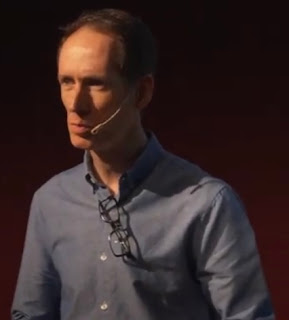
Francesc Font, Can Font Farm Manager

According to Francesc, he comes from a long line of farmers, his family having been thus employed for over 300 years. The farm has always had strong ties to winegrowing with one of his grandfathers serving as the President of a regional wine cooperative for over 40 years. 

Both Francesc and his wife are trained Agricultural Engineers and they came to the realization that their farming practices were releasing significant amounts of greenhouse gases into the atmosphere and, therefore, contributing to global climate change. They were also contributing to desertification as their tilled topsoil is washed away when it rains and blown away when it is windy. Can Font studies showed that they lost about 20 tons of soil/ha/year. If the study area is extended to Penedes as a whole, that number rises to 25,000 tons/ha/year. This amounts to a loss of 1 centimeter of soil per year; it takes nature 40 years to create 1 centimeter of soil. This was not a sustainable operational model and it led them to ask the question: What can we do?

Broadly speaking, they did three things: Investigate. Learn. Apply. They began by investigating what was being done in the world beyond the borders of the farm to address the issues they had identified. They then dug deeper, seeking to truly learn about the new approaches/technologies they were discovering. And, finally, upon their return from an investigatory trip to Australia, they decided to become regenerative farmers and winegrowers. 

While in Australia they had seen how regenerative agriculture: (i) helps to sequester carbon and, in so doing, contributes to mitigation of the climate crisis; helps bring soils and the environment back to life, which, in turn, aids biodiversity; and allows the production of healthy foods without the use of toxic chemical inputs.

Even though they had committed to regenerative, they still had a question as to whether the approach was economically viable. They only way to find out, they realized, was to implement it.

For Francesc, implementing regenerative agriculture required action on three fronts:
  1. Stop degrading the soil (cease tilling and the use of chemical inputs)
  2. Understand the soil in a way that they had not understood it previously. They had to look at: the way the minerals in the soil interact; how the roots work (how they move, how they descend, and whether they run into obstacles); soil compaction; and soil microbiology.
  3. Begin putting regenerative techniques into practice.
Today Can Font is a no-till farm which operates without chemical inputs. The regenerative practices which have been implemented to date are indicated in the table below.

Table 1. Regenerative practices implemented at Can Font.

Regenerative Practice

Tool/Technique

Description

Cover Crops

Legumes

  • One of the most important
  • Fixes Nitrogen from the air (for free)
  • Includes, vetches, clovers, etc.


Grasses

  • Feed our microbial communities (also for free)
  • Mustard is interesting because (i) its taproot helps to de-compact soils and (ii) it plays an important role in the natural sulphur cycle


Flower-bearing crops

Feed the bees and animals that prey on the main pests that affect our almond trees

Soils Management

Nourish the soils

  • Compost applications
  • Manure applications
  • Application of mineral products
  • Application of natural products
  • Application of sea water (contains all the minerals that a plant needs)


Work with soil microbiology

  • They make their own preparations using natural, non-toxic materials from the farm
  • Apply these amendments using a home-made “subsoil plough” which breaks up and aerates the soil to feed the aerobic microbes
  • Use a tank-and-pump system to apply soil amendments close to the roots

Water Management

Keyline System

Encourages the natural flow of water through the cropland

Biodiversity

Boost biodiversity

Use Franco-era bunkers to harbor bats which help in the fight against loberia botrana

Animal Management

Introduce Pigs

  • Helps with management of the cover crops by continually grazing
  • Fertilizes the almond groves

Francesc spent time explaining the importance of managing cover crops; "unmanaged or poorly managed cover crops can become a problem" At some times, they will cut the cover crop down (all the way or to vine level, depending) while at other times they will flatten the crop with a roller crimper. Using the roller crimper in the summer time, according to Francesc, allows them to spread the flattened plant cover over the soil, creating a protective layer through a mulching effect. This protective layer makes it harder for soil water to evaporate, allowing maintenance of soil humidity and providing a favorable climate for the microbial communities. This environment also prevents erosion by mitigating the force of the impact of falling rain.

Cover crops are a powerful tool but they also have some downsides:
  • Can Fron sustained more frost damage than neighbors whose vineyards were covered with glyphosate
  • There is more competition when there are more plants. The farmer must build more robust soils that are able to feed both the cash and cover crops.
Mirroring some of the work being done by Regenerative Organic Certified, Can Fron has created indicators and is measuring against them (one of their mantras is "improvement through measurement"). The results indicate:
  • The soils contain a lot more life than when we were farming conventionally. Soils now have 80% more fungi, 80% more bacteria, and 1000% more protozoans, the latter of which plays a leading role in the natural nitrogen cycle.
  • The soils are more stable
    • Water stability of soil aggregates up by 64.69%
    • Water-holding capacity up 19.97%
      • Mainly because of the organic matter they have gained over the years
  • They have reduced greenhouse gas emissions by 20%
  • They are capturing 15 tons of CO₂/ha/year
    • That is equal to the emissions of 10 cars.
These were great results; and they were happy with them. But what was the impact on the bottom line. Francesc exhibited a chart which showed a period of declining profitability during the transition but increasing profitability after regenerative was fully implemented. Regenerative says Francesc, has a cost. If you know the cost, you can plan accordingly and choose the pace of implementation. They chose to go all in (as opposed to Familia Torres which is proceeding with a phased approach).

Can Font's experience shows that regenerative agriculture can be applied in Emporda, said Francesc, and when you apply the technique, you will produce healthier foods, you will make a better living while caring for the planet, and you will feel "super happy." That's how he feels. 

Francesc closed by exhorting attendees to embark, or continue, on the path to regenerative agriculture.

©Wine -- Mise en abyme

Sunday, December 5, 2021

Regenerative Viticulture: Early steps on the road for Familia Torres

The recent Regenerative Viticulture Symposium, organized and presented by Familia Torres, was a harbinger of the still-then unformalized Regenerative Viticulture Association. The list of speakers was impressive and they covered topics ranging from holistic farming to regenerative agriculture to the soil biome and experiences with regenerative viticulture.

Miguel Torres, General Manager of Familia Torres, was the final speaker of the day. Unlike the other regenerative viticulture practitioners on the dais, his company is in the early stages of the journey. 

Miguel Torres, General Manager, Familia Torres

Familia Torres, according to Miguel, has strong roots in Penedes. The family operations are headquartered in Vilafranca del Penedes, "an area with more than 2700 years of wine history. Even the Iberians made wine here." The area is steeped in organic viticulture, with more than 39% of the DO compliant.

Miguel had two areas of focus in his talk: (i) the enterprise's carbon reduction initiative and (ii) its experimental efforts with regenerative viticulture. I focus on the latter in this post.

During the course of the carbon-reduction effort, Miguel noticed that many of their vineyards were eroded -- evidenced by the distance between the ground surface and the rootstock-scion graft point. That distance was much greater now than when the grafts were initially made. This problem is evident in many of the vineyards in Penedes and around the world. In Familia Torres' case, they lose 134 tons of topsoil for every 1-centimeter decline in soil height.

Familia Torres has historically practiced mono-crop viticulture, a cultural practice inculcated by parents, grandparents, and university teachings. This system does not, however, take the carbon cycle into account and, as a result, vineyard soils are some of the poorest around. Familia Torres have embarked on a journey to rectify this historic shortcoming.

As Miguel sees it, the only machines that exists today that can reliably sequester carbon from the air are plants. Plants sequester carbon and store it in the ground, thanks to the clay-hummus complex. Given the foregoing, Familia Torres will be focused on (i) carbon sequestration and (ii) mechanisms for recovering soil fertility; that is, regenerative viticulture. Increasing minerals, microoganisms, and organic matter are key to creating living soils that can sequester carbon. 

Learnings
Familia Torres has learned a few lessons in the early stages of its program and Miguel's recounting of those are summarized below.

People
One of the most important factors in the success of a regenerative viticulture program is the people. Miguel feels that if he had ordered the staff to adopt the program, it would have failed. Instead, he formed teams comprised of oenologists, vineyard managers, and R & D specialists. For a long time these teams took no action beyond reading, watching film, and debating. They created a chat group and talked constantly about new holistic and regenerative techniques. They even gave the program a new name -- living soils.

From that point on they began to work more and to plan. It was like planting a seed that began to grow. The group started to share ideas and to visualize the concept becoming reality.

Program Planning
Familia Torres set short- and long-term objectives for its regenerative viticulture program. The short-term objective was ambitious: 500 ha to be converted to regenerative viticulture in 5 years. The longer-term plan would be developed based on an understanding of each vineyard, the investments required, and the work schedule.

They stared on the journey with Mas La Plana (Penedes, calacreous-clay soils) and Mas de La Rosa (Priorat; metamorphic soils). These estates were chosen because of:
  • The different soil types
  • Both are high-value vineyards
  • Both produce premmium wines
  • Both are planted with old vines with established, deep reticular profiles that make it easier to manage change.
Soils
From the very beginning, they knew that the starting point had to be an understanding of the soils. They had to analyze the soil, its microbiology, and its mineral structure. When you are just starting with regenerative viticulture, you have to remember to feed the soil. Vineyards can be aided by an increase in soil organic matter. Familia Torres increased soil organic matter by using compost, animal manure, and bio-fertilizers to increase the richness of the soil.

From May/June onwards, mulching has been important in keeping soils fresh and humid thus increasing organic matter, reducing erosion, and increasing biomass in each vineyard.

Cover Crops
They always try to cover the soils 100% throughout the year. This enables carbon sequestration and increases organic matter that gradually accumulates on the ground.

They are willing to try anything as a cover crop: legumes, grasses, perennials, spontaneous, or a combination of the foregoing. The most important thing is to learn from each experiment. They currently have four cover-crop experiments ongoing:
  • CREA -- analyzing which cover crop can sequester the most carbon in the soil
  • Lleida University -- Seeking to determine which cover crop is best suited to meeting Familia Torres objectives
  • Vigo University -- Seeking to determine which cover crop has the most impact on biodiversity. 
  • Also conducting experiments to see which cover crop can absorb the most copper from the soil (copper has always been a problem for viticulture).
The most important thing, says Miguel, is to learn from each experiment. A current map of the engaged vineyards would show different plots with different objectives planted with different species.

Animals
Familia Torres does not raise animals on any of the estates involved in the regenerative tests but are working with neighboring shepherds to get sheep into the vineyards for short, intensive grazing sessions.

Machines
Doing regenerative does not mean doing away with machines. Rather, it means becoming familiar with a whole new range of machinery:
  • A machine to de-compact the soil
  • A compost spreader
  • A roller
  • A reaper
  • A seeder
  • A sprayer
  • A tiller.
Biodiversity
The regenerative viticulture program seeks to increase biodiversity by: creating wildlife corridors; building insectariums and bird boxes; planting fruit trees in the vineyards; planting vegetable patches; creating beehives; and creating amphibian ponds.

Hoped-For Results
Miguel hopes that the regenerative program will result in their wines reflecting the soils and the land and that the resilience they are pursuing will yield wines with a different profile to the wines of the 1990s (The aim of the '90s was to make denser wines from extremely poor soils.). 

He thinks that the wines they are making from more fertile soils are much more capable of expressing freshness:
  • They are finding less and less over-carmelized and over-ripe sensations
  • The wines are more elegant
  • The wines are more consistent because they are more resilient.
Closing Thoughts
In closing, Miguel noted the following:
  • There is no regenerative manual
  • Regenerative is mostly about experimenting and putting ideas into practice
  • It requires a long-term commitment with an understanding that challenges will be encountered along the way but it can be done. 
The planet will benefit from widespread adoption of such programs.

©Wine -- Mise en abyme

Sunday, November 28, 2021

Regenerative Viticulture Association: Newly formed organization illustrates the importance of soil health and carbon sequestration to Spanish winegrowers

Following up on the Regenerative Viticulture Symposium he held in June of this year, Miguel Torres of Familia Torres pulled together a group of like-minded winemakers to form the Regenerative Viticulture Association. The organization was formalized on Monday, November 15, 2021. Its goals and objectives are presented in the following chart while the signatories are presented in the photograph following.


Left to right: Eduard Muixach, Partner, AgroAssessor;
Montse Catasús, Oenologist, Familia Torres; Francesc Font,
Founding Partner, AgroAssesor; Miquel Torres, CEO, Familia
Torres; Christian BArbier, Head of Viticulture, Clos Mogador;
Mireia Torres, Director, Jean Leon; and Joan Huguet, co-owner,
Can Feixes. (Source: https://www.viticulturaregenerativa.org
/blog/constitucion-y-presentacion-de-la-asociacion


I will be writing about the proceedings of the July symposium in subsequent posts.

©Wine -- Mise en abyme