In mid-November 2013, Wine Spectator delighted the hearts of all Spanish wine lovers (as well as the hearts of retailers who had the wine in stock) by naming the Cune Imperial Gran Reserva 2004 as its Wine of the Year. In speaking about the award in The European (Rioja's Cune Imperial is named wine of the year, 19 Novenber, 2013, www.the-european.eu), Maria Umatia, Marketing Director at CVNE, saw the award as being " ... not only good for Cune but for the region of Rioja and Spain as well." I checked in with a few members of the Rioja wine industry to see if they shared her sentiments and received valuable input from Manuel Muga, Manager at Bodegas Muga, Rodolfo Bastida, Director General, Bodegas Ramón Bilbao, and Amaya Cebrian, PR Manager, Bodegas LAN.
As is to be expected, the respondents heard the news of the award in a variety of ways. For example, Rodolfo heard about it through Twitter while Amaya read it when it was first published by Wine Spectator. If these respondents are representative of broad Rioja sentiments, then the euphoria that was experienced by Cune is pervasive. The overwhelming feeling is that this was a great recognition and vindication of Rioja -- specifically - and Spanish wine -- in general -- quality.
Riojan winemakers were going about their under-appreciated way, making what they had to feel was under-appreciated wine, when the Wine Spectator bolt from the blue struck. Maria, in my conversation with her, as well as in the European piece, admitted to surprise at the news. Our respondents were similarly -- pleasantly -- surprised. While surprised, Rodolfo had been noticing a trend towards the classic wine style, with better scores being awarded of late. Amaya expresed similar sentiments while noting that the classics from Rioja, and their quality-price relations, are "more and more valued by these experts."
I asked the respondents whether Cune's award would impact their operations in any way. Rodolfo saw no change in his future as a result of the award but hoped that, in the long term, they would be the beneficiaries of additional press attention. Amaya saw no impact on operations but hoped that the award would help bring attention to Bodegas LANs Gran Reserva. Manuel felt that giving the award to Cune made it easier for WS to place the Muga Reserva Seleccion Especial 2009 onto the Highly Recommended Wines list in the September 2013 issue of the magazine.
None of the respondents foresaw any change in the way they operate as a result of the award. Manuel saw it as being more motivational than anything else. "We will keep on doing what we do at the moment but with a little more motivation as we feel the international recognition for the region."
I queried the respondents as to whether this award placed any pressure on them; either as individuals or for their enterprise asa whole. No one felt that the award brought additional pressure beyond their normal goals and operating parameters. Rather than bringing pressure, the award, Manuel reiterated, was a "great recognition of the long background and the big quality of the wines" that Rioja has been producing for so many years. Amaya thought that some owners might say to their winemakers "I want one of those" but, she understated, "... this is not so easy ..."
The bottom line here is that everyone appears to be happy. "If not me, then let it be someone from my region. If not someone from my region, then let it be a Spanish wine." Each of the respondents had reached out to Cune to congratulate them on the award. Amaya and Rafael had sent congrats through Social Media and Rafael had supplemented this with a call to the winemaker. Manuel has spoken to various levels in Cune and has congratulated the Cune President "who we, of course, know well and appreciate."
In my conversations with Maria about how the award had been received in Rioja, Maria had said: "If I were in their place, I would be proud of a Rioja wine being top wine. I think that they feel that way." She had her colleagues pegged perfectly.
©Wine -- Mise en abyme
Showing posts with label Bodegas Muga. Show all posts
Showing posts with label Bodegas Muga. Show all posts
Wednesday, December 11, 2013

Friday, November 22, 2013
Constructing the wines of Bodegas Muga #DWCC13
But first I have to get you from Bracamontes to the cellar in Haro. In addition to the Cava which I had described, Muga had provided several bottles of the Muga Reserva 2009 for our enjoyment. After my whirl with the Cava, I grabbed an appropriate glass and lit into the Reserva. Right about this time they announced our departure (We were on a tight schedule as we had to meet up with our brethren at Dinastia Vivanco) and one of the Muga employees who had been helping with the service attempted to relieve me of my glass. I opted to keep the glass and its contents. As I was about to board the bus, Ana Muga asked if I wanted to leave the glass behind. I shook my head. No. I held on to that glass like a newborn to a pacifier and, for the remainder of the morning, Ana Muga made sure that there was always something in that glass for me to sup on.
We disembarked at the winery and were ushered through a wood-and-glass-enclosed foyer into an exceptionally well-appointed shop-cum-bar. Of the wineries visited, Muga has the most advanced "Wine Tourism Complex" comprised of a Tasting Room, Wine Shop, Wine Bar, and an Audiovisual Room. In addition, the winery's tower is customer-accessible and provides stunning panoramic views of its surroundings.

 |
| Source: bodegasmuga.com |
 |
| Source: bodegasmuga.com |


The generalized process for Muga wine production is illustrated below. This process differs for Cavas -- which are lightly pressed and double-fermented, with the second fermentation occurring in bottle; the Rosadas, which are bottled after spending two months in fermentation tanks; and the Blancos, which are barrel-fermented. Grapes undergo two levels of selection, one in the field and the second at the sorting table pictured below.


 |
| All oak vessels used are built in-house |


 |
| Racking |
 |
| Separating yolks from egg white that will be used for wine clarification |
 |
| Earnest, dedicated teacher |
 |
| Mesmerized students |

©Wine -- Mise en abyme
Tuesday, November 19, 2013
Bodegas Muga: Vineyard visit and Cava breakfast (Bracamontes, La Rioja) #DWCC13
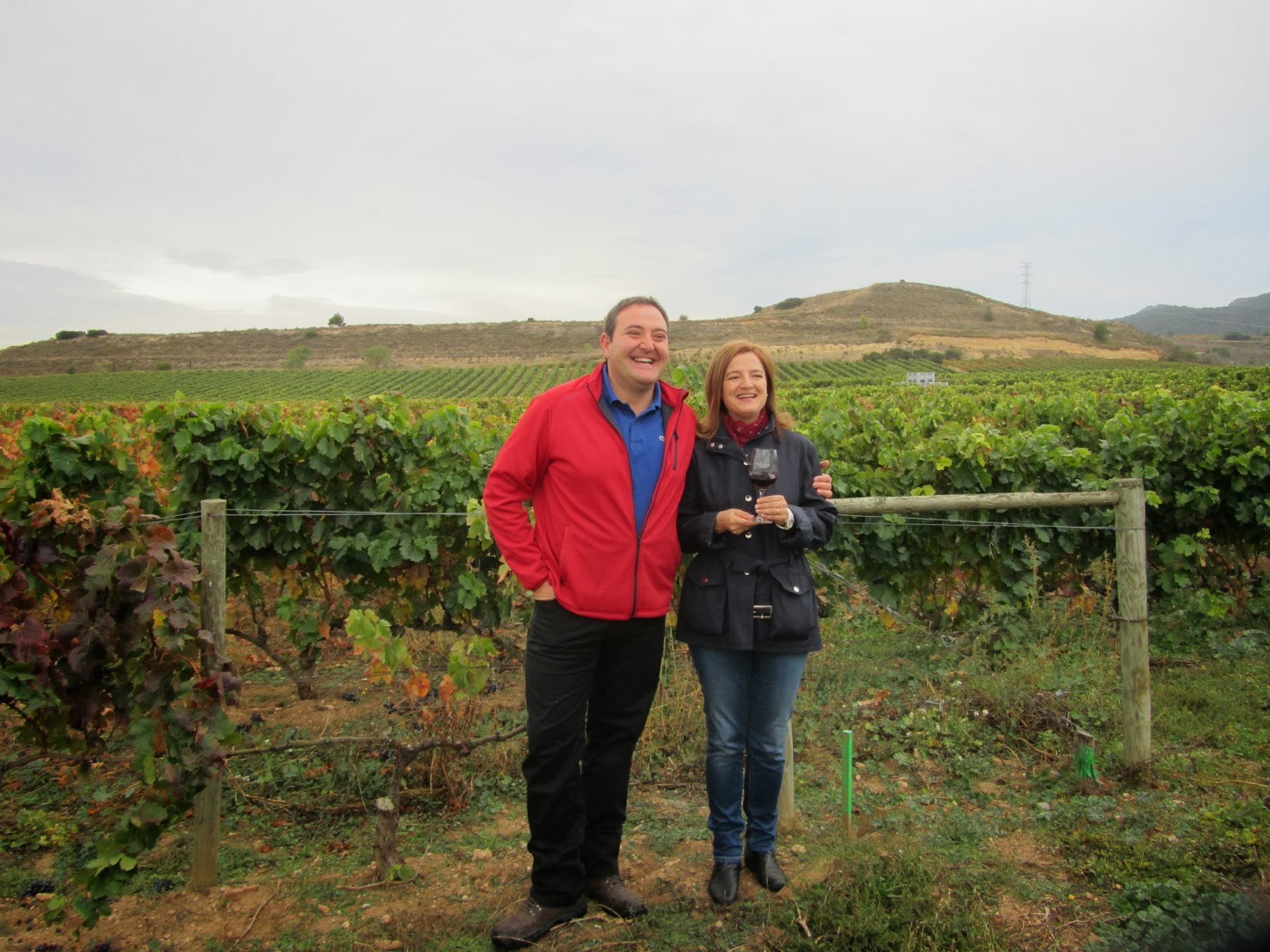
Shortly after I had struggled downstairs and checked out, two white passenger vans rolled up to the hotel and two female drivers emerged. They introduced themselves as Ana Muga (granddaughter of the founder) and Ana Lopezcano Lamarian, PR Manager. They loaded us up and we were off to the first stop on our tour.

Bodegas Muga, which was founded in Haro in 1932 by Isaac Muga Martinez and his wife Aurora Caño, owns 251 ha (620 acres) of vineyards distributed across five properties (El Estepal, La Loma, Baltracones, La Loma Alta, and Sajazarre) and controls another 370 acres through agreements with other area winegrowers. According to the Muga website, these mostly south-facing vineyards are located in the foothills of the Obaronses Mountain in the Rioja Alta region on primarily clay and limestone soils.


 |
| Doug Frost MS/MW mentally composing his next tasting note |

On our way into the vineyard I had seen white smoke rising into the sky from a metal contraption but had taken no further notice of it. On my return to the barn area, I saw that a table had been positioned in front of the barn and that a white tablecloth had been draped over said table. On the table were bottles of Cava, glasses and loaves of chunky bread. The white smoke was emanating from a fire which was being used to cook sausages for our breakfast. I had not planned on this. It was too early to eat something this heavy. Especially with lunch less than two hours away. Oh well.


The Cava served was the Muga Cava Conde de Haro, a blend of 95% Viura and 10% Malvasia sourced from north-facing, high-altitude vineyards located in the same area where the grapes for Prado Enea are grown. These grapes are fermented in large oak casks and sit on the post-second-fermentation lees for 14 months. According to K&L.com, Muga may be the first estate in the Rioja DO to grow, produce, bottle, and age Cava. This Cava was very refreshing with small, tight bubbles, nice acidity, and pear and apple fruit. Its zippiness brought me back to life.

 |
| Ana Lopezcano Lamarian and Ana Muga |

 |
| Umay and his little red book |
 |
| Robert smiling because he will soon be rid of us |
 |
| Isaac Muga -- can you hear me now? |
 |
| It's all good |
 |
| joie de vivre |
After observing the pickers in the field, partaking of a hearty breakfast, and hamming it up for the cameras, we loaded up and headed to the next stop -- the winery.
©Wine -- Mise en abyme
Tuesday, March 6, 2012
Vintage Rioja wine tasting at the Bull and Bear: Selected years, 1925-2001
The wines of Spain's Rioja region -- known and respected around the world -- owe their prominence to three factors: terroir, an affinity for oak, and the included grape varieties. Within the corpus of Rioja winemaking, there is an ongoing debate between "traditionalists" and "modernists" with the former favoring long aging in American oak barrels while the latter favor shorter aging periods in French oak. In order to investigate the two schools in detail, I endeavored to hold tastings of vintage wines from both schools (keeping in mind that the roots of the traditional school go far deeper in time than do the roots of the modernist school). This post reports on a vintage traditional tasting held at the Bull and Bear restaurant at Orlando's Waldorf Astoria on Friday, March 2nd, 2012.


The wines for the tasting were sourced from the cellars of @wineORL, Ron Siegel, and Steve Alcorn, the latter two being prominent Orlando-area collectors. The wines included in the tasting are shown ordered alphabetically by winery in the table below. Some points of note: (i) all of the wines were red; (ii) with two exceptions, all of the wines were from centenarian wineries (wineries plying their trade in the Rioja region for in excess of 100 years); (iii) a total of 20 wines were associated with the 10 wineries; and (iv) with five wines in the mix, the venerable house of Bodegas R. Lopez de Heredia is the source for 25% of the wines in the tasting.

The tasting was led by Andrew McNamara MS and was arranged in three flights from youngest to oldest. The youngest wines were all opened prior to the start of the tasting and allowed to breathe in the bottle. To protect against degradation of a potentialy delicate wine, the 1925 Marques de Riscal was only opened when he was ready for it to be poured.


The first flight was comprised of the the wines from the '80s and '90s plus the Vina Ardanza. The wines were tasted in the following order:
2001 Vina Ardanza
1999 CVNE Imperial
1997 La Rioja Alta Gran Reserva 904
1991 R. Lopez de Heredia Tondonia Gran Reserrva
1985 Bodega Montecillo Vina Monty Gran Reserva
1982 Muga Gran Reserva Rioja
1981 Bodega Montecillo Vina Monty Gran Reserva
The first three wines in the flight exhibited primary fruit and oak with dill a common characteristic. The Vina Ardanza was creamy and light with distinct red fruit character and was less than full-bodied while the La Rioja Alta exhibited vanilla, rhubarb, strawberry, and dill. Things improved on the palate as we moved deeper into the flight (with the exception of the '85 Montecillo which was corked) with the Muga (graphite, iron, certain sweetness) and the Tondonia (strawberries) showing very well. The Tondonia was elected wine of the flight.
The second flight was our '70s flight and the wines were tasted as follows:
1978 Marques de Caceres Rioja Gran Reserva
1978 Marques de Murrieta Castillo Ygay
1976 R. Lopez de Heredia Vina Bosconia
1973 La Rioja Alta Gran Reserva Cuvee Centenario
1976 Muga Gran Reserva
1970 R. Lopez de Heredia Vina Tondonia
1970 Faustino I Gran Reserva
The excellence that began to take hold in the wines of the 1990s continued into and through this flight. The dill and primary fruit evident in the early wines of flight 1 had resolved into raisins and coffee in this flight. The wine of the flight was the 1973 Rioja Alta Gran Reserva.
The final flight was orderd as follows:
1968 Vina Valoria
1968 R. Lopez de Heredia Vina Bosconia
1964 Faustino I Rioja Gran Reserva
1964 La Rioja Alta Gran Reserva
1961 R. Lopez de Heredia Vina Tondonia
1925 Marques de Riscal Reserva
The wines in this flight were all superb and completed the seduction of the tasting panel that had been initiated by the wines in the second half of the opening flight. The wines were mostly well balanced with smoke, chocolate, and dustiness on the palate being a common characteristic. The stunner was the 1925 Marques de Riscal which ended up as the wine of the flight and of the night. This wine was opened just prior to pouring because we were afraid that it might be too delicate to survive extended exposure to the elements; but it got better with the passage of time and three hours later it was running at top speed. Phenomenal. I need more of this wine.
This was an excellent tasting which converted all of the participants from tepid to full-throated fans of vintage traditional Rioja wines. Dhane Chesson, Vibrant Rioja Representative, participated in the tasting and was extremely pleased at the showing of her charges. Please visit Steve Alcorn's blog for individual tasting notes as well as for a discussion of the post-tasting dinner and wines.
© Wine -- The View From Orlando


The wines for the tasting were sourced from the cellars of @wineORL, Ron Siegel, and Steve Alcorn, the latter two being prominent Orlando-area collectors. The wines included in the tasting are shown ordered alphabetically by winery in the table below. Some points of note: (i) all of the wines were red; (ii) with two exceptions, all of the wines were from centenarian wineries (wineries plying their trade in the Rioja region for in excess of 100 years); (iii) a total of 20 wines were associated with the 10 wineries; and (iv) with five wines in the mix, the venerable house of Bodegas R. Lopez de Heredia is the source for 25% of the wines in the tasting.

The tasting was led by Andrew McNamara MS and was arranged in three flights from youngest to oldest. The youngest wines were all opened prior to the start of the tasting and allowed to breathe in the bottle. To protect against degradation of a potentialy delicate wine, the 1925 Marques de Riscal was only opened when he was ready for it to be poured.


The first flight was comprised of the the wines from the '80s and '90s plus the Vina Ardanza. The wines were tasted in the following order:
2001 Vina Ardanza
1999 CVNE Imperial
1997 La Rioja Alta Gran Reserva 904
1991 R. Lopez de Heredia Tondonia Gran Reserrva
1985 Bodega Montecillo Vina Monty Gran Reserva
1982 Muga Gran Reserva Rioja
1981 Bodega Montecillo Vina Monty Gran Reserva
The first three wines in the flight exhibited primary fruit and oak with dill a common characteristic. The Vina Ardanza was creamy and light with distinct red fruit character and was less than full-bodied while the La Rioja Alta exhibited vanilla, rhubarb, strawberry, and dill. Things improved on the palate as we moved deeper into the flight (with the exception of the '85 Montecillo which was corked) with the Muga (graphite, iron, certain sweetness) and the Tondonia (strawberries) showing very well. The Tondonia was elected wine of the flight.
The second flight was our '70s flight and the wines were tasted as follows:
1978 Marques de Caceres Rioja Gran Reserva
1978 Marques de Murrieta Castillo Ygay
1976 R. Lopez de Heredia Vina Bosconia
1973 La Rioja Alta Gran Reserva Cuvee Centenario
1976 Muga Gran Reserva
1970 R. Lopez de Heredia Vina Tondonia
1970 Faustino I Gran Reserva
The excellence that began to take hold in the wines of the 1990s continued into and through this flight. The dill and primary fruit evident in the early wines of flight 1 had resolved into raisins and coffee in this flight. The wine of the flight was the 1973 Rioja Alta Gran Reserva.
The final flight was orderd as follows:
1968 Vina Valoria
1968 R. Lopez de Heredia Vina Bosconia
1964 Faustino I Rioja Gran Reserva
1964 La Rioja Alta Gran Reserva
1961 R. Lopez de Heredia Vina Tondonia
1925 Marques de Riscal Reserva
The wines in this flight were all superb and completed the seduction of the tasting panel that had been initiated by the wines in the second half of the opening flight. The wines were mostly well balanced with smoke, chocolate, and dustiness on the palate being a common characteristic. The stunner was the 1925 Marques de Riscal which ended up as the wine of the flight and of the night. This wine was opened just prior to pouring because we were afraid that it might be too delicate to survive extended exposure to the elements; but it got better with the passage of time and three hours later it was running at top speed. Phenomenal. I need more of this wine.
 |
| Andrew McNamara MS, Premier Beverages and Dhane Chesson, Vibrant Rioja |
This was an excellent tasting which converted all of the participants from tepid to full-throated fans of vintage traditional Rioja wines. Dhane Chesson, Vibrant Rioja Representative, participated in the tasting and was extremely pleased at the showing of her charges. Please visit Steve Alcorn's blog for individual tasting notes as well as for a discussion of the post-tasting dinner and wines.
© Wine -- The View From Orlando
Tuesday, February 16, 2010
Clash of the Spanish Titans: Bodegas Muga
In a previous posting (Wednesday, February 10), I posited that the Wine Barn's Clash of the Spanish Titans wine tasting event delivered in terms of wine quality but under-delivered in terms of wine knowledge. In my view, the winery representatives (David Espinar of Bodegas Emilio Moro and Juan Muga of Bodegas Muga), given the opportunity, would have spent time talking about the wine regions and the wineries in greater detail than the format actually permitted. I will attempt to show the kinds of material these gentlemen would have probably covered. I will cover Bodegas Muga in this posting and Bodegas Emilio Moro in a subsequent post.
Bodegas Muga is located in the Rioja region (named after the Oja River, Rio Oja in Spanish) of Spain, a region with a winemaking culture dating back to the 9th century and codified into law since 1600. Spanish wine law assigns levels to the various wine growing regions and and Rioja was the first region to receive the Denominación de Origen Calcificada (qualified designation of origin) classification. Approximately 90% of the wine produced in Rioja is red with a typical blend of 70% Tinto Fino (local clone of Tempranillo), 15% Garnacha (Grenache), 7.5% Graziano, and 7.5% Mazuelo. Garnacho is used to add flesh to the leaner Tempranillo.
With its proximity to France, Riojan wines have long been subject to influence from the Bordelais. This influence became most pronounced when the French root stock was wiped out by phylloxera causing Bordeaux negociants to seek out alternative sources of supply. This French influence, especially evident in the use of oak, is one of the factors that set Riojan wines apart from other Spanish wines.
Grapes for Riojan wines are grown in three sub-regions: Rioja Alta, Rioja Alavesa, and Rioja Baja. Riojas are made in traditional (oakiness) and contemporary (bigger, more concentrated wine) styles. The key to a quality Rioja is its ageability.
 Source: http://www.elcoto.com/en/docrioja/doc2.htm
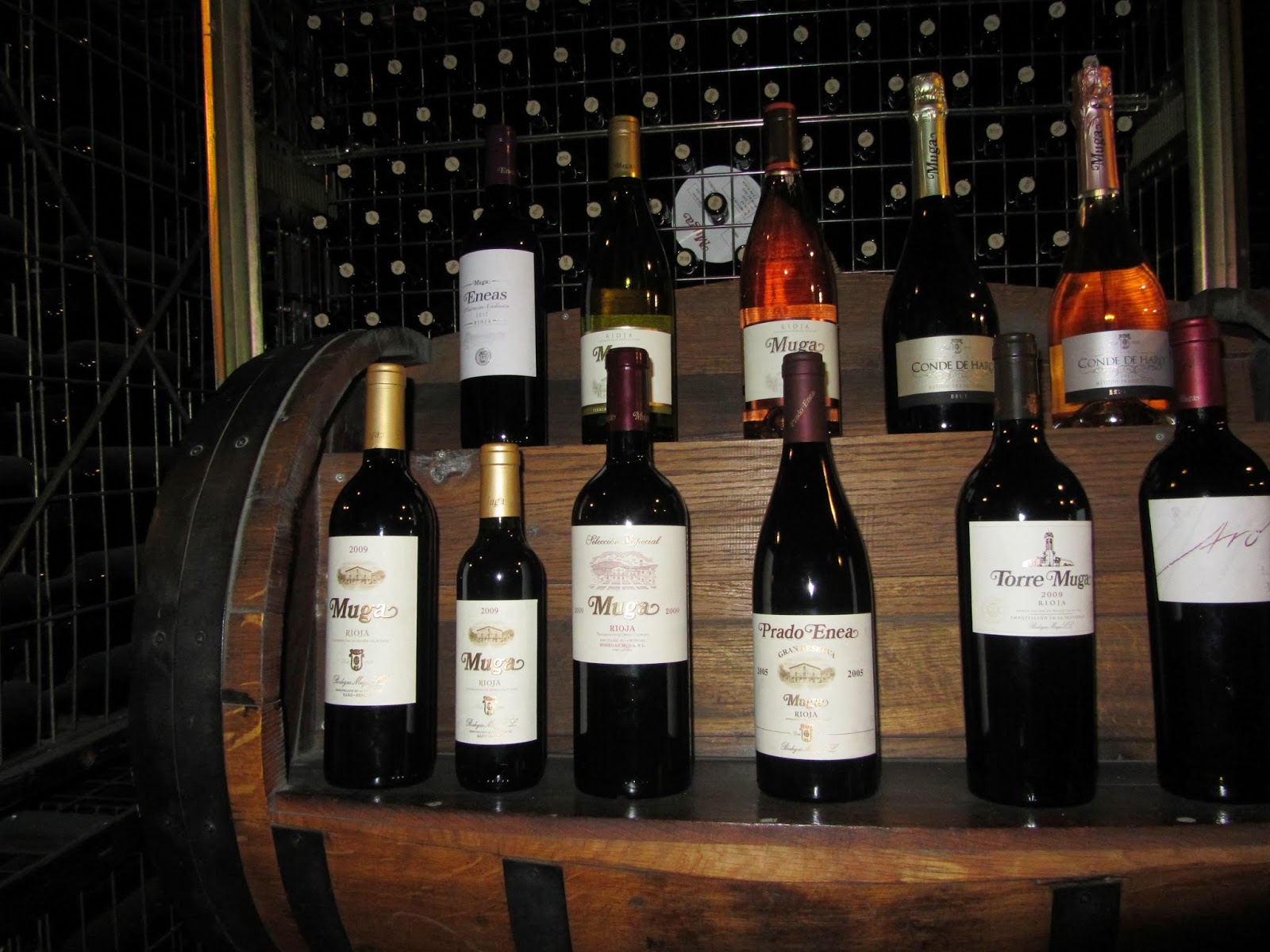
Bodegas Muga, founded in 1932 by a husband and wife team of the same name, has vineyards that are located in the calcareous/clay soils of the Obarenes Mountains in Rioja Alta. The soil, vineyard architecture, and climactic conditions combine to provide ideal conditions for the growth of high-quality grapes. Bodegas Muga is a traditionalist Rioja producer and uses American and French oak (from its own cooperage) throughout the winemaking process. The Muga non-red product lineup is shown below:
- White -- Viura (90%), Malvasia (10%)
- Rose -- Garnacha (60%), Viura (30%), Tempranillo (10%)
- Reserva -- Tempranillo (70%), Garnacha (20%), Mazuelo (5%), Graciano (5%); aging 6, 24, and 12 months, respectively, in vats, barrels, and bottle
- Reserva Seleccion Especial -- Tempranillo (70%), Garnacha (20%), Mazuelo (5%), Graciano (5%); 6, 30, and 12 months aging, respectively, in vats, barrels, and bottle
- Prado Enea Gran Reserva -- Tempranillo (80%), Garnacha, Mazuelo, and Graciano (20%); 6, 36, and 36 months aging, respectively, in vats, barrels, and bottle
- Torre Muga -- Tempranillo (75%), Mazuelo (15%), Graciano (10%); 6, 12, and 12 months aging, respectively, in vats, barrels, and bottle
- Aro Muga -- Tempranillo (70%), Graciano (30%); 6, 18, and 12 months aging, respectively, in vats, barrels, and bottle.
Subscribe to:
Posts (Atom)