In mid-November 2013, Wine Spectator delighted the hearts of all Spanish wine lovers (as well as the hearts of retailers who had the wine in stock) by naming the Cune Imperial Gran Reserva 2004 as its Wine of the Year. In speaking about the award in The European (Rioja's Cune Imperial is named wine of the year, 19 Novenber, 2013, www.the-european.eu), Maria Umatia, Marketing Director at CVNE, saw the award as being " ... not only good for Cune but for the region of Rioja and Spain as well." I checked in with a few members of the Rioja wine industry to see if they shared her sentiments and received valuable input from Manuel Muga, Manager at Bodegas Muga, Rodolfo Bastida, Director General, Bodegas Ramón Bilbao, and Amaya Cebrian, PR Manager, Bodegas LAN.
As is to be expected, the respondents heard the news of the award in a variety of ways. For example, Rodolfo heard about it through Twitter while Amaya read it when it was first published by Wine Spectator. If these respondents are representative of broad Rioja sentiments, then the euphoria that was experienced by Cune is pervasive. The overwhelming feeling is that this was a great recognition and vindication of Rioja -- specifically - and Spanish wine -- in general -- quality.
Riojan winemakers were going about their under-appreciated way, making what they had to feel was under-appreciated wine, when the Wine Spectator bolt from the blue struck. Maria, in my conversation with her, as well as in the European piece, admitted to surprise at the news. Our respondents were similarly -- pleasantly -- surprised. While surprised, Rodolfo had been noticing a trend towards the classic wine style, with better scores being awarded of late. Amaya expresed similar sentiments while noting that the classics from Rioja, and their quality-price relations, are "more and more valued by these experts."
I asked the respondents whether Cune's award would impact their operations in any way. Rodolfo saw no change in his future as a result of the award but hoped that, in the long term, they would be the beneficiaries of additional press attention. Amaya saw no impact on operations but hoped that the award would help bring attention to Bodegas LANs Gran Reserva. Manuel felt that giving the award to Cune made it easier for WS to place the Muga Reserva Seleccion Especial 2009 onto the Highly Recommended Wines list in the September 2013 issue of the magazine.
None of the respondents foresaw any change in the way they operate as a result of the award. Manuel saw it as being more motivational than anything else. "We will keep on doing what we do at the moment but with a little more motivation as we feel the international recognition for the region."
I queried the respondents as to whether this award placed any pressure on them; either as individuals or for their enterprise asa whole. No one felt that the award brought additional pressure beyond their normal goals and operating parameters. Rather than bringing pressure, the award, Manuel reiterated, was a "great recognition of the long background and the big quality of the wines" that Rioja has been producing for so many years. Amaya thought that some owners might say to their winemakers "I want one of those" but, she understated, "... this is not so easy ..."
The bottom line here is that everyone appears to be happy. "If not me, then let it be someone from my region. If not someone from my region, then let it be a Spanish wine." Each of the respondents had reached out to Cune to congratulate them on the award. Amaya and Rafael had sent congrats through Social Media and Rafael had supplemented this with a call to the winemaker. Manuel has spoken to various levels in Cune and has congratulated the Cune President "who we, of course, know well and appreciate."
In my conversations with Maria about how the award had been received in Rioja, Maria had said: "If I were in their place, I would be proud of a Rioja wine being top wine. I think that they feel that way." She had her colleagues pegged perfectly.
©Wine -- Mise en abyme
Showing posts with label Cune. Show all posts
Showing posts with label Cune. Show all posts
Wednesday, December 11, 2013

Tuesday, December 3, 2013
Cune's perspective on its Imperial Rioja Gran Reserva 2004 being named WS Wine of the Year
In mid-November 2013, Wine Spectator delighted the hearts of all Spanish wine lovers (as well as the hearts of retailers who had the wine in stock) by naming the Cune Imperial Gran Reserva 2004 as its Wine of the Year. Having just returned from a trip to Rioja -- a trip during which I visited and toured the Cune facilities in Haro -- I was curious as to whether the winery had perceived this wine as extraordinary prior to the acclaim and also wondered about their response to the news. In order to satisfy this curiosity I gained the approval of Maria Urrutia Ybarra to submit a number of questions for her e-mailed response. First, some background on Cune's Imperial.

As noted in a prior post, Imperial is one of many Cune labels but, according to Maria, it "has always been our flagship wine. It is a wine we only produce in vintages which are classified as excellent." The wine was first introduced in the 1920s and got its name after a special production for the English market in a bottle called the Imperial pint (approximately 1/2 liter). Grapes for the wine are sourced from Cune's 28-ha Villaba vineyard in Rioja Alta as well as selected vineyards in the neighboring communes of Briones and Montalvo. The Villaba vineyard is planted to 85% Tempranillo plus Graciano and Mazuelo. The rootstock is Richter-110 and the vines are hung on wires in rows that run northeast to southwest. The layout (i) maximizes the vines' exposure to sunlight, (ii) enables manual access to each vine, and (iii) positions the vines favorably vis a vis the strong, frequent north winds. Average vine age is 25+ years and average yield is 5000 kg/ha. Imperial wines are aged in American and French (30% today) oak barrels of approximately two years of age for a period of between 2 and 3 years. The Imperial blend is traditionally 85% Tempranillo, 10% Graciano, and 5% Mazuelo.
Following are the questions to, and responses from, Maria. The material has been edited for clarity and flow.
From Cune's perspective, what are the outstanding characteristics of the Imperial Gran Reserva 2004?
Really the 2004 is as unique as the rest of Gran Reserva vintages. From generation to generation we have striven to make the best wine possible in each and every harvest.
What was special about 2004 as a vintage year?
The year 2004 was excellent with rain, cold and a hot summer. Let us say that it had all of the key factors to give birth to excellent quality grapes and, therefore, excellent wine.
How did the team feel about the Gran Reserva 2004 at the time of bottling? Was there any inkling at the time that the wine would attain these heights?
With all the wines we produce we always strive for the best quality and bet for an excellent result.
Was there any special processing or aging of this wine as opposed to previous or following vintages?
No.
How and when did you first know that the wine had been so honored?
We heard the news on Friday around 5 o'clock Spanish time. We were thrilled. We could not believe it. A friend from the U.S. called to inform us. He had seen it on TV.
What was your initial reaction?
Shock. Happiness. Joy. Amazement. Thrilled. Really no words can explain.
How was the information shared with staff and what was their reaction?
The information was shared straight away. This award is not only for a wine but for a whole tradition of producing wine where everyone has a hand in it. The reaction was joy.
Did your group celebrate? How?
It was Friday afternoon and most people had gone for the day. I did celebrate with my family, my dad, actual Chairman of CVNE, and my brothers. Our winemaking team was having lunch together to celebrate the end of harvest and they did a double celebration.
What was your perception of the worldwide response?
Amazing. In a few hours we had responses from everywhere. It was amazing how quickly this good news had spread.
Has things changed for the company since the announcement? How so?
Things have not changed. Now we have to focus on the fact that the award is not only great news for CVNE but for all the wines of Rioja. We have to try to communicate our history and our brand and make our wines known worldwide.
What do you see as the going-forward impact of this award on CVNE? On Rioja as a whole?
As I said before, from one generation to another, we have always worried about producing the best wine. The new generation added another concern to this (very short) list; to make our wines known across the world.
This is the first time that a Spanish winery has received this award. It is very unique. I think this recognition puts Spanish wines at a very top level worldwide.
CVNEs crest is, essentially, Spain's flag. Not an aristocrat's shield. Or a single person's signature. We are Spain's ambassador. And Imperial is the wine from Spain.
How did your fellow Rioja wine companies react to the announcement?
If I were in their place I would be proud of a Rioja wine being top wine. I think that they feel that way. This award helps Rioja, not just a winery.
Is CVNE going to be doing anything differently after receiving this award?
Different? Not really. We cannot relax. Now we have to continue producing excellent wines. We are a family business. My great grandparents left us a great legacy and we have to keep it and pass it on to the new generation.
**************************************************************************************************
Summarizing, Maria feels that the 2004 Imperial Gran Reserva is just as good as every Reserva they have ever made because their creed is to make the best wines possible every time. As a matter of fact, this recognition is really just the world catching up with what has been going on in Rioja for a very long time. She views the recognition as reflecting positively on Cune, of course, but also placing Rioja and Spain in the world's spotlight. While thrilled with the recognition of the great job that they have been doing, they will continue to function in the way that they always have, with the additional goal of making Cune wines known the world over.
I would like to express my gratitude to Maria and the Cune organization for being responsive to my request -- and in such a timely fashion -- especially given the end of harvest conditions as well as the hubbub around the Wine of the Year recognition.
I have solicited responses from selected Haro producers as to the meaning of the award from their perspectives and hope to report on that in the near future.
©Wine -- Mise en abyme

As noted in a prior post, Imperial is one of many Cune labels but, according to Maria, it "has always been our flagship wine. It is a wine we only produce in vintages which are classified as excellent." The wine was first introduced in the 1920s and got its name after a special production for the English market in a bottle called the Imperial pint (approximately 1/2 liter). Grapes for the wine are sourced from Cune's 28-ha Villaba vineyard in Rioja Alta as well as selected vineyards in the neighboring communes of Briones and Montalvo. The Villaba vineyard is planted to 85% Tempranillo plus Graciano and Mazuelo. The rootstock is Richter-110 and the vines are hung on wires in rows that run northeast to southwest. The layout (i) maximizes the vines' exposure to sunlight, (ii) enables manual access to each vine, and (iii) positions the vines favorably vis a vis the strong, frequent north winds. Average vine age is 25+ years and average yield is 5000 kg/ha. Imperial wines are aged in American and French (30% today) oak barrels of approximately two years of age for a period of between 2 and 3 years. The Imperial blend is traditionally 85% Tempranillo, 10% Graciano, and 5% Mazuelo.
Following are the questions to, and responses from, Maria. The material has been edited for clarity and flow.
From Cune's perspective, what are the outstanding characteristics of the Imperial Gran Reserva 2004?
Really the 2004 is as unique as the rest of Gran Reserva vintages. From generation to generation we have striven to make the best wine possible in each and every harvest.
What was special about 2004 as a vintage year?
The year 2004 was excellent with rain, cold and a hot summer. Let us say that it had all of the key factors to give birth to excellent quality grapes and, therefore, excellent wine.
How did the team feel about the Gran Reserva 2004 at the time of bottling? Was there any inkling at the time that the wine would attain these heights?
With all the wines we produce we always strive for the best quality and bet for an excellent result.
Was there any special processing or aging of this wine as opposed to previous or following vintages?
No.
How and when did you first know that the wine had been so honored?
We heard the news on Friday around 5 o'clock Spanish time. We were thrilled. We could not believe it. A friend from the U.S. called to inform us. He had seen it on TV.
What was your initial reaction?
Shock. Happiness. Joy. Amazement. Thrilled. Really no words can explain.
How was the information shared with staff and what was their reaction?
The information was shared straight away. This award is not only for a wine but for a whole tradition of producing wine where everyone has a hand in it. The reaction was joy.
Did your group celebrate? How?
It was Friday afternoon and most people had gone for the day. I did celebrate with my family, my dad, actual Chairman of CVNE, and my brothers. Our winemaking team was having lunch together to celebrate the end of harvest and they did a double celebration.
What was your perception of the worldwide response?
Amazing. In a few hours we had responses from everywhere. It was amazing how quickly this good news had spread.
Has things changed for the company since the announcement? How so?
Things have not changed. Now we have to focus on the fact that the award is not only great news for CVNE but for all the wines of Rioja. We have to try to communicate our history and our brand and make our wines known worldwide.
What do you see as the going-forward impact of this award on CVNE? On Rioja as a whole?
As I said before, from one generation to another, we have always worried about producing the best wine. The new generation added another concern to this (very short) list; to make our wines known across the world.
This is the first time that a Spanish winery has received this award. It is very unique. I think this recognition puts Spanish wines at a very top level worldwide.
CVNEs crest is, essentially, Spain's flag. Not an aristocrat's shield. Or a single person's signature. We are Spain's ambassador. And Imperial is the wine from Spain.
How did your fellow Rioja wine companies react to the announcement?
If I were in their place I would be proud of a Rioja wine being top wine. I think that they feel that way. This award helps Rioja, not just a winery.
Is CVNE going to be doing anything differently after receiving this award?
Different? Not really. We cannot relax. Now we have to continue producing excellent wines. We are a family business. My great grandparents left us a great legacy and we have to keep it and pass it on to the new generation.
Summarizing, Maria feels that the 2004 Imperial Gran Reserva is just as good as every Reserva they have ever made because their creed is to make the best wines possible every time. As a matter of fact, this recognition is really just the world catching up with what has been going on in Rioja for a very long time. She views the recognition as reflecting positively on Cune, of course, but also placing Rioja and Spain in the world's spotlight. While thrilled with the recognition of the great job that they have been doing, they will continue to function in the way that they always have, with the additional goal of making Cune wines known the world over.
I would like to express my gratitude to Maria and the Cune organization for being responsive to my request -- and in such a timely fashion -- especially given the end of harvest conditions as well as the hubbub around the Wine of the Year recognition.
I have solicited responses from selected Haro producers as to the meaning of the award from their perspectives and hope to report on that in the near future.
©Wine -- Mise en abyme
Sunday, November 17, 2013
Old Riojas don't die. They just get better with age #DWCC13
During the course of the lunch at Cune, our hosts popped open a couple of bottles of 1976 Imperial Gran Reserva and they were sublime.

After noting our interest in these wines, the Cune team circulated a list of the aged wines that they had for sale in the wine shop. Suitably impressed, and remembering our paltry fare from the previous night, I bought a bottle of the 1976 Imperial Gran Reserva and a bottle of the 1981 Viña Real Gran Reserva for us to consume at our hotel that evening. I was not going to be caught short again.
We got home very late after the RODA dinner (a long, but phenomenal, event) and repaired to our designated spot, the private lounge that is separated from the bar by the small reception area and elevator bank. The willing participants included Umay, Roger, and me. No Robert. I heard his voice over at the bar so I went over to let him know that we were awaiting his presence ... and he begged off. Weakly. I looked around for other potential victims and spotted Juan Martinez and David Marcos, the team leaders from Bodegas Gomez Cruzado. These guys had given us a tour of their facility -- and fed us -- just the day before. They were surely deserving of this honor. But first, what were they doing in a hotel in the middle of Haro after midnight. I asked them (presumptuous, I know). They had guys out harvesting at that time and had taken a break from receiving grapes to grab a coffee. Never one to drink coffee when wine was available, I invited them to come over and join us in drinking the two old Riojas. After looking at each other hesitatingly, the pull of the wine was irresistible (or they were just too kind to turn us down out of hand) and they followed us back to our enclave.
I began the proceedings by attempting to open the Imperial but the cork was soft and broke into two pieces. Now I like to think that I am pretty handy in recovering cork fragments but my attempt to retrieve the piece left in this bottle ran hard aground and Roger took over. He was able to get the remnant out but some of the detritus fell into the wine. We had no straining or decanting equipment so we powered ahead figuring that we would take care of the bits as we encountered them.

The Imperial 1976 Gran Reserva was light brown in color with caramel highlights. It had an opulent nose with aroma notes of orange liqueur, wet leaves, iodine, tobacco, and hints of floral elegance. Silky on the palate with bracing acidity. Additional dried fruit aromas and flavors contributed significantly to this wines complexity. While not up to the level of the bottle we had had at Cune earlier in the day, the 1976 was a blockbuster.
We next moved to the 1981 Viña Real Gran Reserva This was garnet at the core with an orange rim. A compelling nose with a core of dried red fruit, leather, and tea leaves leading the way to an orange zest. Enticing on the palate with a solid core of fruit, bright acidity, and caressing tannins. Classy and energetic with a long life ahead.


The Gomez Cruzado guys were fully engaged by this time. They were snapping pictures of the bottles and telling tales of bygone years. They did not want the night to end. They conferred with each other in muffled tones and one left and came back shortly with a bottle of 1964 Gomez Cruzado Rioja Gran Reserva Honorable. This was a fantastic bottle of wine and we could not believe that we were having the honor of tasting this bottle with these gentlemen at this hour in the -- now -- morning.
The Honorable had a pale garnet color with an orange rim. It had generous amounts of dried fruits such as apricots and orange zest accompanying tobacco, leather, and sweet spice. There was a consensus that the nose was reminiscent of a good old Tokaji. Graceful and alluring yet exuberant and penetratingly rich. Still fresh and energetic, displaying well-layered flavors lifted by racy acidity. A long, zesty aftertaste.
.jpg)
This was an awesome evening. Great wines and, just as importantly, great and insightful discourse with two leaders of a centenarian winery. We quizzed them at length on a wide range of topics and got the kind of dialog that you can only get at a bar at 3:00 am.
.jpg)
And all this on top of the RODA dinner.
©Wine -- Mise en abyme

After noting our interest in these wines, the Cune team circulated a list of the aged wines that they had for sale in the wine shop. Suitably impressed, and remembering our paltry fare from the previous night, I bought a bottle of the 1976 Imperial Gran Reserva and a bottle of the 1981 Viña Real Gran Reserva for us to consume at our hotel that evening. I was not going to be caught short again.
We got home very late after the RODA dinner (a long, but phenomenal, event) and repaired to our designated spot, the private lounge that is separated from the bar by the small reception area and elevator bank. The willing participants included Umay, Roger, and me. No Robert. I heard his voice over at the bar so I went over to let him know that we were awaiting his presence ... and he begged off. Weakly. I looked around for other potential victims and spotted Juan Martinez and David Marcos, the team leaders from Bodegas Gomez Cruzado. These guys had given us a tour of their facility -- and fed us -- just the day before. They were surely deserving of this honor. But first, what were they doing in a hotel in the middle of Haro after midnight. I asked them (presumptuous, I know). They had guys out harvesting at that time and had taken a break from receiving grapes to grab a coffee. Never one to drink coffee when wine was available, I invited them to come over and join us in drinking the two old Riojas. After looking at each other hesitatingly, the pull of the wine was irresistible (or they were just too kind to turn us down out of hand) and they followed us back to our enclave.
I began the proceedings by attempting to open the Imperial but the cork was soft and broke into two pieces. Now I like to think that I am pretty handy in recovering cork fragments but my attempt to retrieve the piece left in this bottle ran hard aground and Roger took over. He was able to get the remnant out but some of the detritus fell into the wine. We had no straining or decanting equipment so we powered ahead figuring that we would take care of the bits as we encountered them.

The Imperial 1976 Gran Reserva was light brown in color with caramel highlights. It had an opulent nose with aroma notes of orange liqueur, wet leaves, iodine, tobacco, and hints of floral elegance. Silky on the palate with bracing acidity. Additional dried fruit aromas and flavors contributed significantly to this wines complexity. While not up to the level of the bottle we had had at Cune earlier in the day, the 1976 was a blockbuster.
We next moved to the 1981 Viña Real Gran Reserva This was garnet at the core with an orange rim. A compelling nose with a core of dried red fruit, leather, and tea leaves leading the way to an orange zest. Enticing on the palate with a solid core of fruit, bright acidity, and caressing tannins. Classy and energetic with a long life ahead.


The Gomez Cruzado guys were fully engaged by this time. They were snapping pictures of the bottles and telling tales of bygone years. They did not want the night to end. They conferred with each other in muffled tones and one left and came back shortly with a bottle of 1964 Gomez Cruzado Rioja Gran Reserva Honorable. This was a fantastic bottle of wine and we could not believe that we were having the honor of tasting this bottle with these gentlemen at this hour in the -- now -- morning.
The Honorable had a pale garnet color with an orange rim. It had generous amounts of dried fruits such as apricots and orange zest accompanying tobacco, leather, and sweet spice. There was a consensus that the nose was reminiscent of a good old Tokaji. Graceful and alluring yet exuberant and penetratingly rich. Still fresh and energetic, displaying well-layered flavors lifted by racy acidity. A long, zesty aftertaste.
.jpg)
This was an awesome evening. Great wines and, just as importantly, great and insightful discourse with two leaders of a centenarian winery. We quizzed them at length on a wide range of topics and got the kind of dialog that you can only get at a bar at 3:00 am.
.jpg)
And all this on top of the RODA dinner.
Friday, November 8, 2013
Tasting the Cune wines: Press Trip, Haro, Rioja #DWCC13
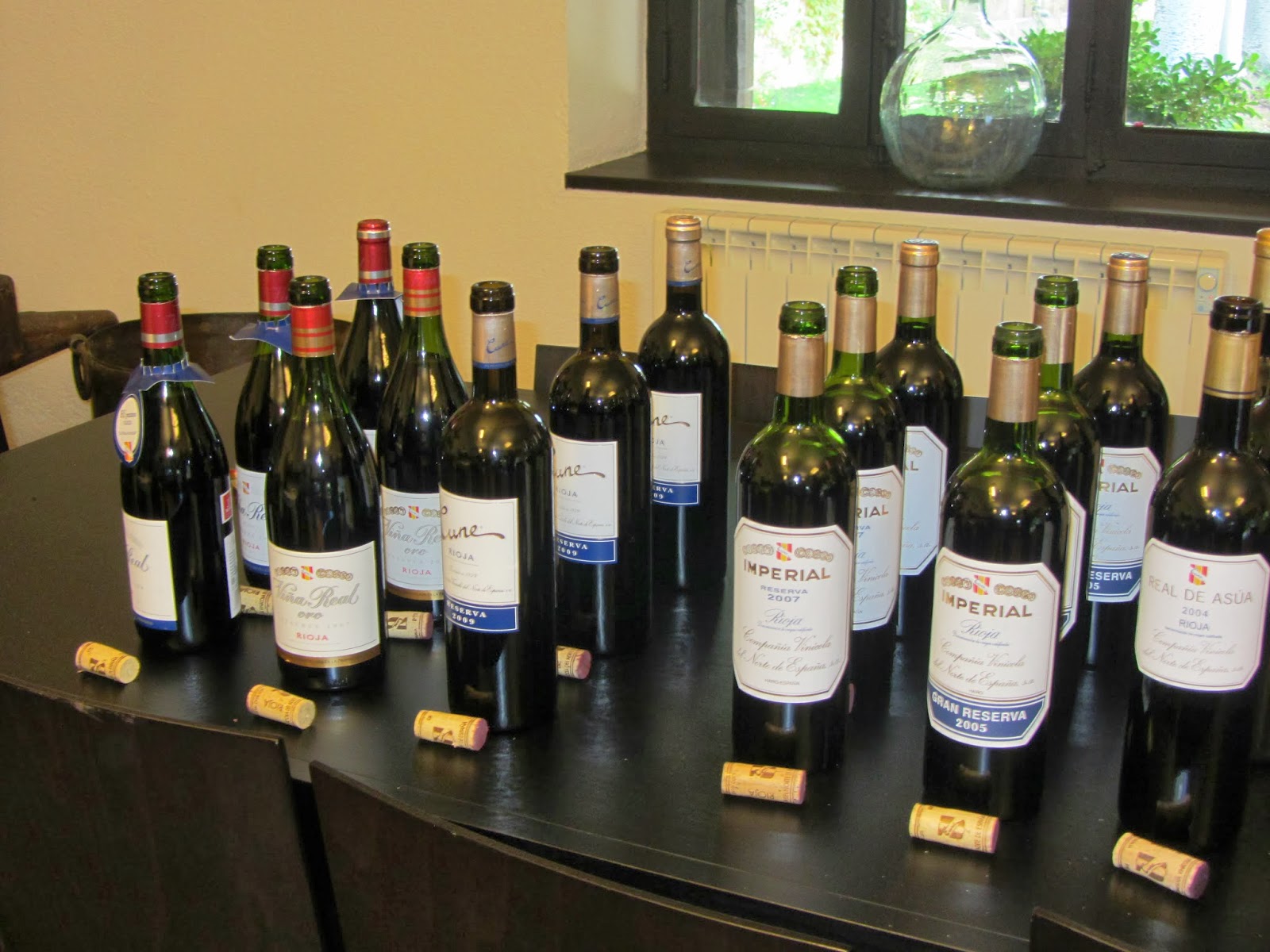
In my previous post I detailed the Wine Bloggers' tour of the Cune winery in the Station District in Haro. At the conclusion of the tour, we were led to the tasting room where we were joined by the other Maria, the winemaker. The wines which were tasted at this sit-down session follow.

Monopole 2012: Made from Rioja Alta Viura fruit. Fermented in temperature-controlled, stainless steel tanks. Light golden color. Florality along with aromas of pineapple, pear, apple, and green papaya. Refreshing on the palate with citrus notes. Easy drinking.
White 2011: The White label is only two years old and features barrel-fermented Viura juice. The grapes are cold-macerated for 6 to 8 hours prior to a light press after which the juice is fermented in new American and French oak barrels for 15 to 20 days. The wine rests on its lees -- with occasional stirring -- until it is racked off prior to bottling. Coffee and petrol aromas. Muted flavors. Spicy. Medium tannin and acidity.
Cune Rosada 2012: Made from Rioja Alta Tempranillo grapes which are kept at low temperature in stainless steel tanks for 24 - 48 hours before the juice is extracted. Fermentation occurs over an 8-day period. Strawberry color. Red berry and cherry confection aromas and flavors. Red fruit and fruit rollups. Reeks of carbonic maceration. Fresh and refreshing. Nice and easy does it.
Viña Real Crianza 2009: Blend of Rioja Alavesa fruit that is picked from bush vines that are planted on limestone and clay soils. The must is fermented in stainless steel tanks and then placed in American and French oak casks for malolactic fermentation. On the nose, richness, plums and other black fruits, vanilla, baking spices and sweet tobacco. Red fruit on the palate. Good levels of acidity. No rough edges. Persistent. Silky tannins. Balanced. Excellent wine.
Viña Real Reserva 2007: Hand-picked Rioja Alavesa grapes from low-yielding plots are macerated prior to alcoholic fermentation in stainless steel tanks. The wine is aged in American and French oak casks for 2 years prior to bottling. Herbs, dried thyme, forest floor, tea, baking spices. Bright red fruit. Late-arriving tannins. Elegant with a full, round mouthfeel.
Viña Real Gran Reserva 2005: Tempranillo-dominant blend made from high-quality grapes sourced from Viña Real's Rioja Alavesa vineyards. Fermented in stainless steel tanks with frequent pump-overs. Malolactic fermentation in American and French oak barrels. Racking and egg-white fining prior to bottling. Black fruits, leather, baking spices, vanilla, and cigar box. A little bit of jamminess on the fruit. Brighter than the Reserva. Silky tannins. Elegant.
Cune 2009: 18-month maturation in French and American oak post alcoholic and malolactic fermentation. Black fruits, tar, baking spices, and cinnamon. Oiliness. A little bit of VA. Red and black fruits on the palate. Tamarind.
Imperial Reserva 2007: Grapes sourced from vineyards around the village of Villalba in Rioja Alta. Fermentation in oak vats and stainless steel tanks. Matured in new and used American and French oak for 2 years followed by an additional 2 years in bottle. Violets, olives, plum, licorice, tar. Round on the palate with supple tannins. Great acidity. Persistent. Elegant and balanced. Long, sour finish with a little bit of heat.
Imperial Gran Reserva 2005: Grapes sourced from 20-year-old vines in Villalba and Haro. Low-yielding, bush-pruned vines. Cold maceration followed by cold-temperature fermentation and malolactic fermentation. Matured in American and French oak prior to bottling. Black fruit, tar, violets. Darker and heavier than the Reserva with grippy tannins. Can keep for decades.
Real de Asúa 2004: Grapes from low-yielding old vines from the best vineyards in Villalba and Haro are subjected to double selection and then fermented in oak vats. Post-fermentation maceration for 5 weeks with pump-overs and punching down of cap. Aged in 100% French oak barrels for 10 - 18 months. This wine is made in a more modern style. Penfolds Grange nose. Mint, eucalyptus, chocolate, coffee, leather, cigar box, tobacco. Structured.
©Wine -- Mise en abyme
Monopole 2012: Made from Rioja Alta Viura fruit. Fermented in temperature-controlled, stainless steel tanks. Light golden color. Florality along with aromas of pineapple, pear, apple, and green papaya. Refreshing on the palate with citrus notes. Easy drinking.
White 2011: The White label is only two years old and features barrel-fermented Viura juice. The grapes are cold-macerated for 6 to 8 hours prior to a light press after which the juice is fermented in new American and French oak barrels for 15 to 20 days. The wine rests on its lees -- with occasional stirring -- until it is racked off prior to bottling. Coffee and petrol aromas. Muted flavors. Spicy. Medium tannin and acidity.
Cune Rosada 2012: Made from Rioja Alta Tempranillo grapes which are kept at low temperature in stainless steel tanks for 24 - 48 hours before the juice is extracted. Fermentation occurs over an 8-day period. Strawberry color. Red berry and cherry confection aromas and flavors. Red fruit and fruit rollups. Reeks of carbonic maceration. Fresh and refreshing. Nice and easy does it.
Viña Real Crianza 2009: Blend of Rioja Alavesa fruit that is picked from bush vines that are planted on limestone and clay soils. The must is fermented in stainless steel tanks and then placed in American and French oak casks for malolactic fermentation. On the nose, richness, plums and other black fruits, vanilla, baking spices and sweet tobacco. Red fruit on the palate. Good levels of acidity. No rough edges. Persistent. Silky tannins. Balanced. Excellent wine.
Viña Real Reserva 2007: Hand-picked Rioja Alavesa grapes from low-yielding plots are macerated prior to alcoholic fermentation in stainless steel tanks. The wine is aged in American and French oak casks for 2 years prior to bottling. Herbs, dried thyme, forest floor, tea, baking spices. Bright red fruit. Late-arriving tannins. Elegant with a full, round mouthfeel.
Viña Real Gran Reserva 2005: Tempranillo-dominant blend made from high-quality grapes sourced from Viña Real's Rioja Alavesa vineyards. Fermented in stainless steel tanks with frequent pump-overs. Malolactic fermentation in American and French oak barrels. Racking and egg-white fining prior to bottling. Black fruits, leather, baking spices, vanilla, and cigar box. A little bit of jamminess on the fruit. Brighter than the Reserva. Silky tannins. Elegant.
Cune 2009: 18-month maturation in French and American oak post alcoholic and malolactic fermentation. Black fruits, tar, baking spices, and cinnamon. Oiliness. A little bit of VA. Red and black fruits on the palate. Tamarind.
Imperial Reserva 2007: Grapes sourced from vineyards around the village of Villalba in Rioja Alta. Fermentation in oak vats and stainless steel tanks. Matured in new and used American and French oak for 2 years followed by an additional 2 years in bottle. Violets, olives, plum, licorice, tar. Round on the palate with supple tannins. Great acidity. Persistent. Elegant and balanced. Long, sour finish with a little bit of heat.
Imperial Gran Reserva 2005: Grapes sourced from 20-year-old vines in Villalba and Haro. Low-yielding, bush-pruned vines. Cold maceration followed by cold-temperature fermentation and malolactic fermentation. Matured in American and French oak prior to bottling. Black fruit, tar, violets. Darker and heavier than the Reserva with grippy tannins. Can keep for decades.
Real de Asúa 2004: Grapes from low-yielding old vines from the best vineyards in Villalba and Haro are subjected to double selection and then fermented in oak vats. Post-fermentation maceration for 5 weeks with pump-overs and punching down of cap. Aged in 100% French oak barrels for 10 - 18 months. This wine is made in a more modern style. Penfolds Grange nose. Mint, eucalyptus, chocolate, coffee, leather, cigar box, tobacco. Structured.
©Wine -- Mise en abyme
Thursday, November 7, 2013
Cune winery visit (Haro, Rioja): The tour #DWCC13
I struggled to get out of bed on this, our first full day in Haro. We had had great visits with Bodegas' Gomez Cruzado and Ramón Bilbao over the course of the previous afternoon/evening and had capped those off with a late-night "tasting" session in the hotel lobby. I dragged myself downstairs about 5 minutes before we were scheduled to depart and quickly guzzled down a stabilizing coffee.
We were visiting the Cune winery this morning and, as they were located in the station district, we would be walking. The air was brisk so we set a like pace and arrived at our destination in fairly short order. We had arrived a little early so, while Robert tried to organize things with the Cune officials, we waited around; initially in the courtyard and then indoors in a pre-tour waiting area.
After the passage of some time, we were approached, and welcomed by, Marta Echavarri, the PR Manager, who informed us that the two Marias, the Marketing Director and the Winemaker, would be joining up with us during the course of the tour. And could we begin now, please. As she was speaking to us I could not help but notice this gigantic metal key (of the type sported by medieval jailers in the movies) in her hand. Its use became apparent later but, until then, I was a little concerned.
Marta began by telling us that the Centenarian wineries were all located in this area because of the old train station. The train allowed the wineries to connect with Bordeaux for shipping wine out and shipping barrels in during the time when the Bordelaise were fully engaged in their battle with Phylloxera.
According to Marta, Cune was founded by two brothers -- Raimundo and Eusebio Real de Asúa -- in 1879 and, at the time, was registered as Compania Vinicola del Norte de espana (CVNE). Due to a publishing error, however, the initials CUNE, rather than CVNE, was used in some documents and, given the way the former rolls off the tongue, it came into popular use.


About 20 years after Cune's founding, the architectural practice of Gustave Eiffel (Yes, that Eiffel) designed an 800-square-meter, column-free cellar which is today called the Eiffel Cellar and serves as the Real de Asúa barrel room. The structure currently houses about 400 American and French oak barrels of between 2 and 5 years of age.


Our next stop was the "cemetery," a series of underground caves where 500 bottles of each Cune vintage is stored. Entrance to the crypt is via a heavy metal door which is opened, with difficulty, by the large metal key of which I had spoken previously. We left the relative light of the cellar and entered into this dark, dimly lit, warren of narrow passageways with moss- and mold-shrouded bottles deposited in alcoves off the passageways. Stifling and claustrophobic but intersting to see, and hear about, some of the old vintages. Most of the bottles are stored sans labels with the labels applied when they are retrieved for use. The bottles in the cemetry are not for sale. Rather, they are used for special events and tastings at the winery and around the world.


This concluded the winery tour and also coincided with the arrival of Maria, the Marketing Director. One of the shortcomings of the tour was that Marta had to defer a number of questions to the arrival of the two Marias. While that is fine, a lot of questions are also generated from the actual presentation and the quality/number of questions are directly correlated to the depth and quality of the presentation.
I will cover the tasting portion of the visit in a subsequent post.
©Wine -- Mise en abyme
We were visiting the Cune winery this morning and, as they were located in the station district, we would be walking. The air was brisk so we set a like pace and arrived at our destination in fairly short order. We had arrived a little early so, while Robert tried to organize things with the Cune officials, we waited around; initially in the courtyard and then indoors in a pre-tour waiting area.
After the passage of some time, we were approached, and welcomed by, Marta Echavarri, the PR Manager, who informed us that the two Marias, the Marketing Director and the Winemaker, would be joining up with us during the course of the tour. And could we begin now, please. As she was speaking to us I could not help but notice this gigantic metal key (of the type sported by medieval jailers in the movies) in her hand. Its use became apparent later but, until then, I was a little concerned.
Marta began by telling us that the Centenarian wineries were all located in this area because of the old train station. The train allowed the wineries to connect with Bordeaux for shipping wine out and shipping barrels in during the time when the Bordelaise were fully engaged in their battle with Phylloxera.
According to Marta, Cune was founded by two brothers -- Raimundo and Eusebio Real de Asúa -- in 1879 and, at the time, was registered as Compania Vinicola del Norte de espana (CVNE). Due to a publishing error, however, the initials CUNE, rather than CVNE, was used in some documents and, given the way the former rolls off the tongue, it came into popular use.


Since its establishment in 1879, the company has expanded by founding additional wineries (Viña Real in 1920 and Viñedos del Contino in 1973) and adding labels under existing winery umbrellas (e.g., Monopole (1915), Imperial (1920), Real de Asúa (1994) under Cune). The table below captures the full extent of the CVNE wines.

CVNE owns over 600 ha of vineyards but this only meets the grape crush needs of Viñedos del Contino and 50% each of the needs of Cune and Viña Real. The remaining needs are met by procurement from long-term growers.
We walked out of the reception building and across a courtyard to the Real de Asúa cellar which is named in honor of the founders and serves as the production center for the Imperial and Real de Asúa lines. The end-to-end operations of the cellar are depicted herein.


About 20 years after Cune's founding, the architectural practice of Gustave Eiffel (Yes, that Eiffel) designed an 800-square-meter, column-free cellar which is today called the Eiffel Cellar and serves as the Real de Asúa barrel room. The structure currently houses about 400 American and French oak barrels of between 2 and 5 years of age.


Our next stop was the "cemetery," a series of underground caves where 500 bottles of each Cune vintage is stored. Entrance to the crypt is via a heavy metal door which is opened, with difficulty, by the large metal key of which I had spoken previously. We left the relative light of the cellar and entered into this dark, dimly lit, warren of narrow passageways with moss- and mold-shrouded bottles deposited in alcoves off the passageways. Stifling and claustrophobic but intersting to see, and hear about, some of the old vintages. Most of the bottles are stored sans labels with the labels applied when they are retrieved for use. The bottles in the cemetry are not for sale. Rather, they are used for special events and tastings at the winery and around the world.


This concluded the winery tour and also coincided with the arrival of Maria, the Marketing Director. One of the shortcomings of the tour was that Marta had to defer a number of questions to the arrival of the two Marias. While that is fine, a lot of questions are also generated from the actual presentation and the quality/number of questions are directly correlated to the depth and quality of the presentation.
I will cover the tasting portion of the visit in a subsequent post.
©Wine -- Mise en abyme
Subscribe to:
Posts (Atom)