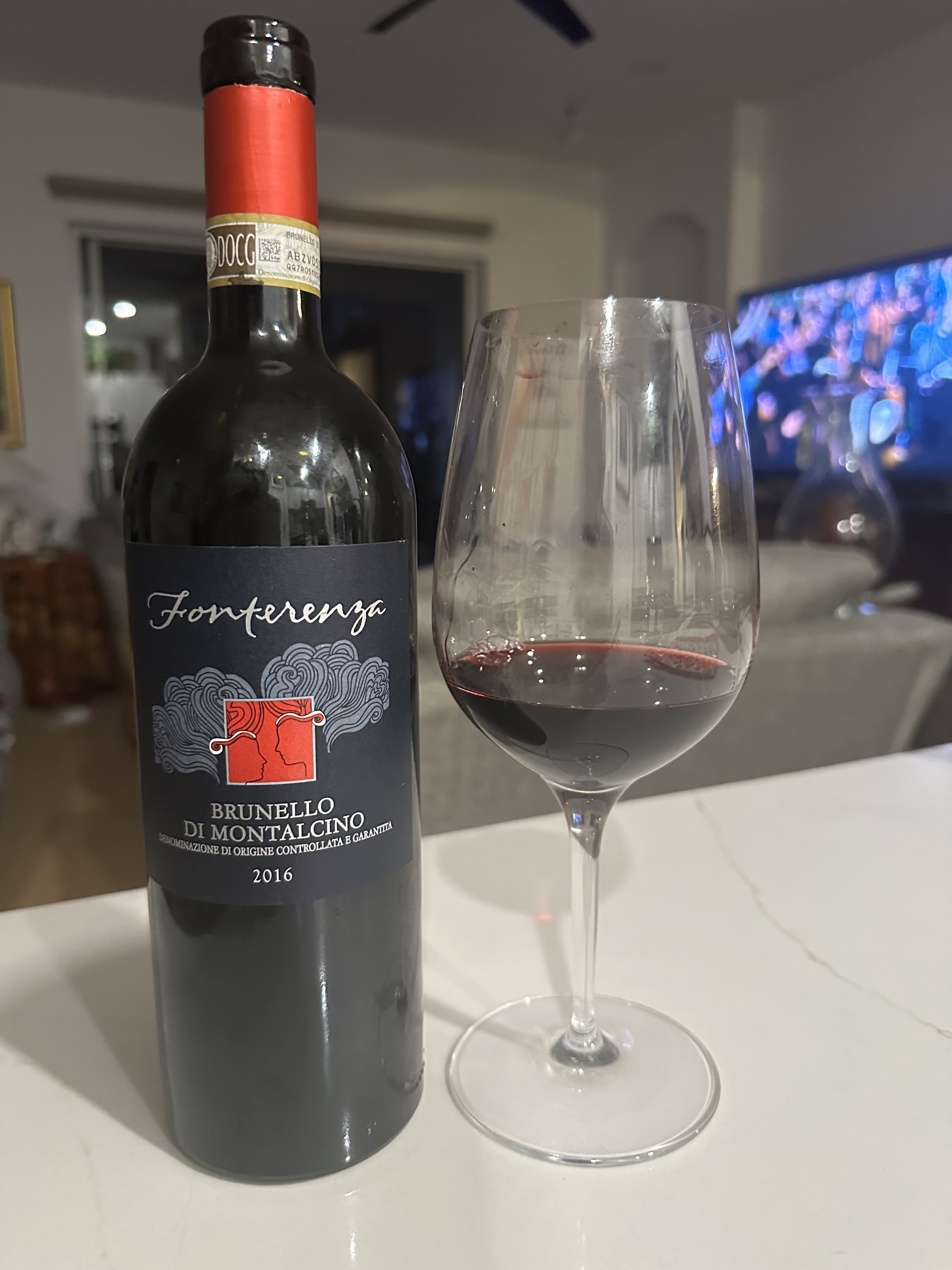
Fonterenza is located in Sant’Antimo in Colle, southeast of the town of Montalcino, where they planted their first vines in 1999. In addition to the vines on Montalcino, the sisters have been purchasing grapes from old vineyards on Mt Amiata and recently invested in their own vineyard on the mountain. In my most recent post I discussed the physical environment of the Fonterenza estate. In this post I round out the picture of the enterprise by describing its winemaking practices and wines.
Fonterenza produces eight wines (shown below): three whites, one Rosato, and four reds.

White Wines
All of the Fonterenza white wines are made with some degree of skin contact and all are IGT. The Bianco IGT is a blend of Ansonica, Trebbiano, Malvasia Toscana, and Malvasia di Candia sourced from a vineyard -- La Casa -- located in Capalbio on the Tuscan coast. The organically farmed, 60-year-old vines are co-planted in sandy, iron-rich soils. The first vintage of this wine was in 2018.
The Le Ragazze is a 50/50 blend of Vermentino and Malvasia Toscana made from organically farmed Mt Amiata grapes.
Biancospino is a Trebbiano varietal made with biodynamic fruit grown in the Casale Vineyard in Poggibonsi. Future plans call for the fruit to be sourced from the Ciliegi Vineyard on Mt Amiata.
Grapes for the white wines are hand-harvested, destemmed (partially, in the case of the Bianco), and gently pressed. The must is fermented spontaneously in stainless steel tanks (Bianco and Biancospino) and open vats (Le Ragazze) with no sulfur added. In the case of the Bianco, the must is a mix of whole cluster and destemmed fruit. The Bianco is macerated for 2 - 6 days and the Le Ragazze and Biancospino for 30 days each.
The aging regime for the wines are as follows:
- Bianco -- mix of old oak and cement
- Le Ragazze -- mix of tonneau, acacia barriques, terracotta, and steel tanks
- Biancospino -- 12 months in old oak.
The wines are all bottled without filtration.
Rosato
The Rosato is made from Sangiovese grapes sourced fro each of the estate's Montalcino vineyards. The wine is fermented by indigenous yeasts and remains on the skins for 20 hours. The wine is aged for 7 months in acacia barriques.
Red Wines
The red wines are all 100% Sangiovese (with the exception of Pettirosso, a blend of Sangiovese and Ciliegiolo) made with grapes sourced from the estate's Montalcino vineyards (except Pettirosso, the sourcing of which is illustrated in the chart below).

The Albarello grapes contributed to the Rosso di Montalcino until the decision was made to begin bottling the wine separately beginning in 2015.
The grapes for all of the Montalcino-based red wines are hand-harvested, with the Brunello di Montalcino taken in multiple passes. Once in the cellar, the grapes are destemmed and fermentation is initiated. The grapes are fermented spontaneously without temperature control, oenological products, or chemical/physical treatments. A variety of cap management techniques -- to include pumping over, delestage, manual punch downs, and submerged cap -- are employed. The grapes from the various Rosso di Montalcino vineyards are vinified separately but blended prior to aging.
The fermentation and aging regimes are summarized below.

**********************************************************************************************************
The estate avers that its winemaking approach "preserves the characteristics of the vintage and express our terroir to the fullest."
The diverse range of wines showcase the estate's versatility and dedication to expressing the unique characteristic of each variety and vineyard. From the skin-contact for the whites, to the lack of additives during the fermentation process, the estate demonstrates its commitment to minimal intervention to natural processes and minimal intervention