Showing posts with label Haro. Show all posts

Friday, November 22, 2013

Constructing the wines of Bodegas Muga #DWCC13

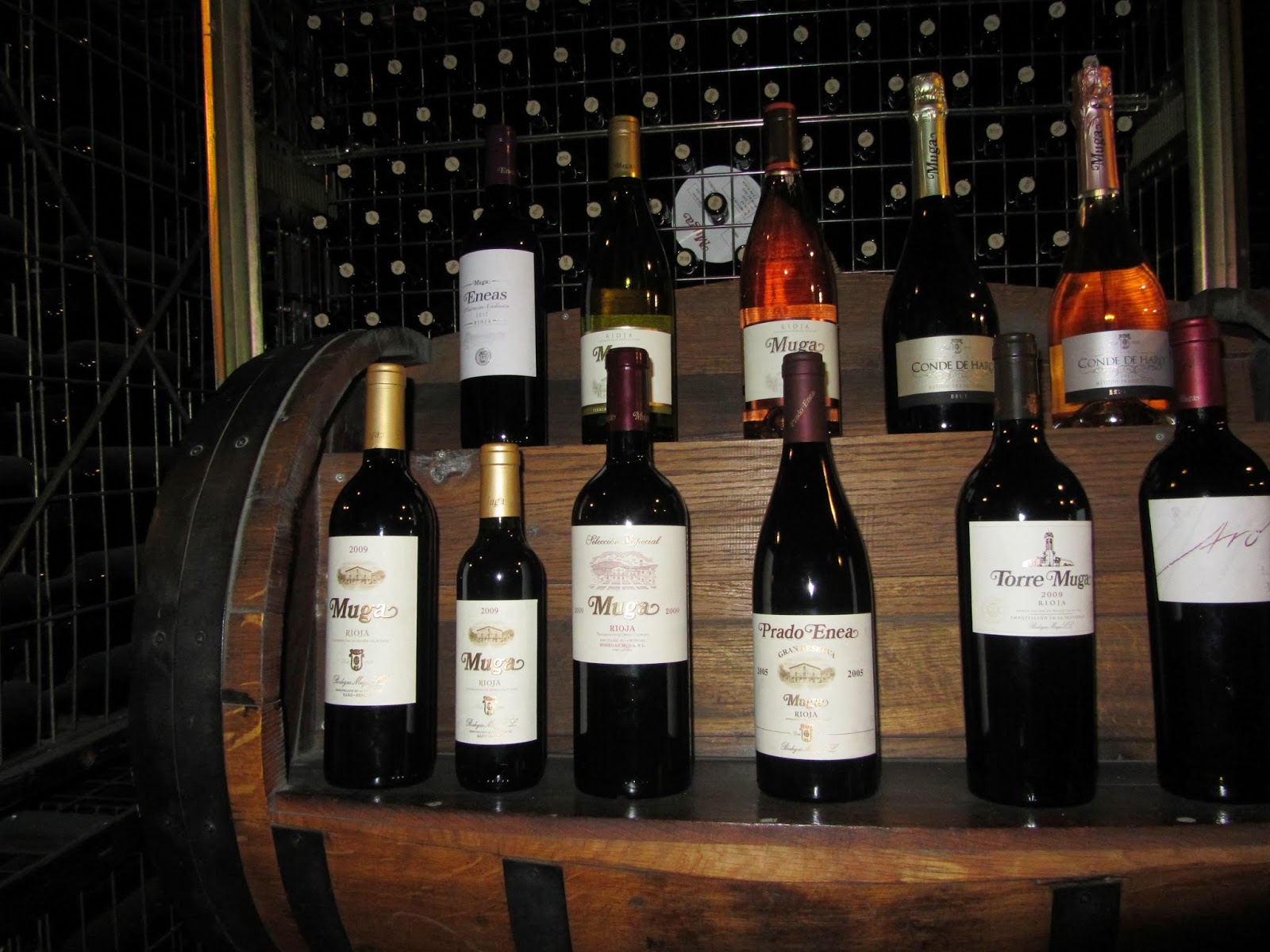
In his 2012 New York Times article on Riojan Gran Reservas (Gentle Soul in a World of Bold, 9/21/12), Eric Asimov noted that, while not among the founding Riojan wineries of the late 19th century, by 1968 Muga had graduated from producing simple wines to its first vintage of the heralded Gran Reserva category. Further, as consumer tastes shifted in the 1980s to more powerful, fruity wines, it responded with Torre Muga, "a more powerful wine, aged in new barrels of French oak, with more prominent fruit flavors that required less aging before hitting the market." In this post I will highlight the process by which these, and other wines in the Muga portfolio, are produced.

But first I have to get you from Bracamontes to the cellar in Haro. In addition to the Cava which I had described, Muga had provided several bottles of the Muga Reserva 2009 for our enjoyment. After my whirl with the Cava, I grabbed an appropriate glass and lit into the Reserva. Right about this time they announced our departure (We were on a tight schedule as we had to meet up with our brethren at Dinastia Vivanco) and one of the Muga employees who had been helping with the service attempted to relieve me of my glass. I opted to keep the glass and its contents. As I was about to board the bus, Ana Muga asked if I wanted to leave the glass behind. I shook my head. No. I held on to that glass like a newborn to a pacifier and, for the remainder of the morning, Ana Muga made sure that there was always something in that glass for me to sup on.

We disembarked at the winery and were ushered through a wood-and-glass-enclosed foyer into an exceptionally well-appointed shop-cum-bar. Of the wineries visited, Muga has the most advanced "Wine Tourism Complex" comprised of a Tasting Room, Wine Shop, Wine Bar, and an Audiovisual Room. In addition, the winery's tower is customer-accessible and provides stunning panoramic views of its surroundings.


Source: bodegasmuga.com


The generalized process for Muga wine production is illustrated below. This process differs for Cavas -- which are lightly pressed and double-fermented, with the second fermentation occurring in bottle; the Rosadas, which are bottled after spending two months in fermentation tanks; and the Blancos, which are barrel-fermented. Grapes undergo two levels of selection, one in the field and the second at the sorting table pictured below.


All oak vessels used are built in-house


Racking
Separating yolks from egg white that will be used
for wine clarification
Earnest, dedicated teacher
Mesmerized students


©Wine -- Mise en abyme

Tuesday, November 19, 2013

Bodegas Muga: Vineyard visit and Cava breakfast (Bracamontes, La Rioja) #DWCC13

This was Thursday morning, the final morning of the final day of what had been, up to this time, a scintillating trip to Haro. We had met a number of the leading lights of Rioja wine production. We had gained a better understanding of the Rioja products and production processes. We had eaten a lot of great food -- and drank some great wines. And we were scheduled to cap all of the foregoing with visits to a Bodegas Muga vineyard and the winery, followed by a trip to Briones to meet up with the broader wine blogger group for a tour of the museum and winery at Dinastia Vivanco. It was going to be a long day for those of us who had just gotten to bed a few minutes before the wake-up call.

Shortly after I had struggled downstairs and checked out, two white passenger vans rolled up to the hotel and two female drivers emerged. They introduced themselves as Ana Muga (granddaughter of the founder) and Ana Lopezcano Lamarian, PR Manager. They loaded us up and we were off to the first stop on our tour.


Bodegas Muga, which was founded in Haro in 1932 by Isaac Muga Martinez and his wife Aurora Caño, owns 251 ha (620 acres) of vineyards distributed across five properties (El Estepal, La Loma, Baltracones, La Loma Alta, and Sajazarre) and controls another 370 acres through agreements with other area winegrowers. According to the Muga website, these mostly south-facing vineyards are located in the foothills of the Obaronses Mountain in the Rioja Alta region on primarily clay and limestone soils.

After a short ride, we turned into a road which led to what appeared to be a white barn in the middle of a vineyard. We had arrived at Viña Baltracones (one of the previously mentioned vineyards) where a number of workers were fully engaged in plucking grape bunches from the vines. We pulled up to the side of the barn and was welcomed by the viticulturist who led us into the field, bringing us up to speed along the way. This year had not been an easy year, with uneven ripening across the region and stop-and-start harvesting. The grapes being harvested were Graciano which would be used to add freshness to the Tempranillo. The freshness of the grapes would be preserved by transporting them back to the winery in refrigerated trucks. During the picking process, the workers were also conducting a first-level selection of the grapes.


Doug Frost MS/MW mentally composing his next tasting note


On our way into the vineyard I had seen white smoke rising into the sky from a metal contraption but had taken no further notice of it. On my return to the barn area, I saw that a table had been positioned in front of the barn and that a white tablecloth had been draped over said table. On the table were bottles of Cava, glasses and loaves of chunky bread. The white smoke was emanating from a fire which was being used to cook sausages for our breakfast. I had not planned on this. It was too early to eat something this heavy. Especially with lunch less than two hours away. Oh well.


The Cava served was the Muga Cava Conde de Haro, a blend of 95% Viura and 10% Malvasia sourced from north-facing, high-altitude vineyards located in the same area where the grapes for Prado Enea are grown. These grapes are fermented in large oak casks and sit on the post-second-fermentation lees for 14 months. According to K&L.com, Muga may be the first estate in the Rioja DO to grow, produce, bottle, and age Cava. This Cava was very refreshing with small, tight bubbles, nice acidity, and pear and apple fruit. Its zippiness brought me back to life.


Ana Lopezcano Lamarian and Ana Muga

Umay and his little red book
Robert smiling because he will soon be rid of us
Isaac Muga -- can you hear me now?
It's all good
joie de vivre

After observing the pickers in the field, partaking of a hearty breakfast, and hamming it up for the cameras, we loaded up and headed to the next stop -- the winery.

©Wine -- Mise en abyme

Sunday, November 17, 2013

Old Riojas don't die. They just get better with age #DWCC13

During the course of the lunch at Cune, our hosts popped open a couple of bottles of 1976 Imperial Gran Reserva and they were sublime.


After noting our interest in these wines, the Cune team circulated a list of the aged wines that they had for sale in the wine shop. Suitably impressed, and remembering our paltry fare from the previous night, I bought a bottle of the 1976 Imperial Gran Reserva and a bottle of the 1981 Viña Real Gran Reserva for us to consume at our hotel that evening. I was not going to be caught short again.

We got home very late after the RODA dinner (a long, but phenomenal, event) and repaired to our designated spot, the private lounge that is separated from the bar by the small reception area and elevator bank. The willing participants included Umay, Roger, and me. No Robert. I heard his voice over at the bar so I went over to let him know that we were awaiting his presence ... and he begged off. Weakly. I looked around for other potential victims and spotted Juan Martinez and David Marcos, the team leaders from Bodegas Gomez Cruzado. These guys had given us a tour of their facility -- and fed us -- just the day before. They were surely deserving of this honor. But first, what were they doing in a hotel in the middle of Haro after midnight. I asked them (presumptuous, I know). They had guys out harvesting at that time and had taken a break from receiving grapes to grab a coffee. Never one to drink coffee when wine was available, I invited them to come over and join us in drinking the two old Riojas. After looking at each other hesitatingly, the pull of the wine was irresistible (or they were just too kind to turn us down out of hand) and they followed us back to our enclave.

I began the proceedings by attempting to open the Imperial but the cork was soft and broke into two pieces. Now I like to think that I am pretty handy in recovering cork fragments but my attempt to retrieve the piece left in this bottle ran hard aground and Roger took over. He was able to get the remnant out but some of the detritus fell into the wine. We had no straining or decanting equipment so we powered ahead figuring that we would take care of the bits as we encountered them.


The Imperial 1976 Gran Reserva was light brown in color with caramel highlights. It had an opulent nose with aroma notes of orange liqueur, wet leaves, iodine, tobacco, and hints of floral elegance. Silky on the palate with bracing acidity. Additional dried fruit aromas and flavors contributed significantly to this wines complexity. While not up to the level of the bottle we had had at Cune earlier in the day, the 1976 was a blockbuster.

We next moved to the 1981 Viña Real Gran Reserva This was garnet at the core with an orange rim. A compelling nose with a core of dried red fruit, leather, and tea leaves leading the way to an orange zest. Enticing on the palate with a solid core of fruit, bright acidity, and caressing tannins. Classy and energetic with a long life ahead.


The Gomez Cruzado guys were fully engaged by this time. They were snapping pictures of the bottles and telling tales of bygone years. They did not want the night to end. They conferred with each other in muffled tones and one left and came back shortly with a bottle of 1964 Gomez Cruzado Rioja Gran Reserva Honorable. This was a fantastic bottle of wine and we could not believe that we were having the honor of tasting this bottle with these gentlemen at this hour in the -- now -- morning.

The Honorable had a pale garnet color with an orange rim. It had generous amounts of dried fruits such as apricots and orange zest accompanying tobacco, leather, and sweet spice. There was a consensus that the nose was reminiscent of a good old Tokaji. Graceful and alluring yet exuberant and penetratingly rich. Still fresh and energetic, displaying well-layered flavors lifted by racy acidity. A long, zesty aftertaste.


This was an awesome evening. Great wines and, just as importantly, great and insightful discourse with two leaders of a centenarian winery. We quizzed them at length on a wide range of topics and got the kind of dialog that you can only get at a bar at 3:00 am.


And all this on top of the RODA dinner.


©Wine -- Mise en abyme

Thursday, November 14, 2013

Dinner and the wines of Bodegas RODA #DWCC13

At the conclusion of the winery tour, we were shepherded upstairs to a fabulous dining room for our dinner and tasting (One of my impressions so far is that Bodegas RODA does it "right" or they do not do it at all.). RODA had brought in VentaMoncalvillo, a La Rioja restaurant of some repute, to prepare and serve us dinner that evening, a dinner which would be supported with selected RODA wines. The wines were introduced by Augustín, and following his insights, we would then proceed to tasting the wine. As the evening wore on, the timing between the introduction of the wine and the serving of a course unravelled but no one was complaining. We were having a good time. The wines which were tasted at this sit-down session follow.


SELA 2010: A blend of 95% Tempranillo and Graciano from bush vines that were between 15 and 30 years old at harvest. Alcoholic and malolactic fermentation in large French oak vats over a 19-day period. Aged for 12 months in 50% new French oak barrels. Fruity with short finish. Easy-drinking wine.

CORIMBO 2010: Made with Tinta del Pais (Tempranillo) grapes sourced from 20-year-old vines grown in the Pago de La Horra and Roa vineyards in Ribera del Duero. Fermented for 20 days in large oak vats and stainless steel tanks and then aged for 12 months in French (80%) and American oak barrels. Black and red fruits on the nose and palate. Spicy. Grippy tannins. Structured. Unbalanced.

RODA Reserva 2008: A blend of 90% Tempranillo, 4% Garnacha, and 6% Graciano sourced from Haro and neighboring vines greater than 30 years old and yielding, on average, 1.5 kg/vine. Fermented in temperature-controlled French oak vats then aged for 16 months in 50% new and second use French oak barriques and 30 months in bottle prior to market release.

According to Augustín, this was a difficult vintage in Rioja -- an Atlantic vintage -- with a dry winter and cold spring and summer. Harvest was late. According to Augustin, you can easily find the Atlantic influence on this wine in the mouth and nose. Red fruit on nose, raspberries on the palate. Medium body with softly integrated tannins. Fresh. Spicy. Lack of complexity.

RODA I Reserva 2007: Tempranillo sourced from 30+ year-old-bush vines yielding 1.5 kg/vine. Fermented in temperature-controlled French oak vats then aged for 16 months in 50% new and second use French oak barriques and 20 months in bottle prior to market release.

In 2008 it was rainy until the summer, causing spring to lose its vigor. Known as the "mildew year" in Rioja because of the rain. It rained very little in the summer. The vintage was not well regarded in Rioja but it was great for them. It was an Atlantic vintage but less so than 2008. Ripe red fruit, coffee, and cocoa on the nose. Sweet red fruit, black fruit, and mineral note on palate. Silky tannins.

RODA I Reserva 2004: Garrigue, wet leaves, forest floor, coffee, baking spices, and black pepper on the nose. On the palate sweet red fruit, fruit rollups, spice. Smooth tannins. Oak not as well integrated as was the case for the preceding wines. Muted acidity. Drying finish.

RODA I Reserva 2005: Red fruit, sweet tobacco, vanilla, cinnamon, and red pepper on nose. Somewhat uni-dimensional. The 2004 and 2005 were both good wines but I preferred the 2004.

CORIMBO I 2009: First vintage of this wine. They have attempted to apply their Rioja knowledge towards making wine in Ribera del Duero. This wine is representative of Ribera but has the elegance of Priorat. According to Augustín, Rioja and Ribera are the greatest regions in Spain for growing Tempranillo but, given Ribera'a location on the Grande Meseta, the vines have 1 month less to reach maturity than vines in Rioja. Ribera wines are known for length, depth, and structure but RODA wanted to supplement that with an elegance note in their wines. Looking for that elegance took them to a small part of the region called La Horra. They felt that this amazing part of Ribera could provide that elegance they were looking for so they found a family with vineyards, but no winery, gave them 10% of the venture, and signed them to an 80-year contract.

Identify the wine based on vintage descriptions: At this point Augustín produced two wines that were not on the original menu and asked us to select between the two based on his description of the vintages. The wines were the 1994 and 1995 RODA Reservas. According to Augustín, 1994 was  a dry year and the vineyards had to go through a lot of suffering. It was an austere vintage. Nineteen ninety-five, on the other hand, was an excellent vintage: rain when needed, sun when needed. The wines were more expressive from the beginning. Both wines were phenomenal and the team split almost evenly in its choices. This was a lot of fun.

CIRSION 2010: Grapes for this 100% Tempranillo are hand-selected (on the basis of RODA research) from different parcels of old vines. Alcoholic fermentation in temperature-controlled oak vats and malolactic in French oak barriques. Matured in 100% new French oak barrels for 8 months followed by an additional 4 months in bottle prior to release. Black and red fruits on nose along with a smokiness and baking spices. Black fruit, cocoa on palate. Persistence and length of finish.

This concluded the tasting and dinner. Everyone was in extremely high spirits and sated both in terms of wine and food. Augustín brought out the Chef so that he could be recognized for the fine fare and service of his staff.


This was an evening that I will always associate with my initial visit to Haro.


©Wine -- Mise en abyme


Wednesday, November 13, 2013

Bodegas RODAs winemaking process #DWCC13

At its founding, the RODA owners wanted to produce wines that people could enjoy. They wanted to respect the indigenous grape varieties but did not want to do the same things that the other Rioja producers were doing. The wines that they produced should be enjoyable, but with long life, and should always have the landscape over the oak. The winemaking philosophy held that the company would do best if they created wines that exhibited both freshness and fruitiness and had softly integrated tannins. The wine should have no structure and should not exhibit much oak.
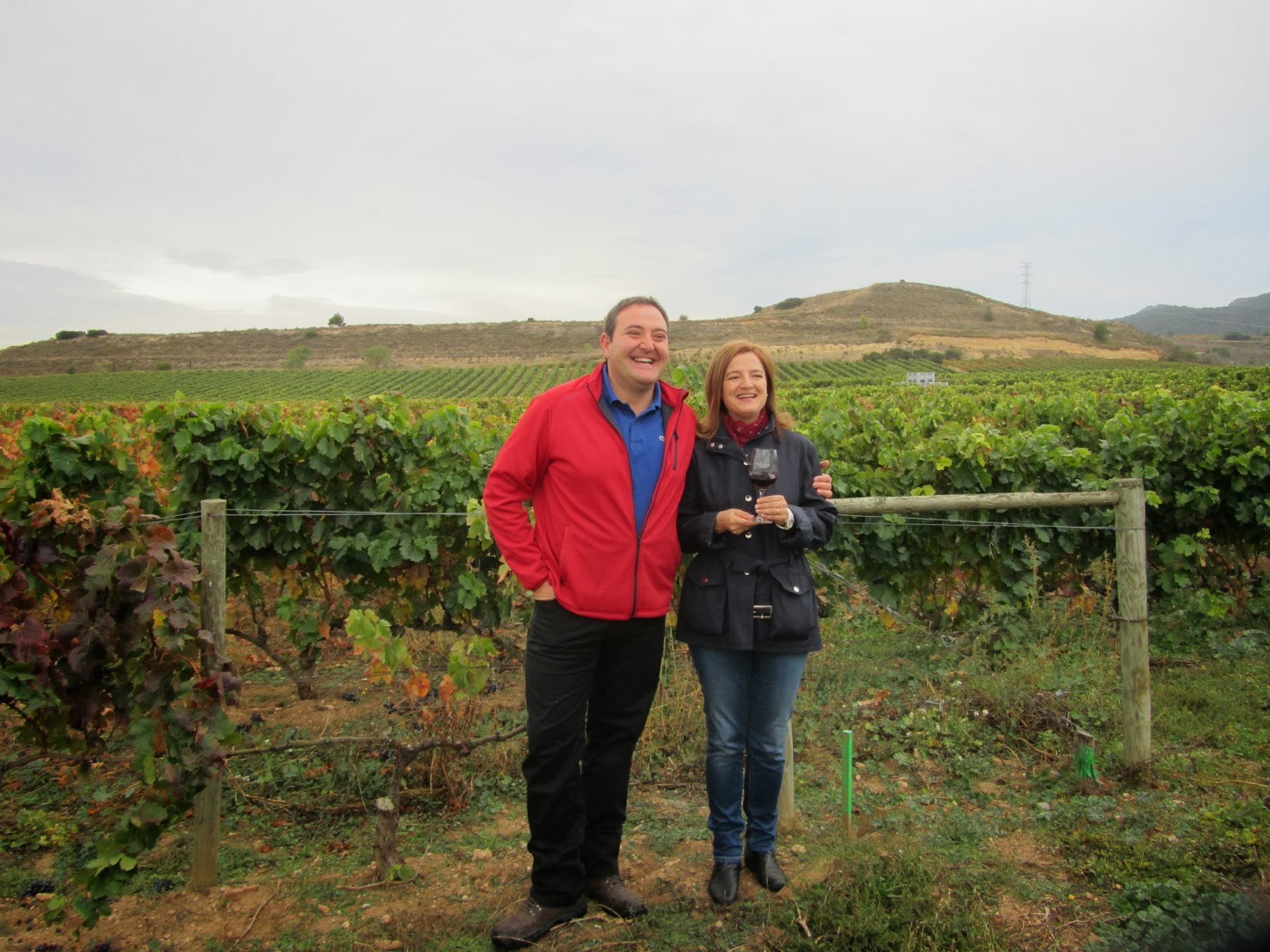
The process by which such a wine is made is illustrated below.

Sources: Compiled using information from roda.es and conversations
with Augustin Santolaya, RODA Managing Director.


©Wine -- Mise en abyme