Wednesday, January 30, 2019

Erbamat: Franciacorta's climate-change mitigator

I have previously written a post on the Franciocorta wine region and a series of posts comparing the wines from Champagne, Prosecco, Franciacorta, and Cava:

Part I -- Origins
Part II -- Regulatory histories
Part III -- Macro-Level characteristics
Part IV -- Production zones
Part V -- The vineyards
Part VI -- Fermentation and aging
Part VII -- Wine styles
Part VIII -- The nonconformists
Part IX -- Production levels and markets
Part X -- The Future

This demonstrated interest garnered me an invitation to a recent tasting of a selection of the region's wines held at the Miami Culinary Institute.


It had been a while since I had visited the detailed characteristics of the Franciacorta wine so I was rather surprised when Mr Silvano Brescianini, the President of the Franciacorta Consorzio, mentioned a grape called Erbamat as one of the constituent varieties. To the best of my knowledge, the mix was Chardonnay, Pinot Nero, and Pinot Bianco but, according to Mr. Brescianini, Erbamat could contribute as much as 10% of a blend. Some research was in order.

That research has revealed that Erbamat is a high-acid, late-ripening white grape that is native to the region and with a history that stretches back to circa 1500. The cultivar had slipped into obscurity until a recent study by a university professor highlighted its characteristics.

When compared to Champagne, Franciacorta is riper, fuller, and rounder, the result of a warmer growing environment -- and the resultant riper fruit (Champagne has about 1000 growing degree days while Franciacorta experiences approximately 1500). Further, climate change is causing the region's grapes to ripen earlier. In the 1980s, for example, Chardonnay was picked in early September; today, the warmer parts of the zone begin picking that variety in late July.

Erbamat is seen as potentially mitigating the ripeness and climate effects of the region. Its primary characteristics are as follows (Aldo Fiordelli, Decanter, 3/21/17):
  • Pale straw color with greenish tinge
  • Thin skin
  • Compact bunches
  • Late ripening (20 - 30 days after other varieties)
  • Higher levels of malic acid (produces lean-bodied, high-acid wines)
  • Low sugar production (low alcohol wines).
The thin skin and tight bunches render the grapes subject to disease pressure but that risk is more than offset by the freshness, white florality, and chalky minerality which this wine brings to the blend. The variety is allowed in all of the Franciacorta styles with the exception of Satén.

©Wine -- Mise en abyme

Thursday, January 24, 2019

The wines of Hidden Bench Estate Winery (Beamsville, Ontario, Canada)

Hidden Bench Estate Winery pursues terroir-driven wines and, as such, farms organically and adheres to a strict non-interventionist policy in the cellar.


Grapes are picked by hand (as late as possible) and placed into 10 kg containers for transport to the winery. The white grapes are sorted and then whole-bunch-pressed before being placed in stainless steel tanks for fermentation. Sulphur is added to the tanks to combat oxidation.

The red grapes are bunch-sorted  and then de-stemmed before a berry-level sorting. Pinot Noir grapes are cold-soaked for 8 to 10 days for additional extraction. The red grapes are fermented with indigenous yeasts in oak and stainless steel fermenters.


Each vineyard block is fermented and aged individually. The red wines are aged in oak (20 - 30% new) and blended at the end of the aging period. The blended wine is then placed into stainless steel tanks in order to facilitate integration.

The estate produces two Rieslings: Roman's Block and Felseck Vineyard. We tasted the 2014 edition of the former and it was austere with notes of petrol and citrus and a distinct mineral character. Bright, sharp, and saline on the palate with a lengthy lime finish. The 2015 Felseck Vineyard showed tropical fruit notes (papaya), pimento, and a hint of petrol. More ample on the palate than the Roman's block. These Rieslings were lighter-bodied and less concentrated than your average Mosel Riesling.

The 2016 Nuit Blanche is a blend of Sauvignon Blanc (94%) and Semillon (6%) made with grapes sourced from the Rosomel Vineyard. Intended as a Bourdeaux-type white, the wine is aged in 13% new oak. Mushroom, white flower, pear, apple, and beeswax on the nose. Pear and apple characteristics carry through to the palate. Rich and mineral.


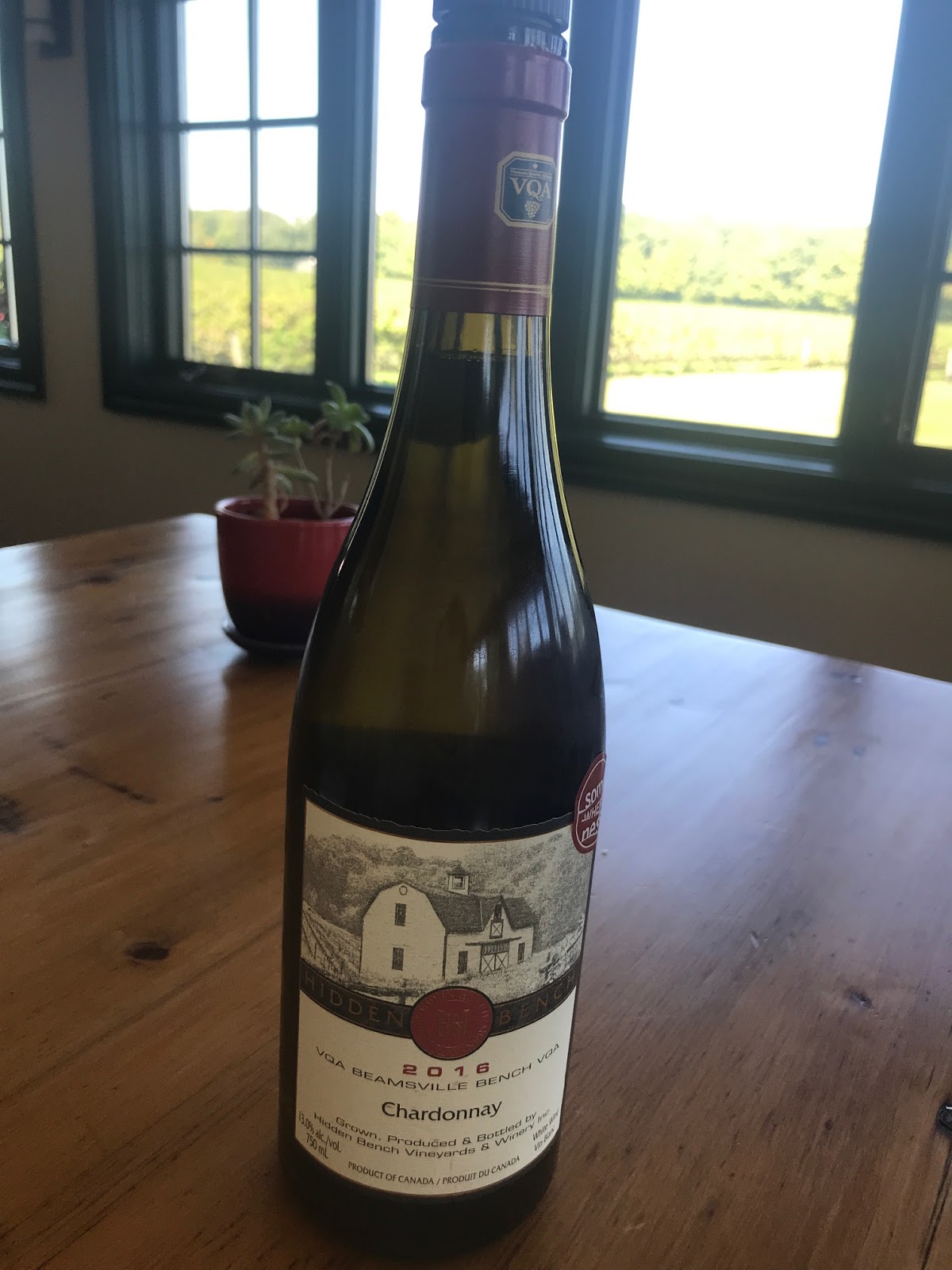
We tasted two Chardonnays: Tête de Cuvée and the Estate. The latter is made from grapes drawn from all three vineyards with 7% of the resulting wine aged in concrete egg and the remainder aged in 17% new oak. Aging extends over 9 months. Apple, pear, clay, mineral notes on the nose and rich, ripe fruit on the palate. The Tête de Cuvée is made from the 10 best barrels drawn from the Rosomel Vineyard. Oily and non-aromatic. Great weight on the palate.


The first red wine tasted was the 2016 Estate Pinot Noir. This is a blend of grapes from all three vineyards. The wine was aged in 27% new French oak and bottled unfined and unfiltered. Pinot fruit and spice on the nose, red berries and spice on the palate. Light-bodied.

The 2015 Rosomel Vineyard Pinot Noir was aged in 20% new French oak. Rich cherries and berries on the nose along with spice. Good concentration.

The 2014 Locust Lane Pinot Noir was deeper and richer than the preceding two. Dark berries, plum, earth, floral notes and spice on the nose. Intense dark cherry and anise on the palate. Concentrated.


The 2013 Terroir Caché is a blend of Merlot, Cabernet Franc, Malbec, and Cabernet Sauvignon. This wine is aged in 20% new French oak for 20 months and is then bottled unfined and unfiltered. Blackberries, plum, cassis on the nose and dark fruit on the palate. Light-bodied and not as structured as I would have liked.

Overall I found the wines of this estate to be of high quality. So much so that I bought an assorted case to take back to the US. I am especially enamored of the Chardonnays.

©Wine -- Mise en abyme

Sunday, January 13, 2019

Hidden Bench Estate Winery (Beamsville, Ontario, Canada): Viticultural environment

I have spent the last three posts framing the physical environment (bedrock, soils, climate) within which Hidden Bench Estate Winery (Beamsville, Ontario) operates. In this post I treat my actual visit to the enterprise and the facts regarding its viticultural environment.

I had sought out recommendations from Remy Charest (noted Canadian wine writer) as to wineries to visit in Ontario. Hidden Bench Estate Winery was among the first names offered so I called them up and made an appointment for a tour and tasting. When I arrived at the locale, I was pleased to find out that Harald Thiel, estate founder and proprietor, would be the one conducting the tour. Harald poured us glasses of bubbly and then headed off to the vineyards surrounding the estate.


As shown in the map below, Hidden Bench farms three vineyards , all located in the Beamsville Bench sub-appellation of the Niagara Peninsula appellation. The Locust Lane Vineyard (8.5 ha/23 acres) was purchased in 2003, co-incident with the founding of the estate, Rosomel (9.2 ha/23 acres) in 2004, and Felseck (13.8ha/34 acres) in 2007. Locust Lane and Felsek Vineyards are located adjacent to the winery while Rosomel is located 6 km to the east.

Hidden Bench Estate Winery vineyards: Locust Lane (red
rectangle), Felseck (red oval) and Rosomel (red hexagon).
Beamsville Bench is the leftmost of the four sub-appellations that occupy the benchland lying just below the Niagara Escarpment. The soil of the benchland is comprised of glacial till mixed with limestone eroded from the overhang of the escarpment.

Beamsville Bench (Source: VQA Ontario)
The appellation slopes towards the lake and this assures adequate wind and water drainage. A number of creeks from the Escarpment transit the sub-appellation on their way to the lake, providing a ready source of water for the vines. Finally, its location below the Escarpment places the bench at the endpoint of the moderating wind flow off Lake Ontario.

Harald Thiel explaining Niagara Lake climatic
zones to the author

The grape variety maps below show that the focus of the enterprise is on Pinot Noir, Chardonnay, and Riesling, a fact that is further chronicled in Table 1's drill-down into the Locust Lane Vineyard.

Source: hiddenbench.com

Source: hiddenbench.com

Source: hiddenbench.com

Table 1. Characteristics of the Locust Lane Vineyard
VarietyNumber of PlotsClonesRootstockPercent of Vineyard Vines
Viognier
3
642
3309, 102-14
6.8
Chardonnay
6
548, 76, 95, 96Riparia, 104-14
21
Malbec
1
598
3309
1.6
Pinot Noir
9
777, 386, 114, 115, 667Riparia, SO4, 104-14, 3309
54.6
Riesling
2
21 B
3309
11.4
Merlot
1
181
Riparia
9.6
Cabernet Franc
1
214
Riparia
6.1

As shown above, a wide variety of clones and rootstocks are used in the Pinot Noir plots. In the case of the rootstocks, Harald mentioned that they are moving to Riparia and 3309 in new plantings as a response to climate change. My research shows that both of these rootstocks are medium resistance to drought conditions but this comes along with low tolerance for limestone soils (there is limestone in the Hidden Bench soil mix from Niagara Escarpment erosion).

Hidden Bench is certified organic with biodynamic principles. The enterprise utilizes oil seed radish as a cover crop to help in breaking up the soil. According to the Ontario Ministry of Agriculture, Food and Rural affairs, this is a relatively new use for oil seed radish and, while it is deeper-rooted than rye grass, "... it does not provide as much organic matter nor support for equipment." The cover crop is mowed just prior to picking.


In keeping with organic requirements, no synthetic herbicides or pesticides are used in the vineyard; pheremones are utilized in the battle against the grape berry moth and the grapes are covered to protect against marauding birds.


In my next post I will cover winemaking and the wines of Hidden Bench Estate Winery.


©Wine -- Mise en abyme

Tuesday, January 8, 2019

Climate in the Niagara Peninsula wine region

Climate, according to Dr. Tony Wolff (Lecturer and Viticulturist, Virginia Tech) and John D. Boyer, is the average course of weather in a region over an extended period as measured by temperature, precipitation, and wind speed, among other variables (Vineyard Site Selection, Virginia Cooperative Extension).  Weather is itself defined as the state of the atmosphere at a specific point in time using the same variables as referenced in the climate definition above.

The climate of a grape-growing region will determine, to a large extent, both the grape varieties that can be grown and the styles of wine that can be produced. The climatic requirements for successful viticulture include: a growing season long enough to mature both the fruit and vegetative aspects of the plant; production of sufficient carbohydrates to ripen the fruit as well as to maintain future productive potential; and an adequate supply of water.

The general consensus is that the ideal climates for vitis vinifera are Mediterranean and marine west-coast climates, both of which are characterized by mild, wet winters and warm, dry summers. The mild winters promote long-term survivability of the vines (and increased quality of the juice as the vines age) and the wetness provides a reservoir of water that the vine roots can tap into during the grape maturation cycle.  The warm, dry summers provide the heat and light that are the engines of vegetative and crop growth while keeping at bay the threat of rot and flavor dilution that would accompany summer/fall rains.

Continental climates are modified by large land masses and are characterized by hot summers and cold winters.  Maritime climates, on the other hand, are modified by proximate large bodies of water which heat up and cool down at a slower rate than does the adjoining land mass.  This scientific fact results in the warming of winter winds as they blow over a warmer body of water and the warming of landside vineyards as the winds make landfall.  This warming could act to extend the growing season and minimize the potential vine impact of winter low-temperature events. On the other side of the coin, warm spring air blowing in over the still-cold water will be cooled down and will retard the development of landside vineyards, minimizing their potential for damage from spring frosts.

The Niagara Peninsula exists in neither a Mediterranean or west-coast marine climate environment; it is decidedly continental. However, the peninsula is bounded by two lakes and those lakes act like heat sinks in moderating the temperature of the surrounding land, cooling it in the summertime and warming it in the winter. In addition, the lakes act as a giant humidifier, increasing the moisture content of the air.

Niagara Peninsula bounded to the north and south by
Lakes Ontario and Erie
(Source: Google Maps screenshot)

VQA Ontario identifies a closed-loop system of air movement over Lake Ontario and the adjacent landforms. Warm air over the lake rises and cold air resident over the land rushes in to take its place. The warm air then moves inland to occupy the space vacated by the cold air, modifying temperatures "several kilometers inland." The concept is illustrated in the figure below.

Air flows in the vicinity of the Niagara Escarpment
(Source: Dr. Tony Shaw, Diagrams and Technical Information
for the Niagara Peninsula)

Niagara Peninsula climate is also modified by temperature inversions. The ground that is distant from the lake cools rapidly overnight by radiating energy upwards. This results in a warm-air being sandwiched between the cooler air above the canopy and the cold air at the surface (Shown in the figure below). In flat areas, this inversion effect warms the canopy and fruit layer of grape vines. In areas with sloping ground, the lower layer of cool air travels downhill and is replaced by the warm air.

Temperature inversion (Source: shsu.edu)

Growing Degree Days
Two key grapevine needs are adequate sunlight and heat to allow both the fruit and the vegetative aspects of the plant to mature.  Vitis vinifera requires a minimum of 1250 hours of sunshine to provide ripe fruit. The progression of the grape through its various stages of maturity is influenced by the ambient temperature with research indicating that growth of the grapevine begins when temperature exceeds 10℃.  A measure -- growing degree days (GDD) -- has been developed to measure the accumulation of heat (as measured by temperature) in excess of 10℃ over a growing season.  Extensive research has yielded the following GDD parameters which can be used as input in vineyard site selection.

Source: Compiled from oregonviticulture.net

Niagara Peninsula, with 1590 growing degree days, is well within the top class of wine quality potential.

©Wine -- Mise en abyme

Thursday, January 3, 2019

Soils of Canada's Niagara Peninsula appellation

I covered the bedrock of Canada's Niagara Peninsula in my most recent post and will now turn to its soils.

In areas that have not been subjected to glaciation, there is a direct correlation between soils and the underlying bedrock as the former is the result of the weathering and decomposition of the latter. That direct relationship between soils and bedrock does not exist in glaciated regions (William R. Farrand, The Glacial Lakes around Michigan, Geological Survey Division, Michigan Department of Environmental Quality, Bulletin 4, Revised 1988 ):
  • Soil material in any given area has been carried in from up to hundreds of miles away
  • Ancient bedrock is generally covered with great thickness of drift material
  • Soil is relatively young and the occurrence scrambled
  • Drainage patterns are haphazard and immature
The Niagara Peninsula was covered by a 2 - 3-km thick sheet of ice -- the Wisconsin Glacier -- in a number of incursions from the north:
  • Early Wisconsin > 65,000 years ago > 15,000 years duration
  • Mid Wisconsin > 40,000 years ago > 8,000 years duration
  • Late Wisconsin > 20,000 years ago > 8,000 years duration
These glacial incursions had two very important impacts on the Peninsula:
  1. There is no record of sediments laid down during the Mesozoic and Cenozoic Eras as they were eroded and transported away by the advancing glacier
  2. As the glacier retreated, water from the melting ice formed the precursors to today's Great Lakes
    1. Glacial Lake Algonquin > Lake Superior, Lake Michigan, Lake Huron
    2. Glacial Lake Warren > Lake Erie
    3. Glacial Lake Iroquois > Lake Ontario
    4. Glacial Lake Tonowanda > deceased
Lake Iroquois was an enlargement of the current Lake Ontario, the result of the ice sheet blocking the St. Lawrence River in the vicinity of today's Thousand Islands. This glacial lake was fed by Glacial Lakes Warren and Algonquin and drained to the southeast. The melting of the ice dam 12,500 years ago resulted in the lake dropping 85 m below its current level. Isostatic rebound of the tectonic plates (freed of the crushing weight of the glaciers) brought the lake up to its current level 4000 years ago.

The Niagara Peninsula is a typical glaciated environment.

Glacial Word/Term Meaning
Till A mixture of rock materials of all sizes from boulders to clay
End Moraines System of hills traceable for many miles across the countryside
Ground Moraines A gently sloping, hummocky deposit of till
Outwash Plain Sheet runoff of meltwater flowing out and away from the ice front at the moraine
  • Very coarse sediments near the moraine grade perceptibly to finer sands and silt further out
  • The finest sediments are carried furthest away because they stay in suspension longest
  • Clays settle out only upon reaching relatively quiet ponded water, such as in a lake
Source: Derived from Farrand.

The B part of the figure below shows the effects of glaciation. All of the terms and impressions mentioned in the table above are evident in the topography and the accompanying textual material. In addition, only the hard limestones and dolostones of ancient strata were able to weather the onslaught of the glaciers.


If we follow the path of the retreating glacier from south to north, we encounter the moraine structures of Fonthill Kame and Vinemount and the Haldimand Clay Plain seem to be text book example of an outwash plain where the heavier particles are closer to the moraine while the clays have been carried out to the Glacial Lake Warren and settled in great quantity. It should be noted that heavy clay soils can be problematic in grape-growing due to a lack of lime, phosphorous, and organic matter in the soil and poor drainage capability.

The Lake Iroquois Bench lies below the Niagara Escarpment and is divided up into four official sub-appellations. According to VQA Ontario, "The topography ranges from a distinct bench in the west Beamsville Bench, backed by steep cliff faces, through a double bench in the Twenty Mile Bench, to undulating hills in the East Short Hills Bench."

As it relates to Beamsville Bench (the sub-appellation within which Hidden Bench Winery Estate resides), the soils "... form a heterogeneous mixture of boulders, gravel, sand, silt, and clay, as well as bits of shale, sandstone and limestone from the continuing erosion of the Niagara Escarpment."

I will cover the region's climate in my next post

©Wine -- Mise en abyme

Sunday, December 30, 2018

Bedrock Formation in Canada's Niagara Peninsula

Earlier this year I paid a visit to Hidden Bench Winery Estate which is located in the Beamsville sub-appellation of the Niagara Peninsula appellation (illustrated graphically below). Being totally unfamiliar with the region, I decided to do a deep dive into its characteristics before discussing the estate and its wines.

As shown in the top-left image of the chart above, Canada currently recognizes four province-level wine regions: British Columbia (BC), Ontario, Quebec, and Nova Scotia. Of these four regions, BC and Ontario have formed in-province regulatory mechanisms -- Vintners Quality Alliance (VQA) -- which guarantees the high quality and authenticity of origin for Canadian wines made under the system. The VQA is similar to the wine regulatory systems currently implemented in the major European wine-producing countries.

Our immediate interest lies in the Ontario wine region as it is within its boundaries that Hidden Bench lies.

The Michigan Basin
The rocks underlying the Niagara Peninsula include igneous and metamorphic rocks formed during the Precambrian Age (4520 - 542 million years ago (mya)) and more recent sedimentary rocks laid down in the Michigan Basin between 540 and 250 mya (see figure below).


The Michigan Basin is the oval-shaped formation in the center of the map above and is the key determinant of the soil types currently resident in the region. It is 250 km wide and 5 km deep (at its deepest point) and extends beyond Niagara Falls to the east, beyond Prairie du Chen (Wisconsin) to the west, to the edge of the Michigan peninsula in the north, and just beyond the Michigan-Ohio border in the south.

It is not clear how this basin formed originally but we do know that sediments from between 24 and 30 transgressions from a shallow sea were deposited therein. Sea conditions varied from incursion to incursion and this was reflected in the sedimentation.

Paleozoic sea conditions Results/Drivers
Warm and clear Supporting a myriad of shelled creatures
Muddy As a result of receiving great volumes of fine silt and decaying vegetation from low-lying land
Desert conditions Seas excessively salty supporting little life or brackish  with gypsum and sulfide and chloride minerals
Shallow, huge swamp Vegetation

Below is a cross section of the deposits in the Michigan Basin through the Paleozoic age.


Landscape Formation
Glaciation
Beginning about 2.6 mya, the region was subjected to several periods of glaciation. Continental glaciers, advancing from the north, eroded the softer rocks down to the harder limestones and, in the northern portions of the Great Lakes Basin, the Precambrian rocks. The eroded rocks were converted to sand, silt, clay, and gravel that were carried along with the advancing glaciers. As the glaciers receded, the melting of glacial ice deposited entrained detritus on the surface as loose, unconsolidated stones. The most recent period of glaciation ended approximately 10,000 years ago.

The figure above shows small deposits of Jurassic Era rocks as the upper most strata in the Michigan Basin Series. These deposits, plus the presence of the Precambrian rocks of the Canadian Shield on the surface in the north of the Great Lakes Basin, points to erosion of the uppermost layers of the Great Lakes Basin rocks by the advancing glaciers; down to the basement rock in the places where the glaciers had the greatest mass, and the harder limestones where the mass was less.

Niagara Escarpment
Sedimentary layers made of the shells and skeletons of ancient sea animals become the hard rocks limestone and dolostone. Layers made from sand form the similarly hard sandstone. Layers comprised of mud form the weak and crumbly shale rock. In above-water environments, the weaker rocks erode at a faster rate than do the stronger rocks, forming, in some places, an overhang and subsequent collapse. Such a process is illustrated graphically below.

Escarpment retreat.
Source: http://spartan.ac.brocku.ca/~ffueten/niagara/detail2.html

In the case of the Michigan Basin, its edge was defined by such an escarpment comprised of the thick, strong layers of limestone and dolostone (Lockport Formation) which serve as the caprock of the Niagara Escarpment. Normally, the erosion-collapse sequence of escarpment retreat proceeds in the direction of the erosion. The Niagara Escarpment is stabilized by vegetation and is not retreating much.

Niagara Escarpment.
Source: http://spartan.ac.brocku.ca/~ffueten/niagara/detail2.html

Bedrock Geology of Niagara Peninsula
The figure below shows a two-dimensional view of the bedrock geology of the Niagara Peninsula while the figure immediately below shows it in cross-section. Note the heavy brow of the Niagara Escarpment (Lockport Formation) in the second picture.


Source: Dr. Anthony B. Shaw, Diagrams and Technical
Information for the Niagara Peninsula

In my next post I will focus on the soils and climate of the region.

©Wine -- Mise en abyme

Tuesday, December 11, 2018

Fermentation, Distillation, Aging, and Tasting: The Appleton Estate Rum Tour

In my prior post on the Joy Spence Appleton Estate Rum Tour, I covered the raw material production exhibits. In this post I cover the fermentation, distillation, and aging processes and exhibits as well as a tasting of selected rums.

Fermentation
Molasses is one of the by-products of sugar production and is used as one of the key raw material inputs of rum production. At Appleton, the molasses is diluted with spring water and the resulting fluid is fermented using specialized yeasts. Fermentation occurs over 36 hours with fermented molasses (alcohol 8%) and CO₂ as the end products. The fermented molasses is then distilled to separate out the alcohol.

Distillation
We passed through a security gate and mounted a number of steps in order to survey the distillation area from above. Appleton Estate utilizes both the Pot Still and Column (continuous) distillation processes in its rum production. Every rum produced at the estate is a blend of these two processes.

Pot Still Distillation
Pot Still Distillation is a 15th-century invention. The process, as employed at Appleton, is illustrated below.


Column Still Distillation
This is a more modern process, invented, as it was, in the 19th century. At Appleton, triple-column continuous stills are in use. Each column has a heat source at the base with the first column stripping out the alcohol from the wash and the remaining columns purifying and concentrating the alcohol vapors. According to Appleton, the column stills produce "clean, light flavoured rum which is perfect for toning down the robust and flavourful rums produced in the Copper Pot Stills."

Aging
We left the secure production area and ambled back over to the main buildings wherein the aging house is located. This aging house is the largest of 17 Appleton aging facilities on the island and its 40,000-barrel capacity represents approximately 16% of the 250,000+ bottles that are being aged on the island by the company at any point in time. The rums are aged in used, 40-gallon Bourbon barrels.

The characteristics of the Appleton aging process are shown below.


Parlo in the Barrel Room
On the far wall, opposite the entrance to the Barrel Room, is the display shown below.


The display showcases Appleton Estate Prime Minister's Reserve, a blend created on September 19, 2012 in honor of the 50th Anniversary of Jamaica's Independence. On the aforementioned date, Jamaica's nine current and former Prime Ministers -- or their representatives -- poured one bottle each of Appleton Estate 50 Year Old Rum into nine barrels, each one containing rum from the 2012 crop year.

These barrels will age until 2062 when they will, in honor of the Jamaican 100 Year Independence Anniversary, be bottled as a Limited Edition Appleton Estate  Blend. Each bottle will be a 50 Year Old Rum but will contain rum that has been aged up to 100 years.

Tasting
Another short walk, this time to the tasting room where every position had been set up with three rums: Signature, Reserve, and Rare blends.

Tasting Room prior to our entrance
Photo credit: Donna Henry

Our team (BTW, the kid is drinking water).
Photo credit: Donna Henry


These were three wonderful sipping rums with decreasing harshness and diminishing need for mixers with age. Fruit, spice, and barrel notes predominate with cocoa, coffee, and almond evident in the Rare Blend. Tiffany had us taste a piece of chocolate along with the Rare Blend and it was heavenly. I couldn't wait to get the 21 Year Old that was waiting for us at home.

Lauren was pretty satisfied with the tour;
she bought something at the merchandise shop.
Photo credit: Donna Henry

All in all a wonderful tour. It took a while, but there was a lot to cover. I came away with a better understanding, and appreciation, of the rum-making process and, specifically, Appleton Estate and its rums.

©Wine -- Mise en abyme