Showing posts with label Beamsville Bench. Show all posts

Thursday, January 24, 2019

The wines of Hidden Bench Estate Winery (Beamsville, Ontario, Canada)

Hidden Bench Estate Winery pursues terroir-driven wines and, as such, farms organically and adheres to a strict non-interventionist policy in the cellar.


Grapes are picked by hand (as late as possible) and placed into 10 kg containers for transport to the winery. The white grapes are sorted and then whole-bunch-pressed before being placed in stainless steel tanks for fermentation. Sulphur is added to the tanks to combat oxidation.

The red grapes are bunch-sorted  and then de-stemmed before a berry-level sorting. Pinot Noir grapes are cold-soaked for 8 to 10 days for additional extraction. The red grapes are fermented with indigenous yeasts in oak and stainless steel fermenters.


Each vineyard block is fermented and aged individually. The red wines are aged in oak (20 - 30% new) and blended at the end of the aging period. The blended wine is then placed into stainless steel tanks in order to facilitate integration.

The estate produces two Rieslings: Roman's Block and Felseck Vineyard. We tasted the 2014 edition of the former and it was austere with notes of petrol and citrus and a distinct mineral character. Bright, sharp, and saline on the palate with a lengthy lime finish. The 2015 Felseck Vineyard showed tropical fruit notes (papaya), pimento, and a hint of petrol. More ample on the palate than the Roman's block. These Rieslings were lighter-bodied and less concentrated than your average Mosel Riesling.

The 2016 Nuit Blanche is a blend of Sauvignon Blanc (94%) and Semillon (6%) made with grapes sourced from the Rosomel Vineyard. Intended as a Bourdeaux-type white, the wine is aged in 13% new oak. Mushroom, white flower, pear, apple, and beeswax on the nose. Pear and apple characteristics carry through to the palate. Rich and mineral.


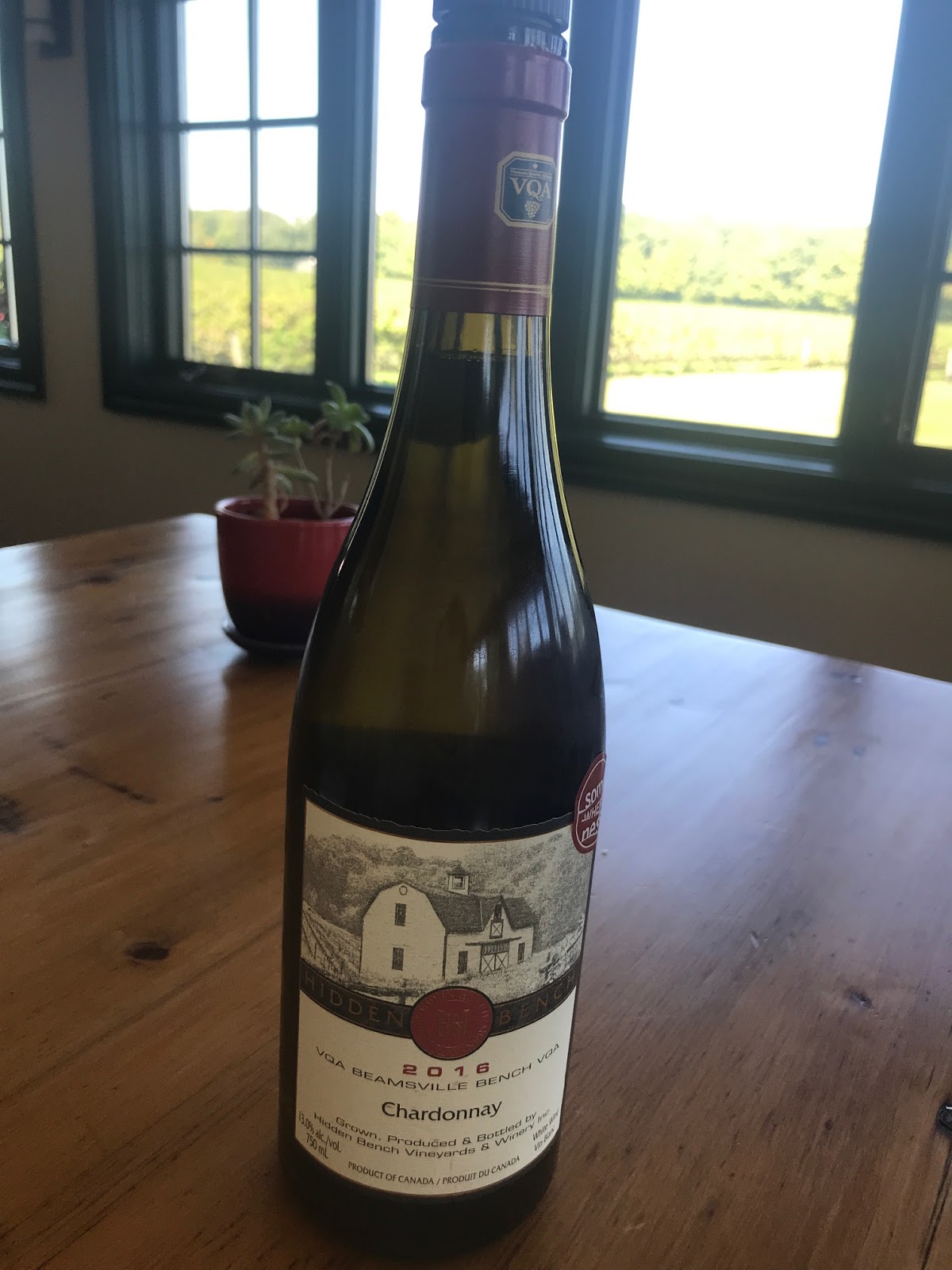
We tasted two Chardonnays: Tête de Cuvée and the Estate. The latter is made from grapes drawn from all three vineyards with 7% of the resulting wine aged in concrete egg and the remainder aged in 17% new oak. Aging extends over 9 months. Apple, pear, clay, mineral notes on the nose and rich, ripe fruit on the palate. The Tête de Cuvée is made from the 10 best barrels drawn from the Rosomel Vineyard. Oily and non-aromatic. Great weight on the palate.


The first red wine tasted was the 2016 Estate Pinot Noir. This is a blend of grapes from all three vineyards. The wine was aged in 27% new French oak and bottled unfined and unfiltered. Pinot fruit and spice on the nose, red berries and spice on the palate. Light-bodied.

The 2015 Rosomel Vineyard Pinot Noir was aged in 20% new French oak. Rich cherries and berries on the nose along with spice. Good concentration.

The 2014 Locust Lane Pinot Noir was deeper and richer than the preceding two. Dark berries, plum, earth, floral notes and spice on the nose. Intense dark cherry and anise on the palate. Concentrated.


The 2013 Terroir Caché is a blend of Merlot, Cabernet Franc, Malbec, and Cabernet Sauvignon. This wine is aged in 20% new French oak for 20 months and is then bottled unfined and unfiltered. Blackberries, plum, cassis on the nose and dark fruit on the palate. Light-bodied and not as structured as I would have liked.

Overall I found the wines of this estate to be of high quality. So much so that I bought an assorted case to take back to the US. I am especially enamored of the Chardonnays.

©Wine -- Mise en abyme

Sunday, January 13, 2019

Hidden Bench Estate Winery (Beamsville, Ontario, Canada): Viticultural environment

I have spent the last three posts framing the physical environment (bedrock, soils, climate) within which Hidden Bench Estate Winery (Beamsville, Ontario) operates. In this post I treat my actual visit to the enterprise and the facts regarding its viticultural environment.

I had sought out recommendations from Remy Charest (noted Canadian wine writer) as to wineries to visit in Ontario. Hidden Bench Estate Winery was among the first names offered so I called them up and made an appointment for a tour and tasting. When I arrived at the locale, I was pleased to find out that Harald Thiel, estate founder and proprietor, would be the one conducting the tour. Harald poured us glasses of bubbly and then headed off to the vineyards surrounding the estate.


As shown in the map below, Hidden Bench farms three vineyards , all located in the Beamsville Bench sub-appellation of the Niagara Peninsula appellation. The Locust Lane Vineyard (8.5 ha/23 acres) was purchased in 2003, co-incident with the founding of the estate, Rosomel (9.2 ha/23 acres) in 2004, and Felseck (13.8ha/34 acres) in 2007. Locust Lane and Felsek Vineyards are located adjacent to the winery while Rosomel is located 6 km to the east.

Hidden Bench Estate Winery vineyards: Locust Lane (red
rectangle), Felseck (red oval) and Rosomel (red hexagon).
Beamsville Bench is the leftmost of the four sub-appellations that occupy the benchland lying just below the Niagara Escarpment. The soil of the benchland is comprised of glacial till mixed with limestone eroded from the overhang of the escarpment.

Beamsville Bench (Source: VQA Ontario)
The appellation slopes towards the lake and this assures adequate wind and water drainage. A number of creeks from the Escarpment transit the sub-appellation on their way to the lake, providing a ready source of water for the vines. Finally, its location below the Escarpment places the bench at the endpoint of the moderating wind flow off Lake Ontario.

Harald Thiel explaining Niagara Lake climatic
zones to the author

The grape variety maps below show that the focus of the enterprise is on Pinot Noir, Chardonnay, and Riesling, a fact that is further chronicled in Table 1's drill-down into the Locust Lane Vineyard.

Source: hiddenbench.com

Source: hiddenbench.com

Source: hiddenbench.com

Table 1. Characteristics of the Locust Lane Vineyard
VarietyNumber of PlotsClonesRootstockPercent of Vineyard Vines
Viognier
3
642
3309, 102-14
6.8
Chardonnay
6
548, 76, 95, 96Riparia, 104-14
21
Malbec
1
598
3309
1.6
Pinot Noir
9
777, 386, 114, 115, 667Riparia, SO4, 104-14, 3309
54.6
Riesling
2
21 B
3309
11.4
Merlot
1
181
Riparia
9.6
Cabernet Franc
1
214
Riparia
6.1

As shown above, a wide variety of clones and rootstocks are used in the Pinot Noir plots. In the case of the rootstocks, Harald mentioned that they are moving to Riparia and 3309 in new plantings as a response to climate change. My research shows that both of these rootstocks are medium resistance to drought conditions but this comes along with low tolerance for limestone soils (there is limestone in the Hidden Bench soil mix from Niagara Escarpment erosion).

Hidden Bench is certified organic with biodynamic principles. The enterprise utilizes oil seed radish as a cover crop to help in breaking up the soil. According to the Ontario Ministry of Agriculture, Food and Rural affairs, this is a relatively new use for oil seed radish and, while it is deeper-rooted than rye grass, "... it does not provide as much organic matter nor support for equipment." The cover crop is mowed just prior to picking.


In keeping with organic requirements, no synthetic herbicides or pesticides are used in the vineyard; pheremones are utilized in the battle against the grape berry moth and the grapes are covered to protect against marauding birds.


In my next post I will cover winemaking and the wines of Hidden Bench Estate Winery.


©Wine -- Mise en abyme