Thursday, December 22, 2016

A selection of the best wines tasted in 2016: Part II, winery visits

In Part I of this topic, I had promised to complete the series in two posts. I lied. After compiling the data for the second post, I realized that I had to further segment my intended second into two distinct posts, one dealing with winery visits (mostly current releases) and the other with wines tasted "around the way" (older wines). This post covers the winery-visit wines.

Winery visits reported on the blog during the course of 2016 include:
  • Portions of the North Greece wine tour not otherwise reported in 2015
  • Visits to Domaine Skouras in Nemea and the Wines of Athens producers during the Winelovers 4th Anniversary Trip
  • Visit to wineries in Sicily, as facilitated by Brandon Tokash
  • Visit to Piemonte for the launch of Suzanne Hoffman's Labor of Love
  • Visits to port houses and estates in Porto and Douro as part of a DWCC-reverie trip
  • Visits to port houses and estates as part of the recent Winelovers Conference
  • Visit to Umbria as part of an Art in Voyage trip.
The regions, and the selected wines, are presented below.

North Greece 
Ktima Kir Yianni
Ramnista 2011 and 2005 (PDO Naoussa Xinomavro) -- More muted on nose; spicy; more vegetal character but more elegance. The 2005 exhibited some more developmental characteristics to include truffles and kerosene.


Wine Art Estate
The first wine poured was the 2013 Techni Alipias, an 80/20 Sauvignon Blanc-Assyrtiko blend. The wine was aromatic with a grassy nose accompanying grapefruit and tropical aromas. The minerality and mouthfeel reflected the Assyrtiko contribution. Bright acidity with some bitterness and a lengthy finish.

The next wine up was a 2015 Malagousia. This wine exhibited fruity and floral aromas and a slight reductiveness. White flower, white peach, white melon. Uber pleasant.

The 2011 Assyrtiko was tank fermented. Less mineral than Santorini Assyrtikos. As is the case for all the estate's white varieties, the fruit was sourced from the Kali Vrisi vineyard. Citrus and complex tropical fruit suggestive of riper grapes. Citrus rind. The 2014 Assyrtiko was barrel-aged and showed toast notes and grapefruit. The oak (medium toast) was beautifully integrated.

The 2014 Chardonnay spent six months on oak. Sweet vanilla notes and great acidity. A burnt toast flavor is late-arriving. This could be a Chardonnay in the class of Leeuwin Art Series Chardonnay or Capensis were it not for an overt oak presence


Sicily
Cantine Paolo Cali
Cantine Paolo Cali is located in the Salmé district of Vittorio in the heart of the Cerasuolo di Vittoria DOCG and Vittoria DOC regions. Within the larger estate, 15 ha of organic vineyards are planted on pre-historic marine dunes at elevations of 180 m. Two of plots -- Forfice and Frappato -- are planted on these beach sands.

As the capper to the morning's tastings, Paolo brought out a bottle of 1932 Cerasuolo. As he explained it, this was a family wine that has been stored in a 250 L chestnut vat and is only tapped for special events like holidays, festivals, and family occasions. He was somewhat sheepish in offering it, apologizing ahead of time for any injury that it might cause. He had nothing to apologize about.

The wine was golden in color, providing a visual clue to the presence of oxidative notes (or oxidation). On the nose, an elegant tawny port, figs, dates, walnuts, coffee, dried cocoa, and burnt orange. On the palate smooth, balanced with a surprising amount of acid still present after all these years. Oxidative notes that struck the right tones. Surprisingly different than what I was expecting. Still a lot of life left in this baby. Long, smooth tropical finish. I luxuriated in this wine and rued the fact that we had to leave abruptly -- with most of the bottle still intact -- in order to get to another appointment.


Barone di Villegrande (Milo, Mt Etna)
The 2012 Etna Rosso was unctuous with faded sweet strawberries, red plum, nutmeg, dried herbs, dried bark, and mahogany on the nose. Great weight on the palate along with strawberry, raspberry, and spice notes. Great acidity. Long, dried herb, spicy finish. The tannins and acidity tell of a long life to come.

Barbara Liuzzo preparing to lead us in a tasting
Lineup of the wines tasted
Azienda Frank Cornelissen
After our discussion and tour of the cellar we tasted four of the Cornelissen wines beginning with the Munjebel bianco 2014. This white wine is made from 60% Grecanico Dorato and 40% Carricante. Unlike the majority of Etna producers, Frank does not see Carricante as the best grape for the region's white wines. He feels that it is too acidic. The grapes for this wine are grown on 40+-year-old vines grown in the Calderara soprano and Borriglione vineyards. A total of 4000 bottles of this wine is produced annually. This wine is amber in color, a result of fermentation on the skins. Florality, spice, and a savoriness on the nose. Savoriness flows through to the palate. A textured wine with great acidity and a long finish.

Our next wine tasted was the estate'e entry-level red wine, the Contadino 2014. This wine is made from 85% Nerello Mascalese with contributions from Nerello Cappuccio, Alicante Bouchet, Minella nero, Uva Francesca, and Minella bianco. This 24,000 bottle production is sourced from 50+ year vines grown in the Piccolo, Malpasso, Campo Re, Crasa, Piano Daine, and Porcaria vineyards. This wine is red-fruit dominant but has some blueberry notes. Rich and earthy. Structured.

The Munjebel rosso 2014 is a pure Nerello Mascalese from 60+ year vines grown on the Chiusa Spagnolo, Monte Colla, Porcaria, Barbabecchi, Rampante, Piano Daine, and Crasa vineyards. Red berry fruit and drying tannins. Rich and balanced.

The final wine tasted was the 2014 Munjebel Feudo di Mezzo, in this case an en primeur sample. Savory with a preponderance of black olives. Long, bitter finish.


Benanti
The tasting included 2011 and 2012 Rovitellos. This is a Nerello Mascalese-Nerello Cappuccio (10%), single-vineyard blend which has been aged for 12 months in barrique and an additional 12 months in bottle. Savory dried-herb note overlaying tobacco, cigar box (more prevalent in the 2011), mahogony, spice and fig. On the palate, raisin, fig, dried and green herbs, spiciness, and an oily finish. Raisiny character more prevalent in 2011 but beautiful fruit character on both wines. The fruit masks some of the complexity of the 2011.

Tasting lineup

Piemonte
Vietti
The first wine tasted was the Arneis 2015. The grapes for this wine are sourced from vineyards planted in 1967 in Santo Stefano Roero on calcareous clay soils. The training system is guyot and the planting density is between 4500 and 500 vines/ha. The wine is fermented in stainless steel tanks and remains on the lees for 25 days.

Walnut and creamy richness. Lime and lime rind. Minerality. Attention-grabbing acidity. According to Elena this wine should be put aside for a while; maybe 1 year.

The La Crena Barbera d'Asti 2012 is sourced from vines planted in 1932. South-facing vineyard on clayey silt soils and vines trained guyot. Twenty-day fermentation in open-top steel vats and then transferred to barrels for MLF. Aged in barrels and barriques for 16 months. The old vines generally yield structured, powerful wines and this drives the decision to keep the wines in bottle for an additional year before commercial release.

Rich red fruit. Savoriness. Oily. Concentrated. Hint of sweetness. Great acidity. Full round mouthfeel yielding to a long finish.

The Barolo Brunate 2012 is sourced from 43-year-old vines grown on chalky-clay soils in the historic Brunate vineyard in La Morra. The 1.6-ha plot is planted to 4600 vines/ha. Three days of cold maceration is followed by 15 days of fermentation and five days of maceration. MLF in barrels followed by 36 months of aging in large barrels and barriques. Blended and bottled without filtration.

Classic tar and rose notes. Pine. Asphalt. On the palate, rich yet focused. Silky tannins. Fresh, fruity, and elegant.

As was the case for the Brunate vineyard, the Lazzarito vineyard is also blessed with chalky-clay soils. The 1.7 ha Vietti plot is SW facing and the 39-year-old vines are planted 4500 vines/ha. The 2012 Lazzarito had a nose of beautiful, rich red fruit with baking spices, black pepper, and a savoriness. Powerful wine with sweet red fruits dominating the palate.

I have described the Rocche di Castiglione MGA in greater detail elsewhere. The Vietti plot is 1.3 ha in size, is SE-facing and is planted to 4600 plants/ha with 47-year-old vines. A 29-day fermentation-maceration period is followed by MLF and 31 months in barrel.

The 2012 Rocche di Castiglione exhibited red cherries, roses, licorice, and spice on the nose. Power and bright acidity on the palate. Full, round mouthfeel. Lengthy finish.


Umbria
Paolo Bea
The first wine tasted was the 2011 Arboreus. The Trebbiano Spoletino vines are more than 100 years old and each plant can produce between 40 and 60 kilo of grapes. The vines are in excess of 3 m tall and grow around trees, eventually killing them. The wine spent 22 days on the skins during fermentation. The wine had an orange color and and orange peel on the nose along with a savory, nutty, asparagus character. Spicy and bright on the palate. A lovely wine.

The second wine was the 2009 Sanvalentino Umbria Rosso IGT and is made from second-passage grapes from all vineyards. In 2009 it was a blend of Sangiovese (60%), Sagrantino (30%), and Montepulciano (10%). This wine spent 32 months in oak. On the nose, sweet herbs, baking spices, and a savoriness. On the palate, sweet red fruit and power with biting acidity. Full-bodied. Mouth-coating tannins. Lengthy finish

The 2008 Pipparello Montefalco DOC Rosso Riserva is a blend of Sangiovese (60%), Montepulciano (25%), and Sagrantino (15%). This wine spent 10 months in stainless steel tanks and 33 months in 25 hl slavonian oak barrels. High-toned, focused, concentrated dark fruit with spice. Huge wine on the palate. Concentrated. Savory with tar and mint notes.

The 2008 Rosso de Vèo Umbria Rosso IGT exhibited red fruits, tar, and a little bit of stewed fruit on the nose. On the palate it showed as relatively simple and lacking in concentration. Giampiero was not satisfied with this wine and opened a second bottle. This second bottle was far more expressive on the nose and showed a lot more concentration. Anise, licorice, tar, and black fruits. Balanced.

We next tasted the 2008 Pagliaro. This is the estate's flagship wine, a 100% Sagrantino that was macerated for 38 days after which it spent 10 months in stainless steel and 33 months in large oak barrels. The vines from which the grapes for this wine are sourced are between 35 and 45 years old. Spice, anise, licorice, tar, and jammy sweet fruit on the nose. Dense and fleshy on the palate with expressive tannins.

The final wine tasted was a new entrant onto the market, the 2007 Cerrete Montefalco Sagrantino DOCG. The vines for this wine are planted in a 3-ha vineyard at the highest point of the Sagrantino area. Total production is 4000 bottles. This wine was produced in 2007 for the first time and was not produced in 2008. Grapes from the vineyard that were not used in this wine in 2007 were used in the Rosso de Vèo wine. Sweet, concentrated, dark fruit along with licorice and tar.  Delivers fully on the palate. This is a beautiful wine. I was so impressed that I bought a six-pack on site.


©Wine -- Mise en abyme

Tuesday, December 20, 2016

The best wines tasted in 2016: Part I, Antonio Galloni events

This year, I am going to present this topic in two parts: the wines tasted at Galloni events and the wines tasted everywhere else. As the title indicates, we begin with the Galloni-events wines.

I attended a total of four Galloni tastings during the course of the year:
  • Bartolo Mascarello: A Historical Perspective (1958 - 2010), a tasting dinner held at the 28º - 50º Maddox Street location (London, April 26th)
  • Soldera: Brunello di Montalcino Through the Ages (1981 - 2006), a tasting dinner held at maze Restaurant in London, on April 27, 2016. 
  • Vietti Barolo Rocche di Castiglione: A Historical Retrospective (1961 - 2011), a tasting dinner held at Vaucluse in New York City, May 10th, 2016
  • Ornellaia and Masseto Retrospective (1995 - 2010), from Magnum, a tasting dinner held at Bouley Test Kitchen, December 5, 2016.
The Bartolo Mascarello Tasting

Used with permission of Vinous Media LLC
The wines that were on my radar screen coming out of the tasting were the 1995, 1997, and all of the wines in Flights 4 and 5.

1995
I had tasted this Mascarello vintage three years ago and at that time had described it as having "a bouquet of dried cherry, soy, and sandalwood. Medium length with red fruits, leather, and mushroom." I found the wine at this tasting to be elegant on the nose with evidence of sweet flowers, tar, asphalt, and dark fruits. Intense red fruits on the palate with some stemminess. Dried rose petal, mushroom, and tobacco on the palate. Long sour finish with a drying towards the end.

1997
This wine exhibited the classic tar and roses but, in addition, an intense spiciness. Great structure and acidity. No rough edges on the palate. Long, sour finish. Best wine tasted up to that time. Antonio had similar sentiments, remarking on the sensuality, roundness, and harmony of the wine. He thought that it was the best wine of its flight.

Flight 4: Greatest Four Wines of Recent Vintages
2004
Tar, roses, green herbs. Young, balanced, focused, round. Sensation of heat. One of the first great vintages that Antonio had reviewed and he sees it as a vintage of incredible pedigree.

2006
Not very expressive on the nose. Cherries. Red fruit on the palate. Tannins present. Rich with a hint of molasses. Long, sour finish. I loved this wine. This, according to Antonio, was a vintage of structured Barolos, masculine and brooding. These wines will be long-lived.

2008
Hints of roses, tar, cigars, tobacco. Antonio saw it as having incredible aromatics and being light and delicate on the palate. He described it as being Pinot-like.

2010
Young. Spice and high-toned red fruits. Not very expressive of traditional Barolo aromas. Structured. Rich. Powerful. Brooding. Antonio considers it the greatest vintage of his time.

Flight 5: Magnum Flight
This flight included the 1986 and 1958 vintages in magnum.

1986
A very special vintage in Piemonte, according to Antonio. This vintage was under the radar. No one had paid any attention to the vintage because of hail. Few producers actually made Barolo in that year. When he speaks to producers who made wine in 1986, they consistently tell him that they prefer the 1986 to the 1985. This magnum was sourced directly from the winery.

Dried rose petals, tar, sauvage, dried herbs, leather, cigar box, and spice. Ripe and lively on the palate. Balanced. Long, sour finish. A beautiful wine. Antonio described it as powerful and pungent.

1958
Antonio thinks that this is the greatest wine ever made at Mascarello. The magnum is actually 1.9 L so that it could be used to fill two .750s while leaving the sediment in the wine remaining in the bottle.

Pungent, piercing nose with laser-sharp focus. Tar, roses, cherries, peeled green mangoes, and coriander. Savoriness. Hint of sweetness. Drinking younger than expected.

The Gianfranco Soldera Tasting


The tasting was organized into five thematic flights with the intent of allowing attendees to "trace the evolution of the wines and house styles all the way back to 1981." The flights were named and ordered as shown in the table below.

FlightNomenclatureInclusive Vintages
1
The Early Years1981, 1982, 1987, 1988
2
Sleeper Vintages2000 Riserva, 2003 Riserva, 2005 Riserva
3
The Mid-1990s1993 Riserva, 1994 Riserva, 19995 Riserva, 1996 Riserva
4
Reference Points1997 Riserva, 1999 Riserva, 2001 Riserva, 2004 Riserva
5
The Icons1993 (Magnum), 1983 Riserva (Magnum), 1990 Riserva, 2006 Riserva

After this tasting, it was clear to see why Antonio had fallen under the spell of this wine. High quality across the board and basically variations on a theme. Even in the years when vintage effects significantly affect the quality of his competitors' products, Soldera manages to produce wines that are clearly recognizable as his. I kept all of my glasses during the course of the tasting and went back at the end to taste all of the wines. Even with some of the wines being in the glass for well over three hours, they had all retained their integrity.

As it would be impractical to reproduce the notes for all of the wines in this post, I encourage you to follow the link in this title section to get to the tasting notes. Each one of these wines fall into the category of the best wines I tasted in 2016.

The Vietti Barolo Rocche di Castiglione Tasting


Used with permission. Courtesy of Vinous, LLC.
The first wine tasted was the 1986. Luca was attending enological school during this vintage when the area was hit by hail on a late morning in early May, causing the loss of 2/3 of the crop. If the hail occurs early enough, you can still make good wine. And they did. This was the wine of its flight. Balsamic, stewed fruit, iron, tea, dried rose petals, herbs and a savoriness on the nose. On the palate intense red fruit along with olives, mushroom, leather, licorice, and white truffle. Balanced with a long, elegant finish.

The 1996 was the wine of its flight. Balsamic, dried rose petals, and dried herbs on the nose. Tight focus. Elegant. Engages all elements of the palate. This wine will age forever. According to Luca, Rocche likes cool vintages and such conditions prevailed for this wine. Luca likes it because of its freshness. He called it "super classic."

The 2004 exhibited spice, red fruit, lead pencil, and licorice. Unctuous. Sweetness on the palate along with great acidity, tar, licorice, and anise. Weighty. Rich, long finish. A long growing season and the first vintage of finesse in Barolo (Antonio Galloni).

The 2006 exhibited tar, earth, and licorice on the nose and licorice and anise on the palate. Virile and powerful but with silky tannins.

Rich red fruit on the nose of the 2010 along with rose petal, mint, and tar. Rich red fruit and anise on palate. Powerful. Lengthy, tart finish. According to Antonio, has been fantastic from the beginning.

The Ornellaia and Masseto Tasting


The 2006 Ornellaia was the first of the wines tasted to exhibit any noticeable acidity. Rich and intense, with juicy acidity surrounded by a beautiful core of fruit. Good levels of fruit and acidity in the 2006 Masseto. Rich, structured, powerful, and balanced. This wine is a buy.

The 2004s were the first wines to show really well on the nose. This illustrated the relative youth of the previous wines. The Ornellaia had floral notes along with tea, licorice, and olives. Full-bodied. Heavier than the earlier vintages. The Masseto was a beautiful wine. Classic older Merlot. Granny's attic, spice, and a dankness. Weighty and structured.

The 1998 Ornellaia was a beautiful wine. Cigar box, tobacco leaf, and black fruit on the nose. Textured and structured. A "come-hither" wine. The Masseto presented cigar box, tobacco, orange peel, and spice. Textured and balanced with a long finish. Axel remarked on the "smoky tobacco leaf character" of both of the wines in the 1998 vintage.
The 1997 Ornellaia was a desirable wine with still a lot of life ahead. A little green pea and coconut on the nose along with a restrained orange peel. Fresh on the palate. Fine-boned and elegant. Long finish. 

The 1995 Masseto showed tobacco and Granny's attic. Great acidity and sharp red fruit. Lengthy finish. An excellent wine.


©Wine -- Mise en abyme

Sunday, December 18, 2016

Selected Cuba accommodations for the discerning traveler

In May of 2015, I wrote a blog post titled "Short- and long-term implications of US-Cuba travel liberalization for Caribbean tourist destinations" wherein I posited:
  • In the short term, a slow but steady increase in the number of US tourits visiting Cuba
  • Displacement of European and Canadian tourists by US tourists if liberalization accelerated
  • US tourists will demand higher levels of service than the OECD tourists they will be displacing 
  • A need for between 98,000 and 116,000 additional hotel rooms, in the longer term, to support the potential 3.2 million yearly US tourists.
In my recent trip to Cuba, I kept an eye open for currently available accomodations with which these higher-services-demanding US tourists would be comfortable.

Accomodations on the island currently fall into two categories: Hotels and casas particulares. The casas particulares came about as a part of the government's "initiative" to allow private ownership of selected types of businesses and allows a homeowner to rent a part of the home to a visitor. This type of accomodation varies all over the map in terms of consistency of service and location, is relatively bare-boned, and has limited applicability to the non-adventurous US traveler.

More to the liking of this type of tourist will be the hotels located to the west of the old town and currently grouped around the area close to the beginning of the Malecon, the 5-mile-long boulevard that stretches from Vedadao to Old Havana. I will share some pictures of two of these establishments in this post.

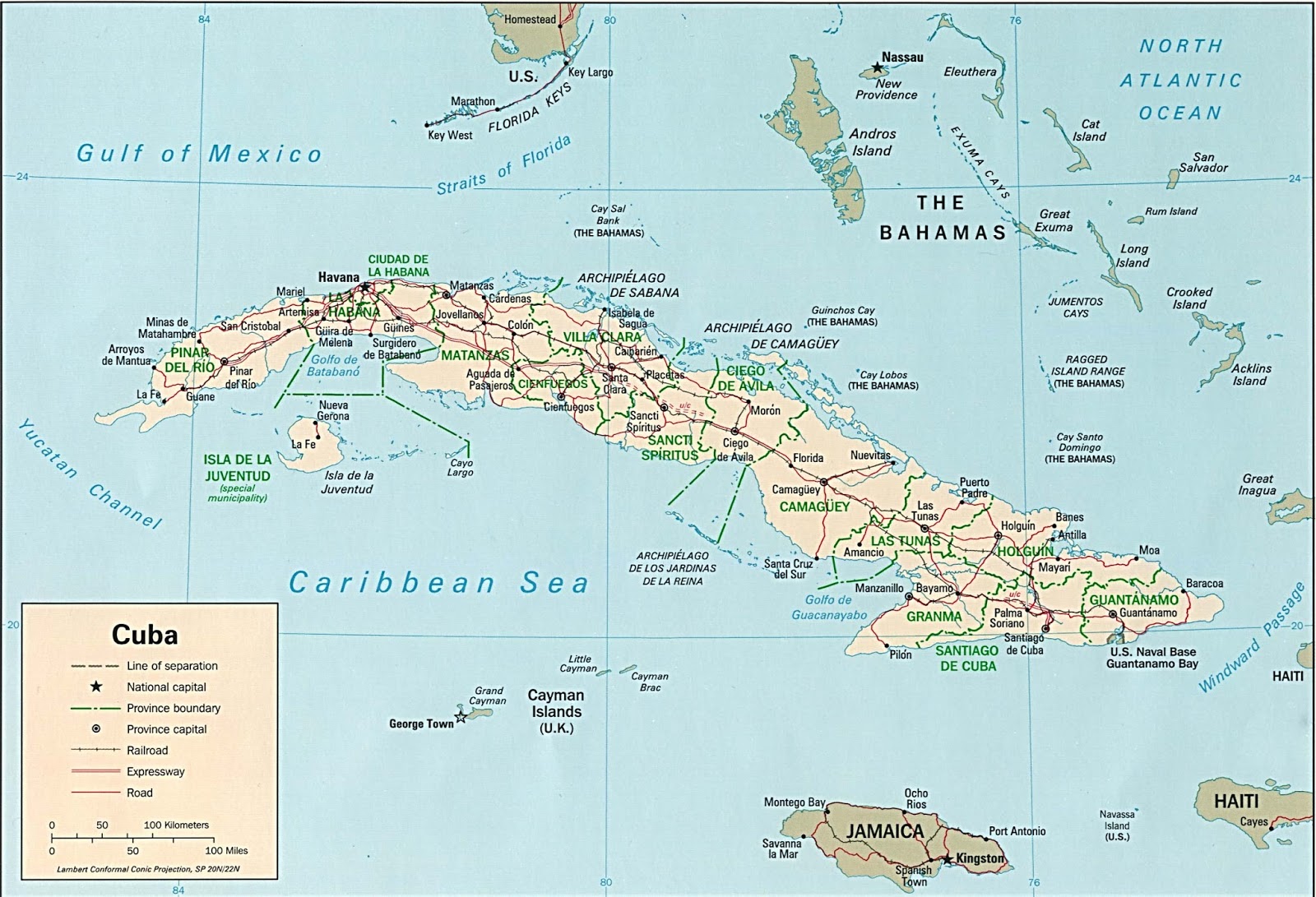
Traveling in from the airport to Havana, my eyes soaked in the countryside of this heretofore unvisited land. And everywhere you looked, you saw signs of disrepair: the cars; the buses; the buildings; and the people. After about a 40-minute ride, we arrived at a reasonably modern-looking structure, our hotel for the duration, the Tryp Habana Libre. This hotel is one of three in the area currently managed by the Meliá Hotel Group. The hotel's location is indicated on the map below.

Source: http://www.lib.utexas.edu/
Tryp Habana Libre had been owned by the Hilton Group, under the name Hotel Habana Hilton, before being expropriated by Fidel Castro . The hotel became Fidel's HQ when he entered Havan ain January 1959 and was eventually nationalized, along with all other US hotels, in October 1960.

The hotel has a total of 25 floors with standard accomodations below the 20th floor and executive-level accomodations on floors 20 and above. These two groups both have separate check-in and breakfast facilities. The hotal has seven associated restaurants and a pool on the topmost floor. The pictures immediately below were taken in our room and show, in my opinion, the type of accomodation that a discerning traveler would be comfortable with.


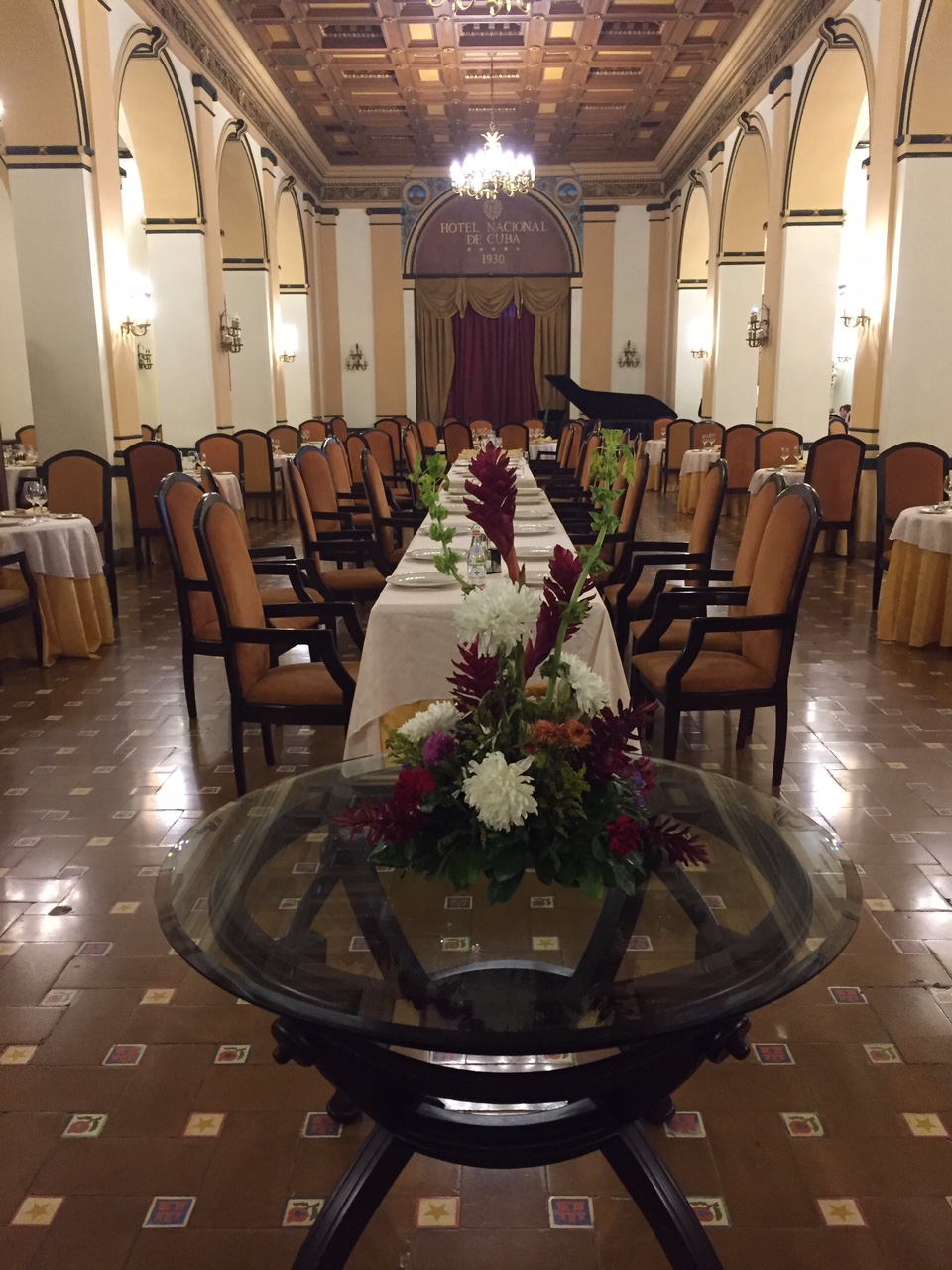
In addition to Tryp Habana Libre, we spent a fair amount of time at the Hotel Nacional, the 85-year-old luxury hotel that sits on a hill on the Malecon in Vedado and affords absolutely beautiful view of sunsets, the ocean, and people, both on the Malecon and on the hotel grounds. Some pictures of/from the Malecon follow.

Hotel Nacional from the upper dining room at Tryp Habana Libre


Jesse Jackson -- contemplating the future at
Hotel Nacional 


Dining Room at Hotel Nacional


©Wine -- Mise en abyme

Thursday, December 15, 2016

2016 Blog year in review and 2017 prospects

This past year I continued to build a body of work, with an especial focus on Greek and Italian wines and wine history. I have also begun an effort to further improve the cohesivness and accessibility of the blog content.

North Greece
The early part of the year was devoted to detailing the story of the North Greece wine region using data collected during an EWBC pre-Conference trip sponsored by Wines of North Greece. At the conclusion of the series the reader would have been cognizant of the environment, the wines, and the issues that market players confront as they strive to make quality wine as well as improve the standing of Greek wine on the world market while confronting strong headwinds at home. The individual posts produced as a result of that trip and subsequent efforts are shown below.
Italy
The Italian campaign rolled out on a number of fronts. First, I visited Sicily and, with the leadership and direction of the most connected man on the island -- Brandon Tokash -- was able to meet, amd spend quality time with, some of the leading winemakers in broader Sicily and Mt Etna. Combining that primary material with secondary data from Nesto and di Savino's The World of Sicilian Wine resulted in a number of high quality posts on the regional landscape, wine infrastructure, and wines.

I also paid a visit to Umbria and the highlight of that trip was a visit and tasting at Paolo Bea.

Another angle of attack in the Italian campaign was participation in, and reporting on, themed tastings of significant Italian wines organized by Antonio Galloni and Vinous and held in both London and New York. In many of the cases the winemaker was also in attendance at the event. These tastings allowed deep historical perspectives on the wines of Gianfranco Soldera, Vietti Rocche di Castiglione, Bartolo Mascarello, Ornellaia, and Masseto. And my efforts did not only focus on the actual wines tasted. If I had not previously profiled the winery or the region associated with the producer, I did so prior to publishing the post on the tasting.

Unfortunately for Piemonte, this year the region has been in the news for reasons other than its great wines. Sometime in August it was announced that the Vietti family had sold its winery and vineyard holdings to an American company named Krause Holdings. This news caused an uproar among Barolo fans. I had sat next to Luca at the Galloni Vietti tasting and had visited the estate a few weeks later as part of the launch of Suzanne Hoffman's Labor of Love. I wrote a couple of relevant posts following the announcement, one looking at the implications of the sale for the broader Barolo region and the other looking at the practical implications for Krause holdings of being in control of both the Vietti and Enrico Serafino (an earlier purchase) properties. Some of the fears I had voiced in the first post on the broader implications will be validated if a rumored purchase of Roberto Voerzio by LVMH does come to fruition.

The History of Terroir
In his sweeping treatment of ancient versus modern wines (Inventing Wine), Paul Lukacs identified the seminal terroir events in France as the demarcation of the Burgundy vineyards by the Cistercian monks beginning in 1098 and the AOC system implemented in the early 20th century. But this apparent terroir desert misses the true formative period -- as well as the ups and downs -- of this concept, beginning during the Renaissance and continuing for two centuries thereafter. A period and history that is detailed in Thomas Parker's Tasting Terroir: The History of an Idea. I summarized Parker's history in a number of blog posts and further summarize the effort in the timeline below.


Book Reviews
I read a number of excellent wine books during the course of the year but only reviewed three of them on the site.

Suzanne Mustacich's Thirsty Dragon is the War and Peace of wine literature. I had to read it twice in order to tease out the many threads and fully internalize and embrace the story that it related. It is a tour de force, throughly researched and impeccably sourced with 40 pages of chapter-specific notes and an index; but the fullest potential is unrealized. That being said, the reporting and analysis contained within the book are exceptional. The epilogue, titled Shangri La, is an especially cogent and insightful piece of analysis.

While a lot of attention, as regards Piemontese winemaking, has revolved around the battle of the modernists versus traditionalists, or the Burgundization of Barolo, the region has also been undergoing an under-reported transformation: the rise of women into the wineries' leadership ranks. And it is this under-explored story that Suzanne Hoffmann captures, and tells effectively and empathetically, in her initial publication Labor of Love: Wine Family Women of Piemonte.

The World of Sicilian Wine (Bill Nesto MW and Frances di Savino, University of California Press(UCP)) is simply the best region-specific wine book I have ever read. It is comprehensive, detailed, informative, well-structured, revealing, and an ode to research well done. In addition, the writing style makes it easy to read and comprehend -- traits not equally shared by all books issuing from UCP.

Blog Organization and Futures
As shown in the bulletized material regarding North Greece above, I have begun a process of tightly tieing all posts to a region. This allows for a more cogent presentation of the material as well as providing me with a road map of uncovered areas. I have begun to do this with all new posts and will go back during the course of the next year, to painstakingly allocate each of my past posts to its appropriate slot(s).

**********************************************************************************************************

This has been a personally rewarding year. I hope that you have derived some value from my musings. I hope to continue along the same path during the course of the upcoming year: learning new things and sharing them with you.


©Wine -- Mise en abyme

Sunday, December 11, 2016

Antonio Galloni and Vinous Ornellaia and Masseto Retrospective (1995 - 2010), from Magnum

Antonio Galloni had had to work overtime in order to convince Axel Heinz (the Ornellaia and Masseto winemaker) to agree to a wine tasting that would, essentially, allow direct comparison of the estate's two major wines. Antonio's powers of persuasion carried the day and now here we were, at Bouley Test Kitchen on December 5, 2016, ready to participate in the Ornellaia and Masseto Retrospective (1995 - 2010), from Magnum.


As early arrivals stood around the dining area chatting, or searching out their appointed seating, we were served 2008 and 2009 Pierre Peters Champagne. The Champagne was then followed in short order by a number of passed Hors-d'Oeuvres, each, in its own manner, pleasing to both vision and palate.


We were eventually called to order and grudgingly took our seats with longing, backward glances towards the origin point of the Hors-d'Oeuvres. Antonio shared the particulars of the tasting with us:
  • The wines would be tasted in flights arranged from the youngest to the oldest
  • Every wine was to be poured from magnum
  • Each magnum had been sourced directly from the winery
  • The wines had been opened at 5:30 pm that day and were all in good condition
  • The tasting included all of the significant vintages falling between 1995 and 2010. 
From an operational point of view, the tasting would be broken into four flights, each flight containing two vintages and each vintage having both an Ornellaia and Masseto included. Each flight would be paired with a course, but the wines would be presented at the table prior to the associated dish being served.


Amouse Bouche

Flight 1: 2010 and 2007 Vintages
Axel was called upon to introduce the first flight. He characterized the 2007 vintage as an early year with cool conditions during harvest while the 2010 was the latest ripening vintage he had ever seen up to that time. 2010 was not, he said, the most typical vintage of the estate.

Both of the 2010s were still very young to the taste. The Ornellaia showed powerful, intense dark fruit, some structure, and a licorice coating on the palate. I found the Masseto to be unyielding on the nose. Full finish with a hint of green.

The 2007 Ornellaia was broader-based than the 2010. Dark, ripe fruit. The 2007 Masseto was perfumed with hints of balsamic and licorice. Tight. Rich dark fruit and some green on the palate.

Forager's Treasure of Wild Mushrooms with
Sweet Garlic and Special Spices

Flight 2: 2006 and 2004 Vintages
According to Axel, 2006 was a strange wine. It had not been easy to make but turned out well having, as it did, a richness, high tannins, high acidity, and concentrated fruit. The 2004 was a textbook vintage with ideal conditions yielding grapes that had ripened evenly and uniformly (masseto.com).

The 2006 Ornellaia was the first of the wines tasted to exhibit any noticeable acidity. Rich and intense, with juicy acidity surrounded by a beautiful core of fruit. Good levels of fruit and acidity in the 2006 Masseto. Rich, structured, powerful, and balanced. This wine is a buy.

The 2004s were the first wines to show really well on the nose. This illustrated the relative youth of the previous wines. The Ornellaia had floral notes along with tea, licorice, and olives. Full-bodied. Heavier than the earlier vintages. The Masseto was a beautiful wine. Classic older Merlot. Granny's attic, spice, and a dankness. Weighty and structured.

Organic Millbrook Venison with Wild Pawpaw
Fruit

Flight 3: 2001 and 1998 Vintages
The 2001 and 1998 vintages are two of the most important reference points for the estate. Michel Rolland, the long-time consulting enologist for the estate, calls 2001 the best vintage that he has ever seen in Tuscany.

The 2001 Ornellaia presented cigar box, cedar, cocoa, and coffee. Diminished fruit levels and pleasing acidity. Classic Bordeaux nose. The Masseto had been decanted earlier in the day due to "tightness." It presented green pea, a mustiness, curry, and tobacco. Sweet ripe fruit on the palate. Axel feels that the 2001 is the most opulent Masseto that he has tasted.

The 1998 Ornellaia was a beautiful wine. Cigar box, tobacco leaf, and black fruit on the nose. Textured and structured. A "come-hither" wine. The Masseto presented cigar box, tobacco, orange peel, and spice. Textured and balanced with a long finish. Axel remarked on the "smoky tobacco leaf character" of both of the wines in the 1998 vintage.


Organic Colorado Lamb with Organic Snow
Peas, Sweet Peas, Fava Beans, Okra, and
Organic Rosemary-Perfumed Quinoa

Chef's Surprise: Eggs and White Truffles

Flight 4: 1997 and 1995 Vintages
According to Axel, 1995 was a cool-climate vintage while 1997 was the year that the estate introduced a second wine at Ornellaia.

The 1997 Ornellaia was a desirable wine with still a lot of life ahead. A little green pea and coconut on the nose along with a restrained orange peel. Fresh on the palate. Fine-boned and elegant. Long finish. The Masseto was all Grandma's attic, black fruit, cedar, cigar box, tobacco, and talcum powder. Elegant. Great weight on the palate along with tobacco, dark fruit, a savoriness, and spice. A lengthy, slightly pruney finish. This is one of the vintages where I distinctly preferred the Ornellaia to the Masseto

The 1995 Ornellaia was unyielding on the nose.  A little blue fruit. Tired. The 1995 Masseto showed tobacco and Granny's attic. Great acidity and sharp red fruit. Lengthy finish. An excellent wine.

Chef's Selection of Mature Artisanal French
Cheeses by Maitre Affineur Rodolphe le Meunier


Axel Heinz signing bottles
My memento


This tasting more than lived up to expectations. I went in looking to taste as much Masseto as I could and came away with  a new-found respect for Ornellaia. I will be buying that label in a more studied fashion going-forward, rather than reflexively, as I do today.

The dishes that accompanied the tasting were all of exceptional quality. The standoiut for me though was the Organic Millbrook Venison. It had a nice spicy undertone and was so tender that the knife glided through. Great texture.

This was a memorable evening. And I made a bunch of new friends at my table.


©Wine -- Mise en abyme

Tuesday, December 6, 2016

Ornellaia - Masseto Wine Dinner: Peering into the mind of Axel Heinz, the estate's winemaker

Masseto is one of my favorite wines, as evidenced by its frequency in my cellar and the number of mentions that it has received in my social media posts. As a fanboy, then, I had to be in attendance at the Antonio Galloni/Vinous Ornellaia and Masseto Retrospective (1995 - 2010) held at Bouley Test Kitchen in New York City on December 5th. And, ... Axel Heinz, the winemaker for both labels, would be guiding the attendees through the tasting of these, the greatest vintages of the estate (For the uninitiated, Masseto is a 100% Merlot wine while Ornellaia is a Bordeaux blend. Both wines  are currently produced at the Ornellaia estate in Tuscany's Bolgheri wine zone.).


The kitchen at Bouley Test kitchen

In his opening remarks, Antonio Galloni spoke to the genesis of the tasting. Five years ago he had organized a Masseto vertical which went up to the 1986 vintage, the earliest in the label's history. It had been relatively easy to get Axel to lead that event. Not so this tasting. Antonio had to work overtime to convince Axel to do this dinner because the estate does not like to show the two wines in opposition to each other. In his opening remarks, Axel validated Antonio's comment about showing the wines together. The estate views the labels as two separate and distinct wines and treats them as such.

Axel Heinz speaking to some of the attendees
prior to the start of the tasting

As it relates to Masseto, Axel sees the wine as almost an accident of nature. When Ornellaia began, a few estates in Tuscany had already planted Merlot. Ornellaia felt that it had to do something to differentiate itself from the 400-lb gorilla in the room (Sassicaia) and that imperative drove the development of Masseto.

The early efforts in this direction were spearheaded by Andre Tschelistcheff, the noted Russian-American enologist, who found the hill with the grey clay and encouraged the Ornellaia team to plant Merlot thereon. The first harvest was in 1986 and the resultant wine was labeled Merlot. The name Masseto appeared on the label for the first time with the 1987 vintage.


With the success of Masseto, the estate did not want to use the Merlot grapes from that vineyard in the Ornellaia blend. It was a full 10 years before Merlot vines planted in other parts of the property attained the maturity to warrant their inclusion in the blend.

Axel sees the Masseto vineyard as very complex (I have assessed the vineyard in a previous post), a complexity akin to Burgundy's Clos Vougeot in that it has three levels and the soils are heterogeneous. In some vintages, they end up with as much as eight separate wines which have to be combined into the final blend (The estate harvests, vinifies, and ages individual plots separately and deploys a team to compose the final blend prior to bottling.).


Approximately 100 ha of vineyards are dedicated to grapes for the Ornellaia blend with different soils, elevations, and expositions being the order of the day. Ornellaia is more of a left-bank wine and Masseto more right bank (if one thinks in terms of Bordeaux) and Axel feels blessed in that being in Bolgheri gives him a chance to employ both winemaking styles in the same location.

I sat next to Axel during the course of the dinner and took advantage to gain his perspective on a number of winemaking issues. One area of exploration was optimal picking time. He was adamant that you need to taste the grapes in order to make a determination as to the best time to pick. In his view, no amount of data can substitute for the taste of the juice on your palate and the crunch (or not) of the seeds between your teeth. At Ornellaia they like to pick ripe with excellent aromatics without pressing through into over-ripeness.

He talked about the difficulty of working the clay soils of the Masseto vineyards. In periods of rain, the soil absobs the water and becomes very heavy. After it has become saturated, pooling becomes a problem. When the soils become water-logged, they have to leave it alone for a few days before returning to work at it again.

I asked him about the potential for a cru Masseto wine; that is, a wine drawn exclusively from one of the three areas of the Masseto vineyard. He saw that as very unlikely. Even though there are, from time to time, temptations regarding some of the components from the middle vineyard, it is the balance that these three vineyards bring in the bottle that is the essence of Masseto. He indicated that many people have told them that they should make a Cab Franc wine but they feel that Ornellaia would be hurt if they went down that path.

In closing this part of my discussion of the tasting, it should be mentioned that the estate is currently building a separate winery to support the production of Masseto. This is the ultimate gesture in showing the world that these are two truly distinct wines. While the field operations will still be conducted by a single team, the two winery operations will be separate. According to Axel, if you make a visit request to Masseto, you will go to the Masseto winery and taste Masseto wines; and likewise for an Ornellaia visit.

I will go into the details of the tasting and dinner in my next post.

©Wine -- Mise en abyme

Sunday, December 4, 2016

Some considerations when traveling to Cuba from the US

Havana is located 105 miles south of Key West but could be in the hinterlands of Inner Mongolia, given the historical lack of access. I recently traveled to the island and share some of the things to look out for in this post.

Source: http://www.lib.utexas.edu/

I was scheduled to fly out on Novmber 29th but this decision came under further consideration when Fidel Castro's death was announced on the 25th of the self-same month. This news gave me pause because of uncertainty about reactions on the ground as well as concern about traveling to an unknown place in uncertain times. But I persevered because of i) my perception as to the historical nature of the flight and ii) the risk that the incoming administration could roll back the program under which this travel was currently allowed. I relayed the specifics of the trip in a previous post.

As I am wont to do, I called AT&T from the airport seeking a voice and data package for the country to which I was traveling. If you are an AT&T customer traveling to Cuba, you are flat out of luck: AT&T has no communications package for Cuba. Their advice to me was to turn my phone off for the duration of the trip and to take advantage of wifi if/when I gained access to it. If you persist and use your phone, voice, data, and text services are very expensive.

Entry in to Cuba is slightly different than I had experienced in other countries. First, the documentation that you are requierd to complete before approaching the authorities includes a medical questionnaire. Second, there is a security screening just after clearing immigration. Third, there is a medical screening once you have successfully navigated the security screen.

Checked luggage is reclaimed beyond the medical screen and Customs Enforcement has both Declare and Nothing-to Declare channels.

Individuals traveling to Cuba are required to convert hard currency to Cuban Convertible Pesos (CUC) in order to purchase goods and services on the island. The exchange rates are set by the government and are very unfavorable for the US dollar. During the time that I was there, US$100 yielded CUC87. One of the lessons that I learned from a seasoned Cuban traveler was that a US traveler should obtain Euros from their home banks and convert those to CUCs while in Cuba rather than doing a direct $ to CUC transaction. There are two currency conversion stations on the outside of the terminal building, one at each end. In addition, there are Cambios sprinkled throughout Havana.

You need CUCs in order to take a taxi into town. The average fare from the airport to downtown is CUC30.

Travelers to Cuba either stay in a hotel or in a private residence (casas particulares). In either case, it is the travelers responsibility to ensure that the lodging expenses are settled in CUC. These lodging expenses cannot be settled with an American credit card. In some cases a reservation will show that the stay is guaranteed by the American card but beware, a third party has to do the necessary transaction completion or you have to be prepared to pay in CUCs on your arrival.

Some specific financial issues to take note of: (i) US banks are barred from doing business with Cuban entities therefore US-issued credit and ATM cards are non-functional on the island; (ii) always carry more cash than you think you will need because you will not have the backstop of a credit card; (iii) you cannot wire money into Cuba from the US; and (iv) you cannot have someone send you money to Cuba by Western Union.

In traveling to the airport for your return flight, be sure that you know which terminal your airline departs from and provide that information to your driver. JetBlue, American and Delta fly in and out of Terminal 3. The distance between Terminals 2 and 3 is 3 kilometers. There is no inter-Terminal transportation so if you go to the wrong terminal, you will will incur a CUC10 - 15 taxi charge to get back on the right track.

Happy trails


©Wine -- Mise en abyme