Thursday, September 30, 2021

Regenerative Agriculture and Agroforestry: The effect of trees on water parameters in the vineyard

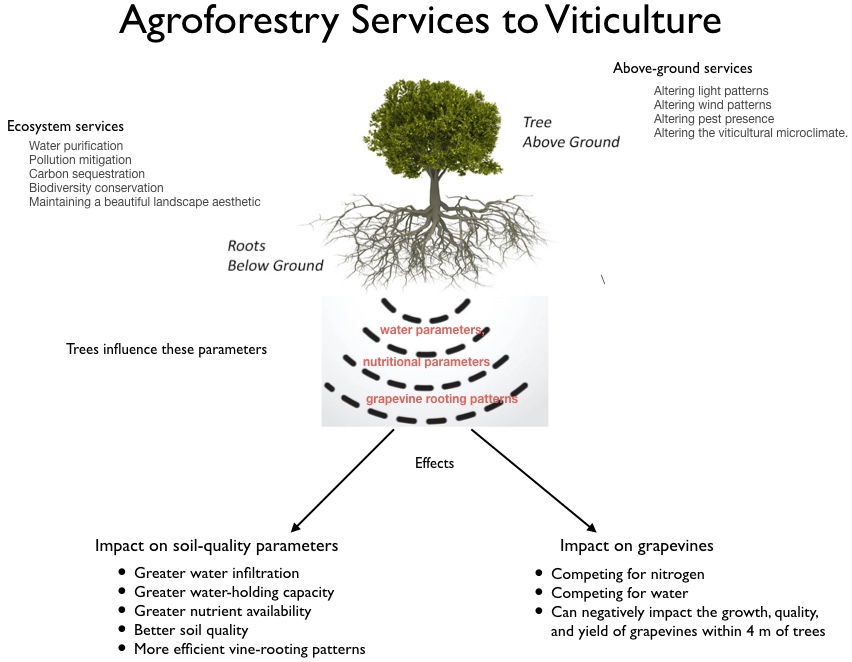
Drawing heavily on Favor's Master Thesis, my recent post on Agroforestry practices in Regenerative Agriculture identified the range of above- and below-ground services provided by trees in the context of vineyards. I return to the topic to discuss the workings of those particular services and their detailed impacts. 

The chart below summarizes the above- and below-ground services, with the below-ground component revolving around elements associated with water, nutrition, and grapevine rooting patterns. I treat the water aspect in this post.

Water is extremely important to the functioning of the vine plant but too much, or too little, can have adverse effects, with run-on impacts on fruit quality. Water sources for the vine include stored soilwater, effective in-season rainfall, and any water that is added by the viticulturist. According to Favor, the presence of trees in the vineyard will result in (i) increased water conservation and (ii) competition between trees and grapevines for water.

Increased Water Conservation
Favor points out that even though grapevines are a relatively drought-resistant species -- most wine regions are located in relatively low-rainfall areas -- "conserving moisture is a high priority in most vineyards." While it would be difficult for droughts to kill off the vines entirely, they can:
  • stunt vegetative growth
  • reduce fruit quality
  • completely suppress fruit production
  • yield expensive water bills in the cases where irrigation is practiced
  • dry up the groundwater.
Trees in agroforestry systems conserve moisture using the mechanisms illustrated in the chart below.


Further, trees increase soil water-holding capacity by improving overall soil structure (Favor). The figure below shows the components included in a soil matrix. According to Favor, trees 

Soil matrix cross-section (Source: serc.carletoon.edu)

improve the soil structure by boosting both organic matter and microbial populations which, in turn, aid in the formation of stable aggregates and a higher incidence of micropores and macropores. These micropores and macropores are the storehouses in which the increased levels of water are held. According to Favor, agroforestry systems can increase organic matter by up to 100% with every 1% increase, yielding a 1.9% increase in soil water-holding capacity.

"All in all, agroforestry systems are able to significantly increase soil moisture, water infiltration rates, water recharge capacity, and water holding capacity" resulting in "greater drought resistance and less reliance on irrigation" (Favor).

Competition between Trees and Grapevines for Water
Favor asserts that some competition for water between trees and grapevines in an agroforestry system is inevitable. The trick here is to avoid severe water deficits for the grapevine (see table below).

Effects of Severe Water Stress on the Grape Vine
Stage
      Effects
Bud Break
  • Water stress infrequent at this stage
  • Moderate levels -- uneven bud break and stunted shoot growth
  • Severe levels -- poor flower cluster development; reduced pistil and pollen viability; nutrient deficiencies
Post-Berry Set
  • Severe levels -- flower abortion and cluster abscission; reduced canopy development; impact on following season’s crop potential

Post-Fruit Set
  • Restrict berry cell division and enlargement resulting in smaller fruit and lower yields
  • Reduced shoot development
  • Reduced yield potential
  • Reduced fruit soluble-solids accumulation
  • Higher pH fruit
  • Decreased acidity
  • Reduced color development in red varieties
Post-Harvest
  • Reduced root growth with resulting decreased nutrient uptake and micronutrient deficiencies the following spring
Source: Wample and Smithyman, Regulated deficit irrigation as a water management strategy in vitis vinifera production in Deficit Irrigation Practices, ftp://ftp.fao.org/agl/aglw/docs/wr22e.pdf%20.

Overlapping somewhat with the above, Favor sees excessive water stress:
  • reducing the number of bunches per vine
  • reducing photosynthesis (reduced leaf area and increased stomatol closure yield lower berry sugar levels)
  • reducing both fruit and vegetative growth
  • negatively affecting sugar metabolism and flavor development.
Excessive water stress, then, is to be avoided at all costs. Some water stress, on the other hand, does seem to have positive quality implications for the grapevine.

Vine water stress is created when this available water supply is reduced beyond the vines climatic needs.  In areas where irrigation is allowed, viticulturists use controlled irrigation to induce vine water stress. In this scenario, the soil water resources are utilized for the plants needs up through bud break and then amounts less than required are provided to the plant (This would include effective rainfall plus irrigation). This limited water access creates a stress situation for the vine, which, in turn, results in the quality enhancements that the viticulturist seeks. That is, the soil will provide for the vine's needs with stored soil water and the vines will dive deeper -- a stressed situation -- in search of additional water when the near-in sources have been depleted. 

Research carried out by UCDavis' Dr Terry Prichard on berry size and vine balance shows that:
  • For a given berry size, vines grown with low irrigation have a higher anthocyanin concentration (between 15% and 33%) than those grown under higher irrigation conditions
  • There is a higher concentration of skin tannins in low- versus high-irrigation environments
  • Water deficits result in lower yields which, in turn, results in lower veggie characteristics and fruitier wines.
According to Favor, mild water stress has been shown to:
  • Improve wine quality by increasing the sugar:acid ratio, lowering malate and total titratable acid concentrations, and increasing total soluble solids
  • Increase grape phenological profiles
  • Increase sugar concentration in berries
    • In a study comparing the effects of 25%, 50%, 70%, and 90% soil moisture regimes, the 25% regime was found to produce the smallest berries and the highest concentrations of sugars and phenological compounds.
Trees and grapevines do impart some levels of water stress through "competition and root niche overlap" but this is more than offset by the beneficial water contributions provided by trees (as detailed in the foregoing section). Some stress is good for the vine plant; and trees in an agroforestry system will provide that. According to Favor, "given all the tradeoffs, research findings suggest that trees would not induce damagingly high levels of water stress."

I will continue in my next post with agroforestry's impact on vine nutrition parameters.


©Wine -- Mise en abyme

Tuesday, September 28, 2021

Piccolo Derthona: A Colli Tortonesi Timorasso entry point for the impatient

Timorasso is a notoriously difficult grape to grow. And your troubles are not over once you get it into the cellar: it requires extended vessel and bottle aging before it is truly ready to be released on the market. Making Timorasso wine is expensive when you factor in the additional vineyard labor costs and the time, material, and opportunity costs associated with extended aging. Producers wanted a mechanism whereby they could realize some offsetting revenue while they awaited the release of the Derthona and thus was born the concept of the Piccolo Derthona, an earlier-release, lower-cost, 100% Timorasso wine.

I have previously characterized the Piccolo Derthona as being akin to a Rosso di Montalcino but recently came across a more pointed reference: "The name, Piccolo Derthona, is inspired by what is done in French Chablis, a great territory for white wines, where the Petit Chablis is produced with the same goal, that of creating a distinctly fresh and pleasant wine, compared to the richer and more structured Chablis, in our case the Derthona."

The Colli Tortonesi Consorzio has submitted an application to the appropriate authorities for the designation of a Derthona sub-appellation within the Colli Tortonesi DOC covering the production of Timorasso vines within its borders. The submittal covers a Riserva (released a minimum of 2.5 years after harvest), a Derthona, and a Piccolo Derthona (both requiring a minimum of 1 year aging). The difference between a Derthona and a Piccolo Derthona will be based on quality parameters as well as tasting panel assessments.

The picture below show the eight Piccolo Derthonas currently produced from Colli Tortonesi Timorasso grapes. 

Piccolo Derthona wines currently produced in
Colli Tortonesi (Picture courtesy of Conrad Mattern)

The producers currently utilize a mix of reduced aging time (Pomodolce, Boveri Giacomo, Massa, Cantina di Tortona), lower quality/younger grapes (Repetto), or both (Canavero Luca) to distinguish the Piccolo Derthona from the Derthona. The proposed Derthona appellation calls for a similar aging period for both Piccolo Derthona and Derthona so producers will either have to declassify grapes, use grapes from younger vines, or use grapes from lower-quality production sites for the Piccolo wine. 

It should be noted that extending the aging period of Piccolo to one year will increase its aging costs and will also cut out an early revenue source for producers who had historically aged the wine for less than one year. 

It should be noted that only one of the big-name producers - La Spinetta -- currently offers a Piccolo Derthona and that none of the non-Langhe outsiders do. It will be interesting to see whether this state of affairs continues into the future. 

I personally have been concerned that a wine drinker encountering Piccolo as her/his intro to Timorasso may wonder what the fuss is all about and not take the time to explore the variety further. 

Below I describe the individual offerings in some more detail.

**********************************************************************************************************

Pomodolce Piccolo Derthona
Pomodolce farms 3 or 4 ha (depending on source) in the Montemarrone municipality of Val Curone. The estate, established in 2005, sources its estate grapes from the areas of Fontanino, Pomodolce, and Barone. The vineyards -- average elevation 380 m -- are sited on calcareous clayey soils and are exposed to the southwest. Vines are planted at 3500 vines/ha and are farmed using organic principles.

The grapes are fermented in stainless steel tanks and aged in-place for 8 months. In contrast, the estate's two Derthona wines are each agaed for 10 months.

Boveri Giacomo Piccolo Derthona
The grapes for this wine are sourced from a Costa Vescovato plot which has been farmed by the family for decades but which has been planted to Timorasso beginning in 2013. Vines are trained Guyot with the between-row spaces grassed.

The grapes are hand-harvested and then soft-pressed with the must clarified prior to fermentation. The wine remains on the lees for 5 - 6 months and is then bottled in the spring following harvest.

Canevaro Luca Piccolo Derthona
This 8- (or 9-) ha estate is located in the municipality of Avolasca at elevations ranging between 300 and 350 m. The vines are farmed organically with grapes for the Piccolo Derthona sourced from younger vines (A total of 1.5 ha is dedicated to Timorasso vines).

The grapes are hand-harvested and soft-pressed prior to fermentation in stainless steel tanks. The wines are aged for 5 months on the lees, with batonnage, and are filtered prior to bottling.

Vigneti Repetto Piccolo Derthona
The Piccolo Derthona is a new wine for the estate. Gian Paolo has described his Piccolo Derthona as "an entry-level wine made from young vines and/or lower quality grapes. This wine has less structure, less body, and a lower price point than the (estate's) Derthona. It exhibits freshness and is suitable for a wine bar."

I tasted the 2019 version of the wine and found saline green olive, a hint of sweet white fruit, and spice on the nose. It was very broad on the palate (wide open, I would say) with underripe citrus fruit and hints of salinity. No hint of the structure that is notable for this variety. The heat on the chest stands in contrast to the 12.5% stated alcohol on the label. Mid-weight, with average length.

Vigneti Massa Piccolo Derthona
The grapes for the Massa Piccolo Derthona are sourced from the Boscogrosso and Sigala vineyards. The production regime for Massa wines are, in general, as follows:
  • Hand-harvesting
  • Maceration on the skins in concrete vessels for 48 to 60 hours without sulfuring
  • Soft pressing
  • Fermentation with indigenous yeasts in stainless steel tanks (20 - 25ºC)
  • Spontaneous malolactic fermentation after temperature reduced to 10 - 18ºC
  • Wine aged in stainless steel tanks for one year (with batonnage)
  • Light filtration prior to bottling
  • Minimum 6 months bottle aging.
I tasted the 2018 Piccolo Derthona. Stone fruit, sea spray, minerality, spice, menthol, and a hint of burnt orange on the nose. Much more powerful on the palate than is the case for the the La Spinetta. Lime and lime skin, green tamarind, minerality, salinity, and lip-smacking tannins. Drying finish.

On the day following, sweet white fruit, tempered by a grey slatiness, pea soup, menthol, and spice. Weighty, bracing lime on the palate along with salinity, spice, and a leaden minerality. Bright. Lively. Lengthy finish.

Cantina di Tortona Piccolo Derthona
Grapes for this wine are sourced from Avolasca, Vigguzolo, and Vho where they are grown at elevations ranging between 250 and 450 m in clay and sandy soils with south and southwest orientations.

The grapes are subjected to a 6-hour maceration in an inert environment prior to alcoholic fermentation. The wine is aged for 6 months in continuously suspended fine lees.

Terralba Piccolo Derthona
No information on this wine was available from traditional sources. Conrad Mattern reached out to the proprietor but he had not yet responded at press time.

La Spinetta Piccolo Derthona
La Spinetta purchased 5 ha of land distributed between Montegiocco, Monleale, and Montemarzino for its entry into Colli Tortonesi Timorasso production. The soils are calcareous and clay at elevations ranging between 350 and 400 m and with southeast and southwest exposures.

The grapes are hand-harvested and fermented naturally in stainless steel tanks. La Spinetta's wine ages for 8 months on the lees after which it is filtered and bottled. The wine spends another 3 months in bottle before its release on the market. 

The 2019 Piccolo Derthona was La Spinetta's inaugural Timorasso vintage.  Neither the nose or palate yelled "Tortonesi Timorasso." This Piccolo was relatively thin.

©Wine -- Mise en abyme

Sunday, September 26, 2021

Regenerative Agriculture: Agroforestry for improved soil health and as a foil against climate change

Agroforestry is one of the key soil health and land management practices of the Regenerative Organic Certification. The practice, as defined by the US Department of Agriculture (USDA), involves "the intentional integration of trees and shrubs into crop and animal farming." Agroforestry (a term coined in the 1970s) "seeks positive interactions between its components, aiming to achieve a more ecologically diverse and socially productive output from the land than is possible through conventional agriculture" and "is a  practical and low-cost means of implementing many forms of integrated land management." (Brittanica).

According to rainwater runoff.com,
Although the story varies greatly from one place to another, the practice of maintaining or integrating trees in the agricultural landscape has existed from ancient times around the world and has constituted the default practice in terms of land use management. It was only during the last centuries that farming and trees became disassociated as monocropping became more common, in an effort to intensify food production.
Brittanica cites written records of agroforesty dating back to Roman times while my research shows the incorporation of trees into the Chianti Classico vineyards in the 14th century with a 20th-century switch to low-trained vines and monocropping accompanying the failure of the mezzadria system.

The USDA has categorized agroforestry systems as shown below.


What is the direct application of agroforestry to viticulture? The image below illustrates an alley-cropping application in a vineyard.

Alley cropping (Source: yaleclimateconnections.org)

On the basis of a comprehensive literature review in her 2021 Master's Thesis, Katherine Favor stipulates that "Agroforestry can benefit vineyards in many ways, both in terms of the above- and below-ground services that it provides to vineyard ecosystems. Agroforestry has been shown to affect below-ground parameters in vineyards positively by increasing drought resistance, reducing erosion, building organic matter, bettering soil structure, and improving vine rooting capability" and above-ground parameters by "... reducing pest and disease pressure, preventing wind damage and erosion, increasing stomatal aperture and leaf area, protecting against heat stress, and protecting against frost."

Summarizing the findings of her research on agroforestry below-ground services, Favor states:
Existing studies reveal that the presence of trees in vineyards imparts a neutral to positive effect on parameters surrounding grapevine water status and water stress despite competition, due to trees’ ability to reduce evaporation and transpiration, modify the microclimate, and distribute water through hydraulic lift. Studies show that trees likely have a slight negative effect on grapevine nutrient status within 4 m of trees; however, trees also have been proven to significantly improve vineyard soil quality. Trees may also potentially increase vine rooting depth and density by improving soil structure and inducing root plasticity. Overall, the positive below-ground services that trees provide in vineyards, paired with the ecological and cost-saving benefits that trees impart to a viticultural ecosystem as a whole, might very well balance out these negative effects.
The above-ground services revolve around pest and disease, altering light patterns and vineyard microclimate.  In the area of pest and disease management, Favor finds:

The existing research on integrated pest management in vineyard agroforestry systems demonstrates the effectiveness of utilizing agroforestry to create heterogeneous vineyard landscape designs as a way to combat pests and diseases. Monocultural vineyard designs are associated with numerous pest management issues that leave vineyards vulnerable to losses, dependent on pesticides, and economically less-resilient. Creating diverse vineyard agroforestry systems by incorporating trees into vineyards has been shown to benefit insect pest management efforts by providing habitat for natural enemy insects and vertebrates, which results in increased abundance of natural enemies, increased parasitism rates, reduced insect pest pressure, and subsequently, reduced yield losses. Although vineyard agroforestry systems can cause increases in pest insect abundance as well, the existing literature shows that the accompanied increases of natural enemy populations result in overall increased insect pest control and reduced herbivore damage. Vineyard agroforestry systems may also control bacterial and viral infections by controlling the insect vectors that transmit these pathogens, however, great care must be taken to avoid intercropping grapevines with trees that could be hosts for harmful viral and bacterial vectors. The prevalence of fungal infections in vineyard agroforestry systems may be increased by the increased shade that trees impart, but may be reduced by trees’ windbreak effects and by the beneficial reductions 52 in vine vigor that occur as a result of below-ground competition between trees and vines. The presence of trees in vineyards also facilitates the proper timing of precision pesticide applications by slowing wind and creating conditions conducive to pesticide application at the precise moment when pest pressure is at the proper threshold.

For light patterns:

The presence of trees in vineyard agroforestry systems impacts light patterns, which, in turn, affect wine grape physiological, production, and quality parameters in both positive and negative ways. Trees reduce the quality and quantity of light that reaches understory crops, trees reflect light from their canopies onto understory crops, and tree shade reduces temperature ... In wine growing regions impacted by high temperatures and more frequent heat waves, shade from trees may benefit grapevines by reducing sunburn from UV radiation, maintaining photosynthesis rates, preventing yield losses from shriveling, maintaining adequate sugar levels, preventing acid degradation, allowing anthocyanin development, and promoting synchronized development of flavor profiles for an overall balanced and high-quality wine. In wine growing regions that are less impacted by climate change, shade may have opposite effects, and may reduce levels of SS, acids, anthocyanins, and yield. In all regions, regardless of the predicted impact of climate change, shade is speculated to have a negative impact on flavonols and long-term anthocyanin stability. 

As regards microclimate:

Trees benefit vineyards by positively affecting wind patterns and the viticultural microclimate. Although incorporating trees into vineyards can increase management complexity, can reduce yields nearest to trees, and can negatively affect certain grape quality parameters, research suggests that the many above-ground benefits of vineyard agroforestry may very well outweigh their costs. The positive above-ground services that trees provide, such as preventing wind damage and erosion, increasing stomatal aperture and leaf area, increasing photosynthetic capacity, protecting against heat, protecting against frost, and reducing water stress suggest that vineyard agroforestry systems may be a wise solution to the many problems facing modern viticulture, especially considering the extreme temperatures, weather events, pest and disease pressure, and micro- and macro-climatic shifts that are predicted to come in the following years with climate change. 


When agroforestry's above- and below-ground services are paired with its ecosystem services (water purification, pollution mitigation, carbon sequestration, biodiversity conservation, maintenance of  a beautiful landscape aesthetic) "the case can be made that agroforestry's applications in vineyards have the potential to create regenerative viticultural systems that are able to both resist and mitigate many of the issues that modern viticulture is presented with" (Favor).

I will be providing greater detail on agroforestry above -- and  below-ground services -- and their parameter impacts -- in future posts.
 
©Wine -- Mise en abyme

Sunday, September 19, 2021

Corsica's Corse-Calvi AOC, the grape source for Etienne Suzzoni's Clos Culombu Blanc

New York City's Some Good Wine is a retailer with a robust offering of off-the-beaten-path wines and is especially deep in Corsican wines. After going in for a second case of their 2018 Etienne Suzzoni Clos Culombu Blanc (produced in the Corse-Calvi region of Corsica), I thought the region, estate, and wine were deserving of a deeper dive. 


Corsica
Corsica has been described as "a mountain planted in the middle of the Mediterranean ... dotted with heavenly beaches and picturesque villages surrounding a central massif. A French territory since 1768, Corsica nevertheless proudly retains its Italian charm and influences ..." (opimian.com).

As illustrated in the map below, Corsica has four primary AOCs (Vin de Corsi, Ajaccio, Patrimonio, and Vins de Coteaux-du-Cap-Corse) and five subzones under Corsi AOC.

Corsican wine regions (Wikipedia)

The island experiences hot summers and sunny autumns with little rain. Significant diurnal temperature shifts yield the cool evenings which are beneficial for freshness and acidity retention in grapes. 

The northern part of the island is schistous and, thus, favorable to the Vermentinu variety. The south has limestone and clay soils and is heavily planted to the red variety Sciaccarella while the east has sandy granite soils which yield excellent white, red, and rosé wines.

Corse-Calvi
Corse-Calvi, the subregion home of Etienne Suzzoni, is hot, dry, and windy in the summertime (favorable for the cultivation of vines and olive trees and in the fight against fungal diseases) and mild and wet in winter. Spring snow-melts help to replenish the area's water table. The climate is modified by the protective shield of Mount Curto and the proximity of the sea which act in concert to reduce the risk of spring frosts and hail.

The region's monogranitic soil is comprised of crystalline metamorphic rock with high silica content and rich in potassium, magnesium, and manganese. The basement is a 350-million-year-old granitic platform whose gradual erosion has yielded sandy loam soils with contrasting textures and structures:
  • Extremely sandy soils in the foothills
  • Increasingly loamy -- sometimes even clayey -- soils in the plains.
Rounding out the mix is ancient alluvial clay-loam soils carried down from Montegrossu.

The Estate
The Suzzoni estate began with plantings of Niellucciu vines in 1973 by Paul, the eldest son, and his father in the communes of Lumiu and Montegrosso. The grapes from these vines were first vinified in 1976.

Etienne, the youngest son, took control of the estate in 1986 and, given his belief in the terroir and wines of the region, pursued an expansionist policy. Today the estate is comprised of 64 ha of vines, 12 ha of olive trees, and 30 ha of meadows and oak groves suitable for cattle grazing.

A total of 19 grape varieties are planted on the estate; 65% of the grapes grown are red varieties. The primary red varieties are Niellucciu (21%) and Sciaccarello (17%) with Vermentinu (31%) as the primary white. The vineyard is divided into 27 parcels planted at elevations ranging between 50 and 150 m.

The estate has always been farmed in an environmentally friendly manner and this was underscored by the 2013 organic certification (ECOCERT) and current adoption of biodynamic practices.

The Wine
The 2018 Clos Culombu Blanc is a 100% Vermentinu that was macerated on the skins in the press for between 6 and 8 hours prior to fermentation with indigenous yeasts in stainless steel tanks. The wine was aged on the lees for 5 months.

When chilled, this wine has a pleasant, restrained nose of perfumed white fruit with hints of ginger, herbs, mint, and lychee. Bright acidity and juicy on the salivary glands. Lemon-lime with a coating on the palate and a decidedly bitter aftertaste. Screams for shellfish. Late-arriving salinity not as intense as is the case for Assyrtiko/Carricante/Timorasso.

As it warms up, the wine becomes more broad-based and open. Less elegant. Still citrus but less intense and more orange than lime. Easy drinking wine that complements, and benefits from, close association with food. I use this wine as my daily drinker.

©Wine -- Mise en abyme

Tuesday, August 31, 2021

Regenerative Agriculture: No-Till farming for soil health and carbon sequestration

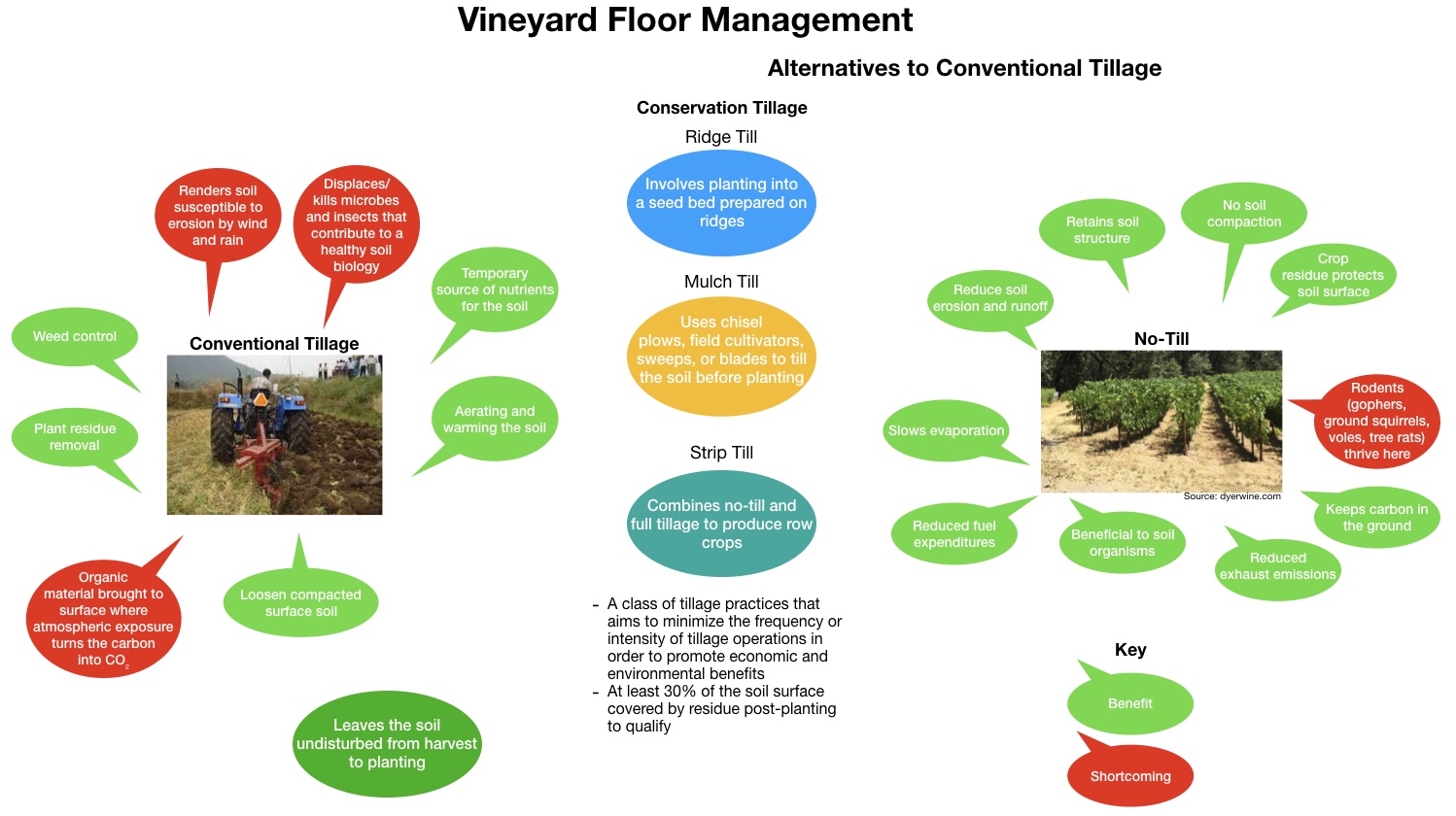
Farmlands have traditionally been ploughed in preparation for planting to: control weeds, remove plant residue, and loosen compacted surface soil.This traditional method involves turning over the first six to ten inches of soil prior to planting, pushing the surface crop residues, animal manure, and weeds deep below the surface, and aerating and warming the soil. 

In addition to its functional efficacy, conventional tillage provides a temporary source of nutrients for the crops; these functions and benefits are outweighed by negative consequences in the soil health and carbon sequestration arenas:
  • Tillage leaves the soil surface bare, rendering it susceptible to erosion by wind and water
  • Soil particles are loosened, a further erosion risk
  • Tilling displaces and/or kills the microbes and insects that contribute to a healthy soil biology
    • Can increase the dependence on chemical inputs for productivity
  • Carbon, in the form of organic material such as plant roots and micro-organisms, are brought to the surface, where exposure to the atmosphere turns the carbon into CO₂, contributing to greenhouse gas emissions.
Conservation tillage and no-till, detailed in the chart below, have been advanced as approaches which robustly address the shortcomings associated with conventional tillage.


No-till is the recommendation in the Regenerative Organic certification, a designation recently attained by Applegate Valley's Troon Vineyard. According to Craig Camp, General Manager, Troon Vineyard is moving to no-till as quickly as they can. In Craig's view, "the foundation of practicing biodynamics is the regeneration of the natural microbiome of your soils. No-till is the natural partner to biodynamic farming as few things are more disruptive to the mycorrhizal community in your soil than tillage. On top of that is carbon sequestration that no-till farms support. This alone is reason enough to transition your farm to no-till."

Dyer Wines and Youngberg Hill are also using no-till. Dyer Wine, in its use of no-till, has found:
  • Carbon is sequestered in the soil
  • Soil texture improves
  • Fertility and nutrient uptake are enhanced
  • Increased worm populations drag organic matter down into the soil
  • Vine roots go deeper
  • Water retention increases several fold.
Youngberg Hill from Willamette Valley initially plowed under the cover crops to limit/eliminate water competition for the vines. Over the years, however, they have discovered a number of advantages associated with cover-crop retention. Further, they have come to understand that the "microbiological environment that lies below the soil is key to improving and sustaining healthy soils" and for that environment to remain healthy, it must remain undisturbed.

Within the no-till category, there is a further delineation of organic versus conventional. In the case of conventional no-till, a farmer can use chemical herbicides to kill cover crops before the next planting. In some cases the herbicide used is greater than the amount used in tillage-based farming. No synthetic inputs are allowed in organic no-till. Rather, the farmer uses cover crops, crop rotation, free-range livestock and available tools. Small-scale organic farmers use hand tools, such as hoes and rakes, while large-scale farmers can utilize tractor-borne implements.

©Wine -- Mise en abyme

Sunday, August 22, 2021

Regenerative Agriculture: Cover crops for soil health and carbon sequestration

Before I became sidetracked by Timorasso, and, before that, by Emergent Spanish Wine Regions, etc., etc., I had begun a series on Regenerative Agriculture and published posts on: what it is and its positioning within the body of farming practices; the main land-management objectives (soil health and carbon sequestration) of the approach; a primer on soils composition; the then-brand-new Regenerative Organic Certification; and the use of Biochar as one of the tools to aid in the attainment of approach objectives. With this post I continue the journey.

"A cover crop is a crop you grow for the soil, instead of for your plate. The practice of growing specific crops just for fertilizing and building the soil dates back to the Roman Empire" (Organic Growers School). UCANR defines a cover crop as any non-harvested vegetation grown between vineyard rows (and, in some cases, under the vines). Cover crops were used in California since the early 1900s but were mostly abandoned during the late 1940s and early 1950s when conventional agriculture became dependent on synthetic fertilizers for enhancement of soil fertility. There was a resurgence of cover-cropping in the 80s and 90s, thanks largely to a growing interest in sustainable agriculture (UCANR).

Cover-cropping is an important component of the Regenerative Agriculture system, with its application having a "direct impact on the health of vines and the surrounding ecosystem." One of the areas where cover cropping plays a role is in the fight against soil erosion. Soil erosion involves "movement of soil particles from one area to another: by wind, in arid areas; by water movement in areas with more rainfall. "Surface runoff, and resulting soil erosion, are the principal means by which fertilizers, sediments, and pesticide residues reach surface water." Sandy soils are most prone to erosion because they do not aggregate well due to a lack of clay minerals or other colloids that facilitate soil-particle adhesion. The harm-minimization strategies that can be employed here include cover crops to avoid direct raindrop strikes on bare surfaces as well as to slow the movement of water in the vineyard. 

The benefits, and potential drawbacks, of cover-cropping are presented in the tables following.

Table 1. Benefits of growing cover crops

Benefit

Description

Improve soil structure

  • Glue-like substances produced by roots and associated soil organisms bind soil particles together, ameliorating soil structure and water infiltration
  • Mechanical action of cover-crop roots loosen the soil up to 60 inches depth, reducing its compaction and improving the penetration of air and water

Improve mineral fertility

  • Decomposition increases soil nitrogen and soil cation exchange capability
  • Legumes contribute to nitrogen-enrichment of the soil by symbiotic fixation of its atmospheric form
  • Can prevent the leaching of some soil nitrate to ground water during the wet winter months by taking up and storing excess soil nitrogen

Improve soil botanical activity and organic matter content

  • Rapidly and intensely stimulate the biological activity of the soil during their growth and, especially, after decomposition
  • The quantity of formed humus allows maintenance of the soil organic content
  • Roots add organic matter and create pores in the soil as they die

Protect against erosion and runoff

  • Protects the soil surface from the impact of soil-dispersing raindrops
  • Grasses reduce erosion by improving water penetration and by slowing the movement of water downslope

Provide habitat for beneficial insects and predators

Some crops attract beneficial insects and arthropods which contribute to the control of harmful insects and mites

Pest management

  • Some weeds may be suppressed by use of appropriate cover-crop species and cultural practices
  • Some crops act against Root-Knot and Pratylenchus nematodes

Influence grapevine growth

  • Compete with the vines for water and nutrients
  • Provide additional nitrogen for vine development

Aesthetics


Table 2. Potential drawbacks associated with growing cover crops

Potential Drawbacks

Description

Demand for water

  • Cover crops often compete with the vines for soil moisture

Compete with vines for nutrients

  • Winter annual grasses require large quantities of nitrogen and, if allowed to mature, can delay nitrogen availability to the vines and reduce vigor

     - Can be used to advantage in vineyards with excessive vigor

     - Adding legume to the mix can offset the demand for nitrogen

     - Adding fertilizer to the cover crop can offset its demand for nitrogen

Pest problems may arise from cover cropping

  • Flower thrips may move to the vines as cover crops mature in the spring or after they are mowed
  • Some cover crops may themselves become weeds if they reseed and grow in an undesirable manner
  • Buildup of vertebrate pests (gophers and voles) can be especially damaging to young vines
  • Nematode populations may increase in cover-cropped vineyards

Threat of frost in early spring

  • Cover crops reduce the amount of solar radiation reaching the soil during daylight hours and can reduce temperatures on cold, clear nights
  • Duration f lower temperatures may be longer in cover-cropped vineyards

Increased cost

  • Cover cropping costs more in real terms
  • Requires more attention

The benefits and shortcomings listed above are not characteristic of cover crops as a class; rather they may exist to a greater or lesser extent depending on the species or seasonal characteristic of the cover crop. The different views of cover crops are detailed in the chart immediately following and specific selection criteria in the second chart.


Compiled from UCANR

The method of tilling the cover crops is the obvious next discussion step and I will take that up in a follow-up post.

©Wine -- Mise en abyme

Sunday, August 8, 2021

A case for Colli Tortonesi Timorasso as "the next big thing" (out of Piemonte)

Colli Tortonesi Timorasso wine is "the next big thing," a conclusion at which I have arrived while conducting an ongoing deep dive into the variety, its history, and the players. In my view, Colli Tortonesi producers have, with their Timorasso efforts, developed the critical components, the raw material, necessary for the wine to gain consideration but it is the entrance of the "non-local" producers, and the potential that they unleash, that elevates the region and the wine from "great potential" to "the next best thing." My arguments are summarized in the chart below and detailed in the text following.


The Critical Components
A Heralded White Wine 
What is a Timorasso wine? According to Elisa Semino of La Colombera, the Timorasso variety yields a great, long-lived, mineral wine. She loves the minerality that comes with Timorasso wine, a minerality which, in her view, comes from the grape (the sapidity, conversely, comes from the soil). According to Marco Volpi of Cantine Volpi, Timorasso produces a structured, mineral, aged wine which evolves further in the bottle, demonstrating increasing levels of a honeyed character. If picked optimally, the variety will produce alcohol levels ranging between 13% and 16%. 

Wines made from Timorasso grapes are highly acclaimed. Kerin O' Keefe (one of today's leading Italian wine experts) refers to Timorasso as "one of the most exciting wines coming out of Italy right now" boasting "more depth, body and complexity than many Italian whites." Berry Bros and Rudd, a historical UK wine retailer, tags the wine as "one of the most exciting autochthonous grape varieties to surface in recent years." Pietro Oddero, of the joint venture Monilià, thinks that "Timorasso is the most interesting variety in Italy." These, and many other such laudatory comments, have been directed at wine made from the Timorasso variety.

Key to the current standard of Timorasso wine quality are: (i) a dynamite cultivar; (ii) a cooperative growing environment; (iii) the effects of a warming climate

The Timorasso Variety
"Timorasso is a native grape variety of the province of Alessandria, with a quality white-berried grape, grown essentially in the Curone, Grue, Ossona, and Val Borbera valleys, in an area where the vine finds a valid 'habitat' thanks to the soil, sunshine and the position sheltered from the winds" (Consorzio).

According to stradacollitortonesi.com, the Timorasso variety is a part of the ampelographic heritage of Liguria, Piemonte, Lombardia, and Emilia Romagna and is assumed to have originated somewhere between Liguria and Piemonte. The characteristics of the variety are shown in the chart below.


D'Agata identifies a "first degree parentage relationship between Lambruschetto and Timorasso while the Lambruscos from Emilia-Romagna were genetically distant."

Versatility
One of the key strengths of Timorasso is its versatility; it delivers consistently high fruit quality, regardless of geography, and wine, regardless of style. As regards geography, the north of Colli Tortonesi is flat, coming in at about 100-m elevation. The hills begin in Vho and Monleale (100 - 200 m) and there is a cluster of wineries around Costa Vescovata (300 m). Beginning at Costa Vescovato, the climate differs from that of the lower altitudes. Val Bobera is a sight to behold, with high mountains and deep valleys. Ezio Poggio's vineyard sits at 500 m.

In terms of style, the variety allows for the production of still (will vary based on fermentation/aging vessels, maceration time, and whether they have been fermented on the skins), sparkling (metodo clasico and charmat method), and sweet wines. 

Phenolic Richness
Writing in openingabottle.com, Kevin Day characterizes the Timorasso variety thusly: "Timorasso has a rich phenolic character, meaning the natural phenols and polyphenols in the grape yield a lot of aromas, flavors, textures, and characters." In other words, these factors, when coupled with the variety's thick skin, renders Timorasso an ideal candidate for skin-contact winemaking.

Growing Environment
The Timorasso vine prefers poor and marginal soils with especially limited water reserves. The current Timorasso growing environment is illustrated in the chart below.


With elevations ranging between 400 and 600 m, Val Borbera has the highest-altitude vineyards in Colli Tortonesi. It also has a markedly different temperature profile. According to Maurizio Carucci of Cascina Barbàn, the Tortona hills, with its hot, humid summers, are more reflective of a Po Valley influence. Val Borbera, on the other hand, is colder in the winter, has more significant diurnal temperature variation, and much more rainfall over the course of the growing season. The diurnal temperature variation supports the production of highly aromatic grapes while the cool temperatures extends the growing season. Maurizio sees at least a 20-day difference in harvest dates between the two zones.

According to Gian Paolo Repetto (Vigneti Repetto), Colli Tortonesi lies between Serravalle Scriva and Tortona and this translates to Tortonian soils in the north, Serravalian soils in the south, and Sant'Agata fossil marls in the middle (see here for my graphical illustration of this concept). The northern part of the zone has more clay, partially calcareous, partially less. This composition lends itself to wines with great structure. The Sant'Agata Fossili soils are rich in limestone and tend to produce mineral, sapid wines. The south has the highest elevations and young, rocky soils. The Timorasso wines from this zone are fine and elegant.

Global-Warming Benefits
According to Elisa, the Timorasso cultivar has benefited from a warming environment. Thirty years ago, the farmers harvested partially ripe Barbera in the middle of October. Ripening was a problem for Timorasso in this environment. It was not warm enough; plus there was rain in the middle of October. In today's world, fully ripe Barbera is harvested in the middle of September and Timorasso is fully ripe in that same timeframe.

Gian Paolo concurs with Elisa’s assessment that global warming has been beneficial to Timorasso. Historically it had been difficult to grow the variety because of botrytis and rot prior to harvest. With global warming, the variety is able to attain full ripeness earlier and harvest occurs in the warmer mid-September period.

In Elisa’s view, the combination of soils and early ripening makes Colli Tortonesi the best Piemontese terroir for exploitation of the variety.

A Stable of Dedicated, Quality Producers
After producing his initial Timorasso vintage, and conducting further research to tighten up the production process, Walter Massa began to proselytize about the variety to anyone that would listen. Daniele Ricci worked as his understudy and acolyte and learned everything that he could from Massa before going off and founding his own winery in Casca Vescovato. This 1.5-ha vineyard, named Vigna di Carlo, was planted in 1995. Andrea Mutti and Luigi Boveri also planted their Timorassos in 1995.

Elisa Semino, now of La Colombera, did her thesis on the Timorasso variety and, according to Walter, worked at his estate in 2000 while collecting data for her study. After graduation, Elisa and her dad were among the first five Colli Tortonesi wineries to heed Walter's Timorasso call.

Walter went on to mentor a large number of the small farmers in the region who saw his success and wanted to replicate it in their environments. They formed an association organized around Massa's production principles and met regularly to compare notes and taste each other's wines. 

Grape-growing, as practiced by Colli Tortonesi Timorasso producers, is artisanal:
  • Most vineyards are farmed by the owners who are also, in many cases, the winemaker
  • The vineyards are mainly a part of a wider farm
  • Vineyards are part of a polyculture rather than being a monoculture (as is mostly the case in the Langhe)
  • Growers pursue sustainable farming with many either practicing or certified organic
  • There is a general thrust to minimize the use of chemicals in the vineyards
  • Individual holdings range between 1 and 3 ha with a handful of producers between 5 and 10 ha, and two or three of the 60 farming in excess of 10 ha.
A Captivating Origin Story
The current incarnation of the Timorasso variety has a captivating origin story. The variety is native to the hills and valleys of southeast Piemonte but, given its (i) unpredictable results and (ii) farming difficulties, most of the region's farmers were replacing it with Cortese in the late 1970s (Cortese had higher yields and Gavi was all the rage). Thirty years ago Timorasso plantings ranged between 3 and 5 ha for the entire region. The variety had experienced a steady decline over the preceding century due to (i) the amount of work required in the vineyard, (ii) its susceptibility to illness, and (iii) its relatively low yield.

Cortese was the dominant white variety planted on the Massa estate but Walter was dissatisfied with its performance. The microclimate was not ripening the grapes adequately, leading to low-quality wines. He wanted to produce a high-quality white wine and embarked on a journey to establish whether Timorasso could fill that role. Prior to Walter's endeavor, Timarosso had only contributed as a component in blended wines.

The journey began in 1987 when Walter filled 580 bottles of his first vintage with grapes sourced from 400 vines scattered around the family vineyard. The results were good enough to encourage further exploration. In 1990 he planted Timorasso vines in a 1.4-ha plot called Costa del Vento. This vineyard had steep, south-facing slopes sitting at elevations ranging between 250 and 300 meters. Some of the vines that he had secured for planting were over 100 years old and ungrafted.

Walter vinified small batches for a number of years, testing different techniques, and was eventually convinced as to the viability and ageability of the wine. Over the course of the testing he discovered that the wine became better the longer it rested in the bottle. His first commercial vintage was in 1995.

Walter went on to mentor a large number of the small farmers in the region who saw his success and wanted to replicate it in their environments. They formed an association organized around Massa's production principles and met regularly to compare notes and taste each other's wines. 

Unique Market Niche
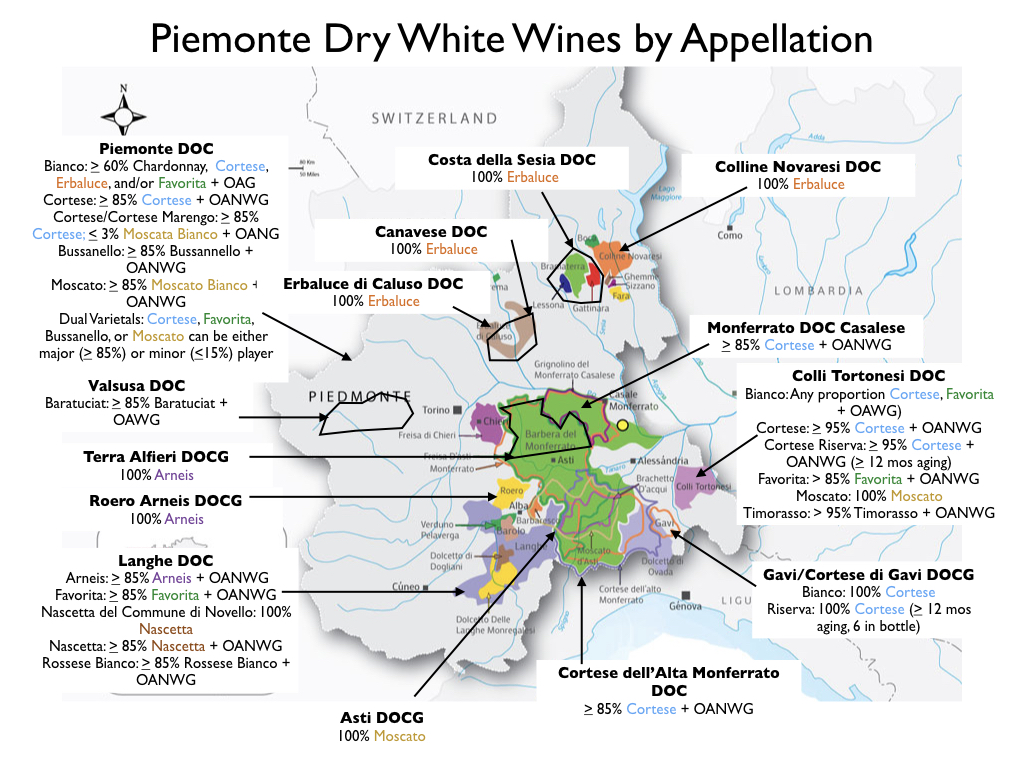
Piemonte is best known for its red wines -- primarily in the southern part of the region but also with  strong representation in the north -- based on Nebbiolo but it is also the source of vibrant indigenous white wines; wines that I have captured in the chart below and written about in a comprehensive study


Erbaluce-based wines dominate in the morainic soils of the north while Cortese-based wines hold sway in the limestone soils of the south. 

Even back at this time, after having only drunk one bottle of Timorasso, I was referring to it as the wine to watch. It is unique in comparison to the other white wines from Piemonte. While high-acid and mineral like some of the other white Piemontese varieties, it adds: an aromatic nose; salinity and sapidity on a phenol-rich palate; and long life, with improvement (a honeyed petrol note) over its residence in the bottle.

While some of the studied white Piemontese cultivars have smaller footprints than does Timorasso, this does not apply to Arneis and Erbaluce.

Customer Appreciation
For the region, the outlook is bright, according to Gian Paolo Repetto. Their is huge interest in the region and its wines. Even with all the recent dislocation in the world, they were able to sell all the Derthona they produced.

Protect the Patrimony
A key part of patrimony-protection is establishing Derthona as Timorasso from a specific place, the original home of the variety. Anyone can plant Timorasso vines but only Colli Tortonesi producers can make Derthona wines. Key to this is the approval of the Derthona appellation. According to Elise, this will probably occur with the 2021 vintage.

The Consorzio has submitted an application to the appropriate authorities for the designation of a Derthona sub-appellation within the Colli Tortonesi DOC covering the production of Timorasso vines within its borders. While Derthona is currently used on the labels of some producers, it is not an official designation. Further, it is a registered trademark of Walter Massa, who has encouraged its widespread adoption and use. The submittal covers a Riserva (released a minimm of 2.5 years after harvest), a Derthona, and a Piccolo Derthona (both requiring a minimum of 1 year aging). The difference between a Derthona and a Piccolo Derthona will be based on quality parameters as well as tasting panel assessments. Some of the key quality elements of the upcoming appellation will be the designation of minimum altitudes in each commune as well as minimum alcohol levels for each wine type.

A second patrimony-protection action has been the limiting of vineyard growth to maintain the artisanal nature of the wine and region. The members of the Consorzio have agreed to limit the total hectares under production to 300, and to attain this number through slow growth. In addition to ensuring that the region does not flood the market with its wine (with the resultant impact on pricing potential), this step will ensure the retention of the current agricultural profile.

"Foreign" Producers -- The Catalysts in the Woodshed
There is no doubt in my mind that, left to its own devices, Colli Tortonesi Derthona Timorasso would have eventually become "a big thing." But I do not believe that it would have aggregated its potential in such a manner -- and in such a timeframe -- that it would gain consideration as a candidate for "the next big thing." I feel that the interest and involvement of the "foreign" producers have been instrumental in this regard. First, lets look at these new entrants.

According to Elisa Semino of La Colombera, "Famous producers are now arriving in the region ... a sign of respect for the region; they believe in the variety and are planting it in its home region."

As shown in the table below, outsider interest began with Cascina La Ghersa in 2007, with a gap until the early part of the 2010s, with a rush of entrants in the last two years of the decade.

Table 1. "Non-Local" market entrants by year of initial vintage.

Initial Vintage

Producer

Producer Origins

Timorasso Holdings

Source(s) of Purchased Fruit

2007

Cascina La Ghersa

Moasca

Casasco and Sarezzano; 1.8 ha


2013

Fontanassa

Gavi

?

?

2014

Roagna

Barbaresco

Montemarzino; 1 ha


2015

Borgogno

Barolo

Monleale; 3 ha


Cascina Gentile

Capriata d’Orba

?

?

2018

Broglia

Gavi


Costa Vescovata


Sassai

Capriata d’Orba

Profigate and Ca’ del Borgo; 5 ha

Castellania and Monleale


Vietti

Barolo

Monleale; 4.1 ha


2019

La Spinetta

Asti

Montegioco, Monleale, and Montemarzino; 5 ha


Monilia

Barolo

Monleale; 1.5 ha

Monleale


Reis

Langhe and Monferrato


Sarezzano

N/A

Alvio Pestarino

Capriata d’Orba

Stazzano; ?


Pio Cesare

Alba

?; 2.5 ha

Vho


Voerzio Martini

La Morra

?


Why did the identified producers launch these out-of-region initiatives? According to Franco Ziliani (Italian blogger and wine critic) the factors driving these producers towards Timorasso wines are as follows:
  • They are impressed by the work of Massa and his disciples
  • They understand the greatness of Timorasso
  • They want to expand the the range of their reds with an important white
  • Vineyards are a bargain in Colli Tortonesi when compared to the sky-high costs in Barolo and its surrounds.
From the perspective of selected "foreign" entrants:
  • Vietti was impressed with the characteristics and future outlook of Timorasso
  • Pietro Oddero thinks that Timorasso "is the most interesting indigenous white variety in Italy."
  • The Reis team decided to do a project as a group and wanted it to be something challenging. Given cost and availability constraints, it most likely could not be in Barolo. Their Timorasso venture was both a testament to the friendship and a bow to the potential of the variety.
What advantages did the locals see accruing to the region as a result of this new presence?
  • Walter Massa saw these entrants as advantageous because of their perceived ability to market Timorasso in foreign markets
  • Gian Paolo Repetto, head of the Consorzio,  and Proprietor of Vigneti Repetto, feels that these entrants have been a "blessing" in that they have raised the profile of the region.
In my view, the Langhe producers saw an in-built marketing message:
Colli Tortonesi Timorasso is an aromatic, medium-bodied, structured, mineral, aged wine made by artisanal producers from the recently rescued Timorasso cultivar. This cultivar, which had been given up for dead, was wrangled back into existence by the tenacity and foresight of the caped-crusader Walter Massa, a winemaking practitioner who has to be seen to be believed. And oh, by the way, Colli Tortonesi is the original home of the variety, with a terroir, inclusive of Langhe-like soils, that maximizes the grape's potential.
It did not hurt that this wine aligned with their need for a counter-balancing white wine as well as with the characteristics of their red wines. These foreign producers have:
  • Provided a stamp of approval for the region
  • Brought about the potential for Timorasso to be considered as the white wine to complement Piemonte's reds
  • Have expanded the potential audience for Timorasso wines by bringing their own customers into the mix
  • Potentially increased the international spread (and acceptance) of the wine by running it through their distribution channels
  • Added to the wherewithal of the region by bringing into the deliberations a sophistication that can only be attained after generations of working in the international market
  • Elevated the value proposition for the region and the wine
  • Expanded Timorasso production beyond the traditional stainless-steel fermentation/aging vessels to include materials such as oak (barrique and cask), ceramics, concrete, etc. 
  • Aided in the efforts to protect the patrimony.

©Wine -- Mise en abyme