Sunday, December 21, 2014

Best wines tasted in 2014

At the end of the day it is all about the wine. And a lot of wine was about during the course of the year. I revisit the best of those wines in this post. Chronology is responsible for the ordering of the presentation. Most of these wines were tasted in a group comprised of Ron, Bev, my wife, and me or a larger group of which we were a part.

At our January Solaia vertical tasting, the  1982 Solaia stood head and shoulders above its flight partners. Coffee bean, mint, vanilla, and Georges de Latour on the nose and palate. Long, sweet finish. The wine of the night.

We were excited when the Hyatt Grand Regency Orlando opted to reprise its classic La Coquina Brunch and snapped up a few tickets. So were a lot of other local folks as we ran into a lot of friends, including the folks from wineontheway.com. These kind folks bought a bottle of 1988 DRC La Tache from the restaurant and invited me over to try it. I did not hesitate. The wine appeared rather delicate in the glass but the fragrance was powerful. Strawberries and muted red fruits. Firm on the palate but elegant nonetheless. Still youthful. Balanced. Slight drying tannins. Elevated what had already been a glorious day.


We made a number of trips to Berns during the course of the year, the first being a celebration of Ron's birthday. At this initial trip we did a 2000 DRC horizontal. While we waited for Brad (our Somm) to set up the DRCs, we continued our demolition of the 1975 Dom that Ron had brought along to ease the tedium of the chauffeured-drive from Orlando to Tampa. The Dom exhibited notes of lemon custard, creme brûlée, coffee, nuts, and a slight oxidation. On the palate still lively, with butterscotch, lemon peel, burnt orange, and a hint of tannin. Ron got lemon butter, creme brûlée, toffee, and roasted hazelnuts and expressed a particular liking for the "slight sherry oxidative notes" that can be found in older Champagnes. He also noted an "amazing acidity and ... nice, fine bubbles."

The 2000 Richebourg was much darker at the core than the Grand Ech that we had consumed and had a floral nose with tar and petrol at the back end. My first thought was that someone had messed up and put a Barolo in a DRC bottle. As the wine evolved, notes of strawberry, watermelon, cigar box and cedar box became apparent. On the palate, spice, great acidity, and a very long finish. This was an extremely high quality wine.

The 2000 La Tâche was even darker at the core than was the Richebourg. Talcum powder and chalkiness on the nose. Over time the talcum powder evolved into soy. Rose petals, tea, coffee, burnt tobacco, smoke, coffee grounds, nutmeg, and menthol. Power and weight on the palate along with bright acidity, non-aggressive tannins, and a long, drying finish.

By this time my steak had arrived and Brad suggested a 1949 Canon in mag to accompany. This wine was replete with dried figs, tamarind, and mahogany. Wild red cherries, freshly turned earth, sweet tobacco, and a musty old closet. A little Brett. A herbaceousness which Brad characterized as a hallmark of aging Cab Francs. A Burgundy lover's Bordeaux. Tamarind on the palate. Its acidity supported a long, sour finish.


Prior to leaving Paris for Burgundy at the end of April, we had dinner at Le Taillevent and there encountered a 2003 Armand Rousseau Chambertin Clos de Beze. On the nose the wine presented smoked oak, vanillin, and strawberry. On the palate a spiciness, copious amounts of red berries, road tar, cigar box, and savoriness. Lengthy finish.

At our DRC visit, Bernard Noblet, the DRC Cellar Master, decided to play Stump the Chumps with our group (which included Raj Parr, a Burgundy expert in his own right) and opened a number of bottles for us to taste blind. As he was pouring the first wine, Bernard mentioned that it was from a great vintage where both the quantity and quality of the harvested grapes were high. The wine showed some stemminess along with floral notes and spice. Great complexity and a lengthy finish. Youthful. This wine was revealed to be a 1999 Grand Échézeaux. The second bottle, according to Bernard, was from an exceptional vintage. It had a reductive nose which soon gave way to a savory complexity. Ron noted ripe fruit, elegance, and power. This wine had some age on it. Revealed to be a 1990 Grand Échézeaux. The third bottle had apple-pear notes, a rich oiliness, honey, brown butter, hazelnut, almonds, caramel and a stemminess. I thought the acid level was low. This wine turned out to be a "ringer." It was a 2007 Bâtard-Montrachet, a wine of which the estate only produces 300 bottles for family consumption. Ron felt that it was the best Bâtard that he had ever had. Bernard was having such a great time that he brought a fourth bottle to the table. While pouring, he described the wine as the product of a difficult vintage. It had a watery-gold color with a broad, pale rim. On the nose, molasses, brown sugar, caramel, a nuttiness, dates, figs, and mushrooms. Ron thought it had, additionally, tangerine and orange-rind notes. Balanced on the palate. This was a unique wine for both Ron and me. Raj thought that it was a 1977 Montrachet and provided the reasons for his conclusions. It was a 1977 Montrachet. I was doubly impressed: first by the wine and then by Raj's recall.

Bernard Noblet, DRC Cellar Master


The second Berns trip was notable for, among other things, a restaurant-wide power outage mid-meal. Our wine fare for this evening was also DRC-heavy. Our first bottle was the Bouchard Père et Fils 1978 La Romanée. This wine was a study in evolution during the course of its residence in the glass. It started out with sweet red fruits (cherry, strawberries) with a molasses undertone along with blood, raw meat, and a hint of dried cork. It was youthful and fully engaging on the palate, with a slight alcohol burn on the chest. Tannins were still aplenty. At the second visit, coffee and mocha began to show along with a perception of increased acidity. On a third visit, herbs became dominant with rosemary and thyme implicated. On the palate the wine was now smooth, elegant, and refined. The wine continued to evolve with a highly perfumed phase (vintage-Barolo-like) followed by a cinnamon and baking-spices phase. A definite hint of tamarind on the palate in these latter phases. This was an absolutely awesome wine.

The second wine poured was the 2000 DRC Grand Échézeaux. This wine was much more rustic in comparison to the La Romanée. It exhibited cinnamon and baking spices along with turpentine, pimento, mocha, coffee, road tar, and animal skin. Over time the mocha and coffee gave way to mushrooms and dried herbs. On the palate, elegant, fine grained, with drying tannins. Layered complexity with a long, elegant finish.

The third wine opened was the 2000 DRC Richebourg. Floral with coriander and cumin on the nose and baking spices layered on top. Coconut oil and orange rind. Sprightly and elfin on the palate though bolstered with an earthiness. Paired with a rich, thick lobster bisque.

With lights once again abundant, we turned to the fourth bottle from the Grand Cru vineyards of Vosne-Romanée/Flagey-Échézeaux, the 2000 DRC La Tâche. This wine was dusky, ephemeral, and muted, with a loose tea leaf note. Expressive on the palate, much more so than on the nose. Bright red fruit. Rich but elegant. Appropriate acidity. Stony minerality with a drying character. Balanced with a tea finish.

We closed with a 1934 Leoville-Poyferre. This wine had a tar, black olive, and dill nose. Rich and oily. Mint, dried sweet red fruits, tobacco, and an earthiness. Bright with a long finish.


I have always been intrigued by the story of the Vosne-Romanee lieu-dit Cros Parantoux largely based on the repute of its most famous winemaker, Henri Jayer. I took a bottle of the 2006 Meo-Camuzet Cros Parantoux to our Victoria and Albert's  dinner even though I knew it needed time. The initial impression upon bringing the glass to the nose was a florality. Fresh-cut violets, said Ron. Potpourri, said Andrew. Accompanying this florality were notes of cinnamon and lifted red fruits. This wine was obviously young but wore its youth like a Toga rather than with uncouth brashness. On the palate a concentration which belied its color in the glass. Balanced. Palate-pleasing acidity and weight. Drying finish. With one mighty leap this wine had ascended to the top levels of wines that I have drunk.


On both sides of the Meo-Camuzet, we partook of a number of phenomenal wines. We actually began with a white Burgundy flight comprised of a 2007 Remoissenet Puligny-Montrachet Les Folatierres and a 1997 Remoissenet Montrachet. They both were gold in color with the Montrachet being just a little darker. The Montrachet exhibited a waxiness on the nose, a slight hint of tropical fruits, and tangerine. Andrew identified a creme brulée character. On the palate a dried-tangerine character with the waxiness on the nose manifesting as an oily texture. Long finish. The Puligny-Montrachet had notes of lime, sage, pepper, and a trace of phenolics. Lean and sharp on the palate with a long, balanced finish. The Montrachet was clearly the class of this pair.

The 1966 Leroy Chapelle-Chambertin Grand Cru was paired with a wine which made itshine even brighter in comparison. The Leroy exhibited aromas of a musty closet, earth, and ripe red fruit. Great acidity on the palate along with a spiciness and a long dried-herb finish. Balanced.

1966 Chateau La Mission Haut-Brion  Thanks to Ron's never-ending supply of '66 La Mish, we have drunk this wine on many an occasion and we are never disappointed. This wine generally presents dill, smoke, tar, black olives, and perfect balance.

Vega-Sicilia is arguably the greatest wine from Spain while Masseto is one of the great Super Tuscans, the best Italian Merlot, and one of the finest Merlots in the world. They were flighted together because of a perception of an underlying "Pomerolian" nature to both. The 1970 Vega-Sicilia Unico exhibited dried red fruits, licorice, graphite, earth, and spice box. Very focused with polished tannins. Elegant and silky. Balanced. First-growth-like. The 2005 Ornellaia Masseto was very rich and very young with plentiful chocolate on the nose and palate. Pomerol-like. Excellent length on the finish. Needs another ten years to fully realize its potential. Drinking now but patience will produce even greater rewards.


Our recently concluded Penfolds Grange vertical provided a number of wines to my "best-of" list. The Grange 1980  exhibited aromas of coconut oil, violets, earth, game, and mint. Balanced, with the acidity and 12.9% alcohol fitting perfectly into the matrix of the wine. Long, balanced finish with rich, oily aftertaste. Rhonesque. The 2004 vintage experienced an even, moderate growing season which resulted in (according to DLynn) a complete wine. 4% Cabernet Sauvignon. On nose coconut, dill, savoryness, richness. Round and rich on the palate. Excellent texture. Long finish. The 1990 Grange showed toffee, praline, pencil lead, blackpepper, and ripe black fruit on the nose. Rich, ripe fruit on the palate. Concentrated, with a long finish. Very Graves. The 1968 presented aromas of espresso, vanilla, mocha, cocoa, leather, blackpepper, gunoil, coconut. A sweet La Mish on the palate. Mushroom, savory, complex. I called it a 1985 Heitz Martha's Vineyard. Steve called it an '85 BV Georges de la Tour. I loved it. We all did, as a matter of fact. The 1976 Grange was 11% Cabernet Sauvignon and exhibited herbs, fennel, gunflint, chocolate, and coffee on the nose. Someone yelled "Haut-Brion." It was very Bordeaux-like and we got into a heated discussion when trying to determine the wine of the flight because it came down to this Bordeaux style versus what I will call the "When-Napa-was-Napa" style exhibited in the 1968.

The 1997 Grange was not included in the tasting but was drunk the week following. On the nose toffee, cocoa, vanilla, fudge, ripe fruit, dried herbs, and a rich elegance. The dried herbs carried through on the palate along with a thick, rich, creamy texture and silky tannins. This wine is perfectly balanced with enough acidity to perform palate-cleansing duties when it accompanies food. Long, rich finish with a creamy aftertaste. Ron said that it reminded him of a high-quality Pomerol and that if it had been included in the tasting it would have given the 1990 (the WOTF) a run for its money. This is truly a thoroughbred.

In a recent visit to Ticino, Switzerland, I tasted a number of wines of which two deserve special mention. The 2013 Brivio Contrado is a white Merlot which is barrel-fermented and aged for 10 months in oak. The wine was cold-filtered to remove any color and, according to the owner, fermentation flavors were also removed during this process. Aromas include chocolate, coffee, banana, and lychee. It had great weight on the palate. This was the standout white Merlot for me.

The 2011 Agriloro Chardonnay was one of the few varietally labeled wines that I encountered on this visit. Both alcoholic and malolactic fermentation were conducted in barriques and the wine was then aged for 9 months in 25% new barriques. This was an excellent representation of Chardonnay. Apple-pear on the nose and palate with white fruits, oak, biscuit, and spice. Margaret-River-Chardonnay-like on the palate. Elegant, with perfect balance. Apple on the aftertaste. Phenomenal alone. No give when paired with a Braised Hare with Pomegranate Seeds and a Cortona Apple Puree.


Hope 2015 is as memorable as was 2014.

©Wine -- Mise en abyme

Thursday, December 18, 2014

Sony and Coravin: Case studies in crisis management

So you are a major international corporation. Let's say your name is Sony. And you are hacked by some nefarious organization calling themselves Guardians of Peace (who, while guarding the peace, create a lot of havoc in the process). So you have a crisis on your hands. So what is your response? Deny. Deny. Deny.

First you act as though nothing has happened and batten down the hatches. Next, as info begins to flow, you begin pointing fingers at North Korea. As your executives' boorish behavior and your sexist business practices are spread all over the internet, you adopt a bunker mentality. You have your high-priced, Brooks-Brothers-suited lawyers send letters to the major news outlets threatening them with legal action for doing their jobs -- reporting on the news. Then you give the theaters an opening which allows a few of them to opt out of screening the film on Opening Day. And when they opt out, you pull the film "because the cinemas will not be showing it."

You caved to the GOP. You caved to a bully and set a horrible precedent for corporate blackmail in the future. And still, to this date, you have not made a formal statement to the public or your investors.

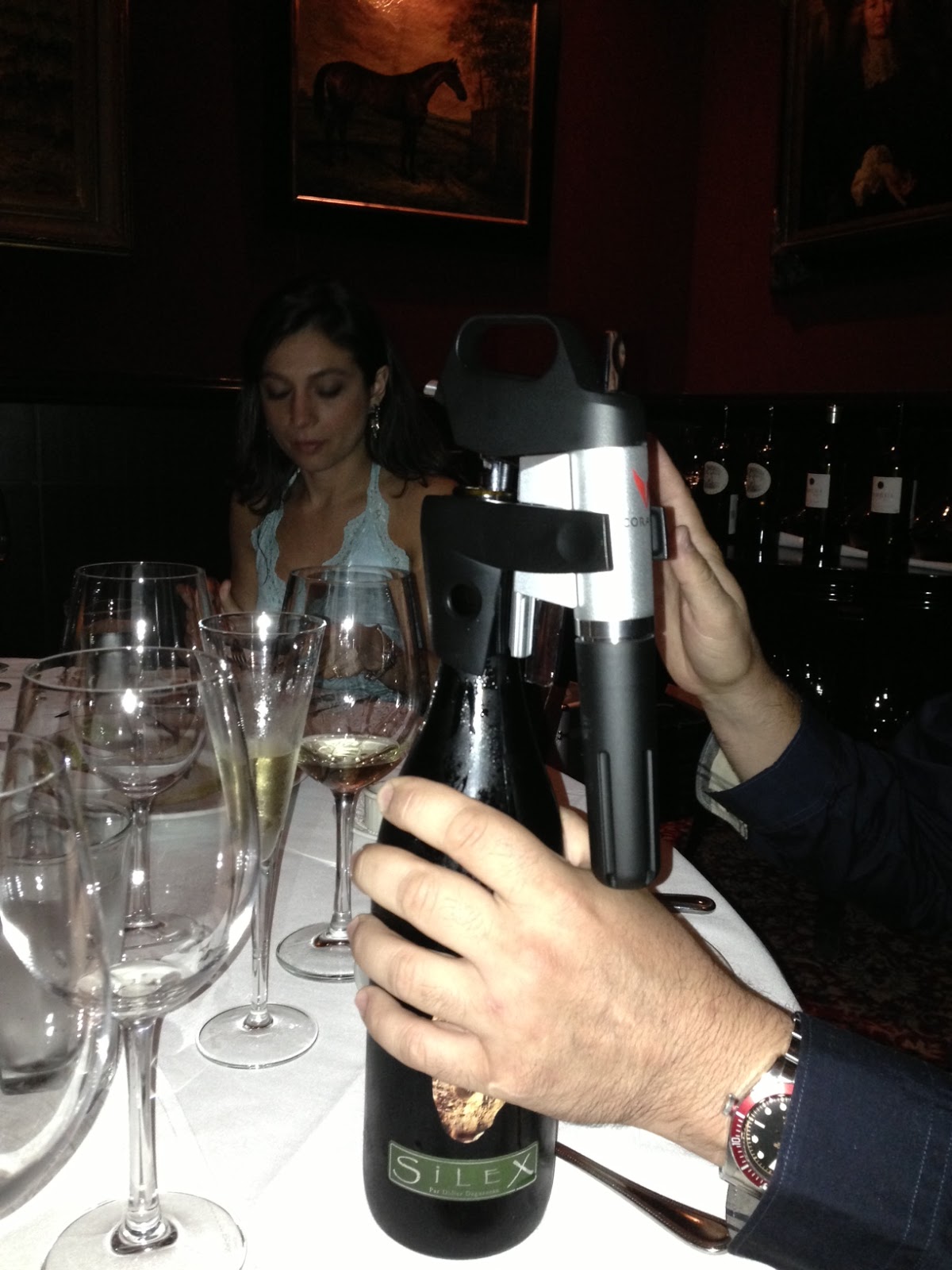
Compare that to the case of Coravin, freshly minted producer of the freshly minted wine-extraction device.


When Coravin began getting reports of wine bottles breaking while the device was being employed, they immediately contacted the FDA. Shortly after, they wrote a very detailed letter to existing Coravin owners alerting them to the problem, telling them what they thought the problem was, and discouraging them from using the product until further notice. The keys here were: identification of the problem; taking ownership of the problem; getting the appropriate governmental officials on board early in the process; getting government officials on board voluntarily, rather than being forced to (hear that vehicle airbag manufacturer?); and early, clear communications with the customer base.

Once Coravin fully understood the problem (some bottles that were defective could break under the slight pressure exerted within the bottle by the insertion of the argon gas), they set about developing and testing a solution. Once that solution was tested and accepted by the FDA, they then sent the solution to every customer along with instructions as to its use.

Again, a timely, effective solution developed with government oversight and communication with the customer along the way. Coravin suffered very little PR damage from this affair and its openness was widely lauded.

Coravin, could you please send some of your PR people over to Sony.

And the Oscar for Best Crisis Management Response of the Year goes to -- not Sony.


©Wine -- Mise en abyme

Wednesday, December 17, 2014

The best of 2014: Part I

This is the time of the year that we all pause to take a look back at the year in our respective rearview mirrors. It is the time that we take stock of the things that we liked and the things that pissed us off. I am in that mode right now and will reminisce on some of the 2014 wine-related happenings in this post. I will not cover wines specifically as, on its merits, the topic deserves a post all its own.

Best "Own-Rooted" Wine Tasting
Orlando is Boonesville when it comes to wine events, so residents who want great wine experiences are on their own. I am part of a small group that holds tastings, either as specialized events or wine dinners. This year we held three such tastings: two specialized (Solaia and Penfolds Grange) and one wine dinner (Victoria and Albert's Queen Victoria Room). The best of these tastings was the Penfolds Grange Vertical Tasting based largely on the wines but also due to the magnificent leadership and performance of DLynn Proctor, Penfolds US Winemaking Ambassador and star of the movie SOMM. As I described it, DLynn "was a veritable fount of information on Penfolds as a company, the wines, the winemakers, the vintages."


Best Expert-Led Tasting
During the course of the year I attended a number of events which featured tastings led by experts in specific wines or regions. At this year's TEXSOM event, I attended the following events:
  • Burgundy's Last (Decade) of the Last (Century) -- Fredrick L. Dame MS, Jay Fletcher MS, Paul Roberts MS
  • Varietal Focus Syrah -- Rajat Parr, Josh Reynolds, Bernard Sun, Robert Bohr, Serafin Alvarado MS
  • Regional Focus: Germany Today -- Tim Gaiser MS, Laura Williamson MS
At the Digital Wine Communications Conference I attended the following seminars:
  • North Greece Constellation Masterclass
  • Grand Tasting of Swiss Wines -- Jancis Robinson and Jose Vouillamoz
  • Rare Swiss Varietals -- Jose Vouillamoz
  • Iconic Swiss Wines -- Paolo Basso, 2011 World's Best Sommelier


At La Fete du Champagne I attended two outstanding seminars led by Anselme Selosse of Domaine Jacques Selosse and Jean-Baptiste Lecaillon of Louis Roederer.


These were all stellar sessions with the Gaiser/Williamson and Robinson/Vouillamoz deserving of special mention but the cream of the crop for me was the Basso-led tasting. In the allotted time (squeezed because the event was late starting and had to be hurried because we had a hard stop to accommodate the Gala Dinner), he clinically dissected the 11 wines on offer with a precision and verve that I had not previously been exposed to. His points of attack were always the same but the wines had no defense and, at the end of every skirmish, lay naked before us, the awed spectators.

Best Classroom Education
The tag line of my blog is "A quest for knowledge. A mandate to share." In order to deliver on that promise, I have to consistently put myself in positions to acquire knowledge to share. The knowledge-acquisition opportunities that I normally pursue can be broken down into classroom (courses and seminars) and field (winery and vineyard visits) education. This year's classroom activities included the seminars previously described plus Wine Production and Viticulture courses at UC Davis. The Wine Production course was my best knowledge-acquisition vehicle of the year. Why was this course so great?
Because it fulfilled the promise of distance learning (DL) which was undelivered by many DL courses that I have taken in the past. It was great because it provided a multitude of avenues by which students could acquire knowledge and, rather than allowing those avenues to lie fallow, seeded them with starters, continuously monitored for progress, and provided direction along the way as necessary. It was great because it competently tested the students' knowledge acquisition with case-based assignments that required careful thought, extensive research, analytical thinking, and a comprehensive understanding of the topics covered to date in order to effectively answer the questions. It was great because of the tools and resources made available to the students and the mix of media provided for professor/student interaction. It was great because of the knowledge and experience locked up in the students and shared freely in the General Chat forum. It was great because Program Administration performed flawlessly in getting me from the position of a prospect to having a seat in a classroom. It was great because the Professor was eminently qualified to teach this course and was empathetic and interested in our knowledge acquisition. It was great because the Professor did not allow a personal tragedy to impact the schedule that we were working with (even though it would have been perfectly understandable).
Best Vineyard/Winery Visit
I was lucky this year to be able to stitch in a few vineyard/winery visits between the varying tugs and pulls of trying to keep food on the table. We visited a number of the leading Burgundy properties with Raj Par to include DRC, Domaine Roulot, Domaine Armand Rousseau, Dujac, Domaine Francois Carillon, and Domaine Mugneret-Gibourg.

AS a part of the DWCC pre- and post-conference press trips, I was able to visit a number of wineries in Tavel, Chateauneuf-du-Pape and, Ticino.

Tavel
Domaine Maby
Domaine Lafond - Roc Epine
Chateau de Trinquevedel

Chateauneuf-du-Pape
Domaine La Barroche
Domaine de Nalys
Chateau Fortia
Ogier-Clos de l'Oratoire

Ticino
Brivio Vini SA Gialdi Vini SA
Cantina Kopp Von der Crone Visini
Tamborini Carlo SA
Angelo Delea SA
Azienda Mondo
Viattieri Ticinesi

The DRC visit was iconic in  a number of ways. This was my first trip to Burgundy and I was making it with my wife and our two best friends and we were being shown the ropes by Raj Parr and our first visit was DRC and the first Burgundian winemaker that we met was Aubert de Villaine. Further adding to the magic of the trip was seeing Raj blind these DRC wines and nail them every time. 'Twas good.


I will cover the best wines tasted in my next post.

©Wine -- Mise en abyme

Sunday, December 7, 2014

Deconstructing the Masseto (Bolgheri, Tuscany) vineyard: Irrigation management

This post is the final in a series that sought to characterize Ornellaia's  Masseto vineyard using both publicly available data as well as reasoned supposition. Previous posts in the series covered soils, scion and rootstock, disease and virus management, training systems and pruning practices, and nutrient monitoring.   This post examines irrigation management.

Water is extremely important to the functioning of the vine plant but too much, or too little, can have adverse effects on the plant, with run-on effects on fruit quality.

One of the important viticultural philosophies in many new world grape-growing environments is that controlled water deficits, and the resultant vine stress, can improve wine quality while “full-potential water use” will most likely result in “heady canopies” and insufficient light getting through to the fruit as a consequence. Research carried out by UCDavis' Dr Terry Prichard on berry size and vine balance shows that:
  • For a given berry size, vines grown with low irrigation have a higher anthocyanin concentration (between 15% and 33%) than those grown under higher irrigation conditions
  • There is a higher concentration of skin tannins in low- versus high-irrigation environments
  • Water deficits result in lower yields which, in turn, results in lower veggie characteristics and fruitier wines.
Water sources for the vine include stored soilwater, effective in-season rainfall, and any water that is added by the viticulturist. Vine water stress is created when this available water supply is reduced beyond the vines climatic needs.  In areas where irrigation is allowed, viticulturists use controlled irrigation to induce vine water stress. In this scenario, the soil water resources are utilized for the plants needs up through bud break and then amounts less than required are provided to the plant (This would include effective rainfall plus irrigation). This limited water access creates a stress situation for the vine, which, in turn, results in the quality enhancements that the viticulturist seeks. This controlled-irrigation option is not available to the Masseto vineyard because irrigation is not allowed in Bolgheri except under emergency conditions. That is, the soil will provide for the vine's needs with stored soil water and the vines will dive deeper -- a stressed situation -- in search of additional water when the near-in sources have been depleted. In the remainder of this document we will explore the implications of this situation for the Masseto vineyard.

According to Orlandini et al. (Water Use in Italian Agriculture: Analysis of rainfall patterns, water storage capacity, and irrigation systems), Tuscany gets about 22 billion cubic centimeters of precipitation annually with yearly values ranging from 2000 mm in the northwest to 500 mm in Maremma to the south. Overall, regional water requirements are 760 million cubic meters with agriculture demanding a paltry 150 million cubic meters. During April 2004, 92 mm of rain fell in Florence and effective rainfall (rainfall during the growing season) ranged between 53.6 and 78.5, depending on the conversion schema chosen. Precipitation is not the problem then. According to Orlandini et al., there is enough precipitation to supply the region’s water needs but the “temporal and spatial distribution can be responsible for severe water deficits” (see table below).

                           Effects of Severe Water Stress on the Grape Vine
Stage
      Effects
Bud Break
  • Water stress infrequent at this stage
  • Moderate levels -- uneven bud break and stunted shoot growth
  • Severe levels -- poor flower cluster development; reduced pistil and pollen viability; nutrient deficiencies
Post-Berry Set
  • Severe levels -- flower abortion and cluster abscission; reduced canopy development; impact on following season’s crop potential

Post-Fruit Set
  • Restrict berry cell division and enlargement resulting in smaller fruit and lower yields
  • Reduced shoot development
  • Reduced yield potential
  • Reduced fruit soluble-solids accumulation
  • Higher pH fruit
  • Decreased acidity
  • Reduced color development in red varieties
Post-Harvest
  • Reduced root growth with resulting decreased nutrient uptake and micronutrient deficiencies the following spring
Source: Wample and Smithyman, Regulated deficit irrigation as a water management strategy in vitis vinifera production in Deficit Irrigation Practices, ftp://ftp.fao.org/agl/aglw/docs/wr22e.pdf%20.

Orlandini et al., recommend two solutions to addressing these emergency water deficit situations: (i) landforms and (ii) water repositories. The clayey soils of Bolgheri have an infiltration rate of .5 mm/hr and, coupled with the fact that terraced vineyards show runoffs of .72 g/l, while sloped vineyards experience runoffs of 4.18 g/l, point to terraced vineyards as a mechanism for slowing the runoff and keeping the water around to allow the max possible infiltration into the clayey soils.

A practice in the Italian farming community is the development of farm ponds to capture precipitation to hold for emergency situations. There are a total of 2462 farm ponds in Tuscany, up from 1707 in 1980 (Orlandini, et al.). A 1985 study has shown that the average farm pond can hold about 30,000 cubic meters of water, an optimal dimension for cost and maintenance. Allowed emergency irrigation is 60 mm/ha  which amounts to 780 cubic meters including losses and efficiency (Orlandini, et al.). A pond of 30,000 cubic meters can irrigate 30 ha, making it more than adequate to meet the emergency irrigation needs of the Masseto vineyard.

Masseto does support terraced vineyards and my guess is that they would have at least a 30,000 cubic meter farm pond to allow increased precipitation retention and to meet any emergency irrigation needs that may present.


©Wine -- Mise en abyme

Friday, December 5, 2014

Deconstructing the Masseto (Bolgheri, Tuscany) vineyard: Nutrient monitoring

Masseto is one of the the world's leading Merlot wines and its 6.63 ha vineyard is ensconced within the confines of the larger Ornellaia vineyard in Bolgheri, Tuscany. It has been difficult obtaining information on the details of the vineyard so I have undertaken the task of deconstructing it using data from publicly available sources as well as reasoned assumptions. In this post I cover nutrient monitoring practices.

Adequate amounts of the appropriate nutrients are required to support proper growth of the grape vine, fruit development, and fruit maturity and those nutrients are obtained from the soil.  The table below shows the mineral requirements of the vine plant, the role of each mineral, acceptable ranges of each mineral in the soil, and the impact of mineral deficiency on the vine. 


Toxicity is just as important to the vine as is deficiency as a surfeit of a particular mineral in the environment can also have adverse effects on the vine plant and/or fruit. For example, high levels of magnesium in the soil can inhibit the plant’s uptake of potassium, potentially leading to a potassium deficiency. The viticulturist must have a program in place to monitor the levels of nutrients available to the plant and a plan of action to address deficiencies or toxicity.

Prior to vineyard planting, the only recourse for assessing the availability of nutrients to the grapevine is an analysis of soil samples to determine soil texture, cation exchange capacity, soil organic matter, and pH (Skinkis and Schreiner). Staben et al., (Monitoring Soil Nutrients Using a Management Unit Approach, PNW 570E, October 2003, ie.library.oregonstate.edu) describe three methods of soil sampling and those are summarized in the table below. 


                                                    Soil-Sampling Methods

Whole-Field Sampling
Grid Sampling
Management-Unit Sampling
Soil cores collected from entire field, mixed together, and single compoite sample sent to lab
  • Field systematically divided into areas of uniform size and shape (cells)
  • Samples taken from each cell and analyzed (composites of 10 or more cores)
  • Patterns of estimated nutrient availability can be determined and a nutrient application map developed
  • Divide field into management units based on soil features and grower’s needs and priorities
  • Collect soil samples throughout each management unit or for a smaller reference area within a management unit
  • Select one of the two above approaches and use it consistently
Issues:
  • Treats the entire field the same regardless of landscape or cropping history
  • Conclusions drawn from the test may not be appropriate for all parts of the field
  • Basing fertilizer application on these findings will have some areas over-fertilized and others under-fertilized
Advantages:
- More accurate data than provided by whole-field sampling
Issue:
- Expensive given the labor, equipment, and lab fee costs
Advantages:
  • Save time and money compared to grid sampling
  • Obtain more accurate data than provided by whole-field sampling
  • Provide many of the benefits of grid sampling while overcoming the costs


Once the soil analysis is complete, decisions regarding needed additions can be made. The suggested frequency of soil testing is shown in the table below.

Nutrient-Driven Soil Testing Frequency 

Nutrient/Characteristic
Frequency
Soil texture
Initial soil assessment
Cation exchange capacity
do.
Organic matter
do.
pH
Periodic
Bray or Olsen P
do.
K, Ca, Mg, Na, Zn, Mn, Cu, Fe
do.
Boron
Annually
Sulfur
do.
Electrical Conductivity
do.
Nitrate-N, NO(3)-N
As needed

Source: M. L. Staben, et al.

Once the vineyard is up and running, soil samples alone will not suffice. Soil samples may show adequate amounts of nutrients available in the soil, but nutrient presence in the soil does not translate on a one-to-one basis to nutrients in the plant. Issues such as  mycorrhizae population, rootstock type, presence of manganese, etc., may inhibit the takeup of nutrients into the vine. A much more fitting approach is the sampling and testing of plant tissue. Tissue for this type of analysis is generally taken from the (basal) petiole or blade at bloom (US) or veraison (Europe). According to Skinkis and Schreiner, tissue analysis gives an “idea of sufficiency, deficiency, and toxicity of mineral nutrients" in the vine. According to the authors, petiole samples provide information on chlorine, potassium, and sodium levels while leaf blade samples provide better nitrogen indicators than does petiole analysis and also indicates levels of magnesium, boron, calcium, copper, and manganese.

An effective nutrient management program for vineyards must contain the following elements (Schreiner and Kinkis):
  • Good records of fertilizer and irrigation inputs
  • Vigor assessment
  • Yield
  • Interpretation of soil and plant tissue results.
I am assuming that Masseto conducted an initial soil analysis using the management unit sampling approach and conducts concurrent soil and tissue analysis at veraison on an ongoing basis. I am assuming that the vibrancy of the clay soils obviates the need for nutrient additions. The Bolgheri zonation study failed to identify any toxicities in the soil so my assumption is that no additives to address this issue are required.

©Wine -- Mise en abyme

Wednesday, December 3, 2014

The wines of Ticino (Switzerland)

After reviews of the broader wine region, the industry structure, and its wine production practices, I will now examine the wines of the Ticino region.

White Wines

In my view, the great white wine regions of the world are so designated because their wines exhibit typicity, balance, and, in most cases, bright acidity. You know when you are drinking a Chardonnay from Burgundy or Margaret River; or a Chenin or Sauvignon Blanc from the Loire; or an Assyrtiko from Santorini; or a white from Rioja or Chateauneuf-du-Pape. Ticino is not one of the world's great white wine regions. Rather, it still seems to be casting about in search of a white-wine identity. As I survey the number of different white wines being made in the region, I am reminded of conversations among Virginia Wine Bloggers a few years ago as to what grape varieties were best suited to the region; but Virginia is an emergent wine growing region while Ticino has been turning the sod for a minute.

The Ticino white wine environment is not as monolithic as is the case for its reds but the primary red variety -- Merlot - also plays an important role in the region's white wines. For the production of white wines, the Merlot grape is crushed and then gently pressed with little or no contact between the skin and juice. The 2013 Brivio Contrado is such a wine. It is barrel-fermented and aged for 10 months in oak. The wine was cold-filtered to remove any color and, according to the owner, fermentation flavors were also removed during this process. Aromas include chocolate, coffee, banana, and lychee. It had great weight on the palate. This was the standout white Merlot for me.


Most of the other white wines tasted were blends of Chardonnay and one or two other varieties -- Chardonnay-Sauvignon Blanc blends were fairly popular -- and these were, for the most part, indistinguishable one from the other. Even when paired with foods, these wines did not stand out.

One white wine that was a reveal as to the potential of the region -- if it focused its effort -- was the 2011 Agriloro Chardonnay. This was one of the few varietally labeled wines that I encountered on this visit. Both alcoholic and malolactic fermentation were conducted in barriques and the wine was then aged for 9 months in 25% new barriques. This was an excellent representation of Chardonnay. Apple-pear on the nose and palate with white fruits, oak, biscuit, and spice. Margaret-River-Chardonnay-like on the palate. Elegant, with perfect balance. Apple on the aftertaste. Phenomenal alone. No give when paired with a Braised Hare with Pomegranate Seeds and a Cortona Apple Puree.


Red Wines

As I have mentioned many times previously, the dominant grape variety in Ticino is Merlot. And so is the dominant red wine. One of the characteristics of the Ticino wine region is that the allowed yield is 70 hl/ha and, as I have pointed out elsewhere, this compares unfavorably with other leading Merlot-produing regions. There are a number of distinct issues with overcropping, in general, and with Merlot, in particular:
  • Given the vigorous nature of the Merlot variety, as well as the soils in the south, it is quite likely that large canopies accompany this type of yield
  • Proper canopy management in this environment will be very time-consuming
  • With the perceived canopy sizes, enough light may not be getting through to the fruit, with implications for berry size and concentration of solutes
  • An effect of these high yields is a diminution of the herbaceousness of the Merlot and an increase in its fruitiness
My impression of the Ticino Merlots is that there are a number of standout representations surrounded by a vast sea of average-to-poor wines. But, as we found out, the wines of Ticino do best with foods, as even the less-than-stellar wines spring to life in the presence of a mouthful of the robust fare of the region.


Tasting notes for a small subset of the reds follow:

Brivio 2011 Refisi de Epoca -- Concentrated fruit, balsamic notes, coconut oil, tobacco, cuban cigars. Elegant, refined, integrated, balanced. Long, refined finish with chocolate aftertaste.
Brivio 2011 Sassi Grossi -- Grapes from the north. Spice, toast, balsamic, tar, shoe polish. Good acidity. Rich, weighty, and smooth. Coffee. Long finish with a creamy aftertaste.
Brivio 2010 Trentasei -- Grapes from the north. Successive 18-month new oak treatments. Straight oak notes with spice, smoke, sweet baking spices, and milk chocolate. Elegant. Long finish with a creamy aftertaste.


Agriloro 2011 Merlot Reserva La Prella -- Alcoholic fermentation in barrels for 15 days followed by MLF and 2 years of aging in 50% new oak barrels. Ripe red fruit on attack with concentrated black fruit on mid-palate. Rich. Spice. Chocolate. Elegant and balanced. Great weight on palate. A little light on the finish.
Agriloro 2011 Casimiri -- Nine-variety blend to include Bordeaux varieties plus Arinarnoa, Tannat, Gamaret, Egiodola, and Marselan. Alcoholic fermentation in barrels for 15 days followed by MLF and 2 years of aging in 50% new oak barrels. Complex. Chocolate and baking spices, fudge, and milk chocolate. Slate, tar, anise and spice. Excellent acidity. Balanced and harmonious.
Agriloro 2007 Syrah -- Alcoholic fermentation in barrels for 20 days followed by MLF and 2 years of aging in 60% new oak barrels. Very Syrah. Blood, iron, meat, with a gaminess. Good concentration. Ripe but not overripe. Fresh.


Vinattieri 2011 Ligornetto -- Grapes for this wine had yields of 35 hl/ha. Aged for 16 - 18 months in part new oak. Plum and licorice with good acidity. Spice. Austere. Ripe tannins. Astringency without aggressiveness. Good, firm aftertaste.
Vinattieri 2012 Ligornetto -- Same treatment. Only bottled this past June so not yet on market. Vinous. Austere. Lean. Vibrant and zesty.


The visit and tasting of Ticino wines were both informative and revelatory. It was informative in that I was exposed to Ticino wines and winemakers for the first time ever and gained some insight into what they are trying to accomplish. It was revelatory in that it gave me some insight as to the potential of the region (my perspective, of course). The Agriloro Chardonnay cries out for a concerted attempt to place this type of quality before the world's wine drinkers and influencers. The fine, elegant Merlots that I drank seemed to come from vineyards with lower yields. It may be that the high Merlot yields in effect are there to provide grapes for the white wines also but I think that the region would be better served by cutting back on merlot production and converting some of those vineyards to Chardonnay (at the appropriate yield levels). This would improve the quality of the Merlot offerings and place another great Chardonnay onto the world wine stage.

©Wine -- Mise en abyme

Monday, December 1, 2014

Training systems and pruning practices at the Masseto (Bolgheri, Tuscany) vineyard

Masseto is one of the the world's leading Merlot wines and its 6.63 ha vineyard is ensconced within the confines of the larger Ornellaia vineyard in Bolgheri, Tuscany.


It has been difficult to obtain information on the details of this vineyard so I have undertaken the task of deconstructing it using data from publicly available sources as well as reasoned assumptions. In this post I cover training systems and pruning practices.

According to the Article 4 rules of the Bolgheri DOC (Bolgheridoc.com):
  • Vineyard layouts, training systems, and pruning practices must be those in general use in the area and in any case such as will not change the characteristics of either grapes or wine. Expansive training systems are not allowed.
  • All vineyards planted after 21 March 2011 shall have a density of at least 4500 vines per ha calculated according to a vineyard with a maximum of 2.5 meters between vine rows.
Clay soils have an infiltration rate of .5 mm/hour, the slowest of all soil types. Vines planted in linked terraces have a runoff rate of .72 g/l while vines planted with the slope allow runoffs of 4.18 g/l. Given these variables, Masseto has opted for a vineyard layout that is perpendicular to the slope in order to allow the summer rains to percolate slowly into the soil rather than to run off vertically.

According to Paul Domoto (Constructing a vineyard trellis, Presentation at the Iowa Grape Growers Conference, 1/26/02), a vineyard trellis serves as a framework for training and supporting the vines and should be:
  • Strong enough to support large crops and withstand high winds
  • Able to last 20 or more years with routine maintenance.
Based on images from the Masseto vineyard, as well as other vineyards in the area, my perception is that the trellis construct of choice is an anchored end-post system with earth anchor. The longevity of this construct will be enhanced by pressure treating the posts with chromated copper arsenate.


Anchored end-post system (Source: Bernd Meyer, Trellis End
Post Assembly Designs for Vineyards, aces.nmsu.edu)

According to masseto.com, the Masseto vine planting density is 3.0 x 0.85.

The predominant cordon system in Bolgheri is cordon spur but there are also examples of guyot and gobelet.  Some viticulturists avoid the guyot system because of its increased growth on the outer edges of the plant and the additional work required to keep the vine in balance. In addition, Guyot is designed for low-to-moderate-vigor vineyards (Patty Skinkers, Guyot vine training system, Oregon State University, extension.org). Vigorous vines - a la Masseto -- are not suited to the guyot system because of “high shoot density and inner canopy shading” which reduces leaf surface area exposure. Masseto trains according to the unilateral cordon spur system.

The goal of canopy management is to provide a properly balanced vine with the right ratio of shoots to leaves and the “right” fruit exposure to light (Cliff Ohmart, The science behind canopy management, winesandvines.com, November 2009). Vine balance is affected by the trellis, spacing, pruning, irrigation, nutrition program, rootstock, and scion as well as the vineyard site and the regional climate (Ohmart). The canopy management strategy of choice is two leaf layers in the vine to (i) allow “good exposure to the leaves so that they are fully active and (ii) to provide light through the canopy to the fruit.” The canopy will be managed through pruning during the vegetative cycle and leaf removal during the summer period. Other practices such as hedging and the use of cover crops to provide competition could be utilized. Masseto prunes 5% - 10% of the production "to help the vines reach their optimum equilibrium" (masseto.com).


©Wine -- Mise en abyme