Tuesday, December 6, 2016

Ornellaia - Masseto Wine Dinner: Peering into the mind of Axel Heinz, the estate's winemaker

Masseto is one of my favorite wines, as evidenced by its frequency in my cellar and the number of mentions that it has received in my social media posts. As a fanboy, then, I had to be in attendance at the Antonio Galloni/Vinous Ornellaia and Masseto Retrospective (1995 - 2010) held at Bouley Test Kitchen in New York City on December 5th. And, ... Axel Heinz, the winemaker for both labels, would be guiding the attendees through the tasting of these, the greatest vintages of the estate (For the uninitiated, Masseto is a 100% Merlot wine while Ornellaia is a Bordeaux blend. Both wines  are currently produced at the Ornellaia estate in Tuscany's Bolgheri wine zone.).


The kitchen at Bouley Test kitchen

In his opening remarks, Antonio Galloni spoke to the genesis of the tasting. Five years ago he had organized a Masseto vertical which went up to the 1986 vintage, the earliest in the label's history. It had been relatively easy to get Axel to lead that event. Not so this tasting. Antonio had to work overtime to convince Axel to do this dinner because the estate does not like to show the two wines in opposition to each other. In his opening remarks, Axel validated Antonio's comment about showing the wines together. The estate views the labels as two separate and distinct wines and treats them as such.

Axel Heinz speaking to some of the attendees
prior to the start of the tasting

As it relates to Masseto, Axel sees the wine as almost an accident of nature. When Ornellaia began, a few estates in Tuscany had already planted Merlot. Ornellaia felt that it had to do something to differentiate itself from the 400-lb gorilla in the room (Sassicaia) and that imperative drove the development of Masseto.

The early efforts in this direction were spearheaded by Andre Tschelistcheff, the noted Russian-American enologist, who found the hill with the grey clay and encouraged the Ornellaia team to plant Merlot thereon. The first harvest was in 1986 and the resultant wine was labeled Merlot. The name Masseto appeared on the label for the first time with the 1987 vintage.


With the success of Masseto, the estate did not want to use the Merlot grapes from that vineyard in the Ornellaia blend. It was a full 10 years before Merlot vines planted in other parts of the property attained the maturity to warrant their inclusion in the blend.

Axel sees the Masseto vineyard as very complex (I have assessed the vineyard in a previous post), a complexity akin to Burgundy's Clos Vougeot in that it has three levels and the soils are heterogeneous. In some vintages, they end up with as much as eight separate wines which have to be combined into the final blend (The estate harvests, vinifies, and ages individual plots separately and deploys a team to compose the final blend prior to bottling.).


Approximately 100 ha of vineyards are dedicated to grapes for the Ornellaia blend with different soils, elevations, and expositions being the order of the day. Ornellaia is more of a left-bank wine and Masseto more right bank (if one thinks in terms of Bordeaux) and Axel feels blessed in that being in Bolgheri gives him a chance to employ both winemaking styles in the same location.

I sat next to Axel during the course of the dinner and took advantage to gain his perspective on a number of winemaking issues. One area of exploration was optimal picking time. He was adamant that you need to taste the grapes in order to make a determination as to the best time to pick. In his view, no amount of data can substitute for the taste of the juice on your palate and the crunch (or not) of the seeds between your teeth. At Ornellaia they like to pick ripe with excellent aromatics without pressing through into over-ripeness.

He talked about the difficulty of working the clay soils of the Masseto vineyards. In periods of rain, the soil absobs the water and becomes very heavy. After it has become saturated, pooling becomes a problem. When the soils become water-logged, they have to leave it alone for a few days before returning to work at it again.

I asked him about the potential for a cru Masseto wine; that is, a wine drawn exclusively from one of the three areas of the Masseto vineyard. He saw that as very unlikely. Even though there are, from time to time, temptations regarding some of the components from the middle vineyard, it is the balance that these three vineyards bring in the bottle that is the essence of Masseto. He indicated that many people have told them that they should make a Cab Franc wine but they feel that Ornellaia would be hurt if they went down that path.

In closing this part of my discussion of the tasting, it should be mentioned that the estate is currently building a separate winery to support the production of Masseto. This is the ultimate gesture in showing the world that these are two truly distinct wines. While the field operations will still be conducted by a single team, the two winery operations will be separate. According to Axel, if you make a visit request to Masseto, you will go to the Masseto winery and taste Masseto wines; and likewise for an Ornellaia visit.

I will go into the details of the tasting and dinner in my next post.

©Wine -- Mise en abyme

Sunday, December 4, 2016

Some considerations when traveling to Cuba from the US

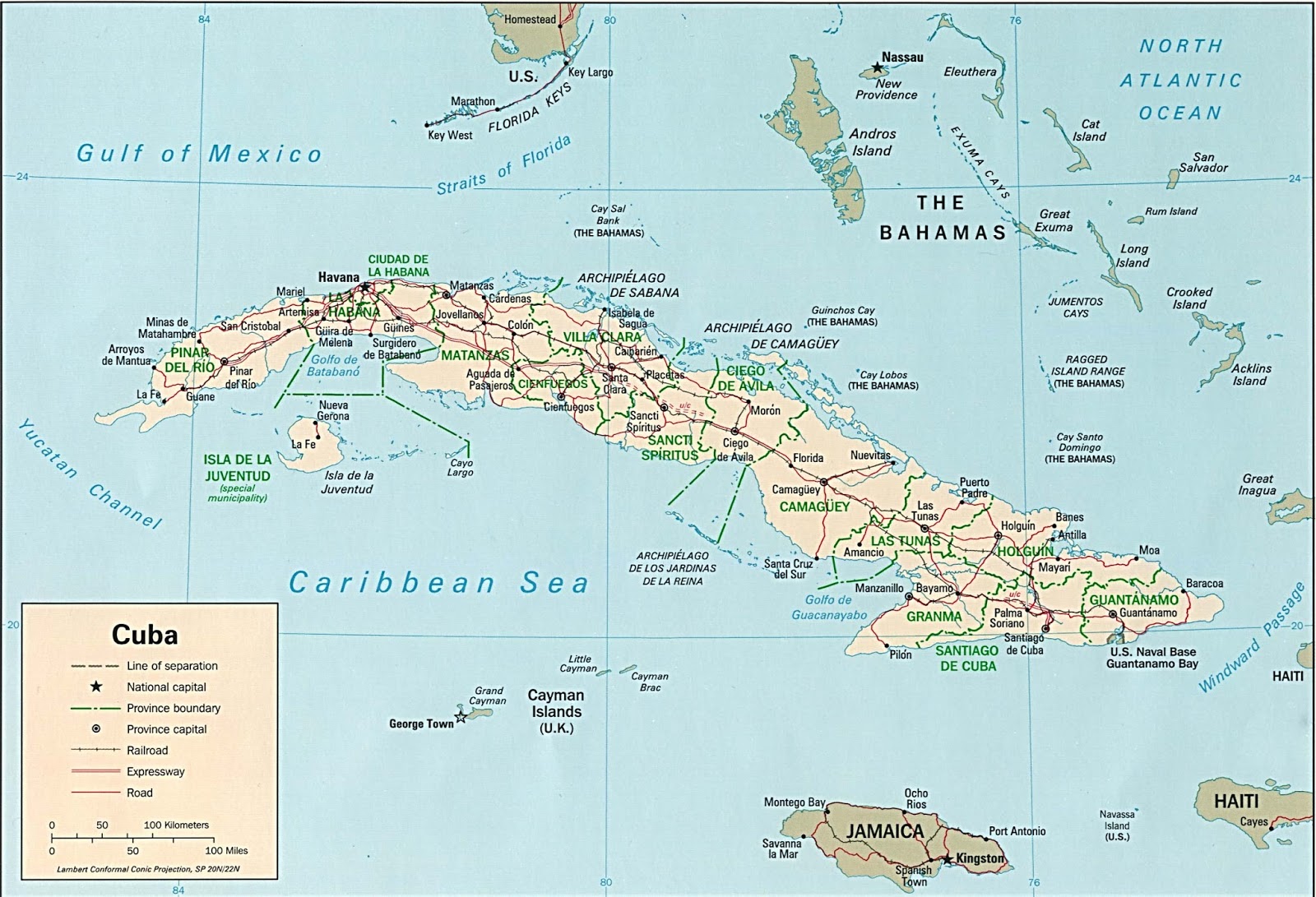
Havana is located 105 miles south of Key West but could be in the hinterlands of Inner Mongolia, given the historical lack of access. I recently traveled to the island and share some of the things to look out for in this post.

Source: http://www.lib.utexas.edu/

I was scheduled to fly out on Novmber 29th but this decision came under further consideration when Fidel Castro's death was announced on the 25th of the self-same month. This news gave me pause because of uncertainty about reactions on the ground as well as concern about traveling to an unknown place in uncertain times. But I persevered because of i) my perception as to the historical nature of the flight and ii) the risk that the incoming administration could roll back the program under which this travel was currently allowed. I relayed the specifics of the trip in a previous post.

As I am wont to do, I called AT&T from the airport seeking a voice and data package for the country to which I was traveling. If you are an AT&T customer traveling to Cuba, you are flat out of luck: AT&T has no communications package for Cuba. Their advice to me was to turn my phone off for the duration of the trip and to take advantage of wifi if/when I gained access to it. If you persist and use your phone, voice, data, and text services are very expensive.

Entry in to Cuba is slightly different than I had experienced in other countries. First, the documentation that you are requierd to complete before approaching the authorities includes a medical questionnaire. Second, there is a security screening just after clearing immigration. Third, there is a medical screening once you have successfully navigated the security screen.

Checked luggage is reclaimed beyond the medical screen and Customs Enforcement has both Declare and Nothing-to Declare channels.

Individuals traveling to Cuba are required to convert hard currency to Cuban Convertible Pesos (CUC) in order to purchase goods and services on the island. The exchange rates are set by the government and are very unfavorable for the US dollar. During the time that I was there, US$100 yielded CUC87. One of the lessons that I learned from a seasoned Cuban traveler was that a US traveler should obtain Euros from their home banks and convert those to CUCs while in Cuba rather than doing a direct $ to CUC transaction. There are two currency conversion stations on the outside of the terminal building, one at each end. In addition, there are Cambios sprinkled throughout Havana.

You need CUCs in order to take a taxi into town. The average fare from the airport to downtown is CUC30.

Travelers to Cuba either stay in a hotel or in a private residence (casas particulares). In either case, it is the travelers responsibility to ensure that the lodging expenses are settled in CUC. These lodging expenses cannot be settled with an American credit card. In some cases a reservation will show that the stay is guaranteed by the American card but beware, a third party has to do the necessary transaction completion or you have to be prepared to pay in CUCs on your arrival.

Some specific financial issues to take note of: (i) US banks are barred from doing business with Cuban entities therefore US-issued credit and ATM cards are non-functional on the island; (ii) always carry more cash than you think you will need because you will not have the backstop of a credit card; (iii) you cannot wire money into Cuba from the US; and (iv) you cannot have someone send you money to Cuba by Western Union.

In traveling to the airport for your return flight, be sure that you know which terminal your airline departs from and provide that information to your driver. JetBlue, American and Delta fly in and out of Terminal 3. The distance between Terminals 2 and 3 is 3 kilometers. There is no inter-Terminal transportation so if you go to the wrong terminal, you will will incur a CUC10 - 15 taxi charge to get back on the right track.

Happy trails


©Wine -- Mise en abyme

The very predictable (fill in the blank) Barolo Estate sale

Late yesterday I saw a post from Anna Savino on the Barbaresco and Barolo Facebook page saying/asking "Heart is breaking ... did you hear about Voerzio?' A few queries were directed at her but she did not respond futher at that time. I had heard a rumor at the recent Cavallotto Dinner at La Pizza Fresca that Voerzio was up for sale but did not assign any credence to it at the time. So I asked if that was the issue that was causing her distress.

When I woke up this morning, I was greated by a loud verbal wail from Anna adding furher fuel to the fire and using the letters LVMH -- the company that is synonymous with luxury brands. I was intrigued and went looking around for further info. One of the boards had a petered-out thread that referenced a potential acquisition but Pernod-Ricard was the name bandied about there. I got some more substantive information later on in the morning which indicated that LVMH was believed to have purchased the Voerzio company.

And if that is the case, it would not come as a surprise to me. In August of this year, in my assessment of the Vietti sale, I wrote:
Now what are the implications of all this for the broader Barolo. There is potential for this being the tip of the spear. In a tight market, Vietti now has a competitive advantage over its neighbors. It's sources of supply are guaranteed and it is sitting on capital with which to make future acquisitions. In the podcast Luca described a property that was coming on the market but he would not bid on it because the vintner who sourced grapes from that property was a friend. With the Krauses as partners, that property could have come into his portfolio through a Krause acquisition, allowing him to hide behind the "they did it" mantle. No self-respecting market player can allow a participant to acquire and retain this type of competitive advantage without a response at some time down the road. Within that environment, the Vietti purchase is just the tip of the iceberg for Barolo: (i) All of the other vintners are facing the same pressures that Vietti was facing and drove them to this decision. (ii) Luca says there are a number of potential investors sniffing around the valley; therefore, it is only a matter of time before some of the folks seek to monetize their investments while preserving the fundamentals of the business.
Further, a little over a year ago, I lucked into predicting this event when I titled one of my posts "The Louis Vuittonification of Burgundy: A roadmap for Barolo?"

It will be interseting to see the details of this deal (if there is a deal) as they emerge.


©Wine -- Mise en abyme

Saturday, December 3, 2016

Inaugural Orlando - Havana Flight: JetBlue accentuates the historicity

JetBlue inaugurated its spanking new Orlando - Havana route with an 8:29-am, Orlando-origin flight on Tuesday, November 29th. And if there was any concern about the incoming administration's position on the policies that made this flight possible, the airline did not allow it to affect the show that it put on for this inaugural flight.

I had been threatening to fly to Cuba for a while to report on the farm-to-table scene for my blog but had not taken any steps towards that end. This all changed when JetBlue announced the sale of tickets for the inaugural flight for its newly awarded route between Orlando and Havana. I saw the opportunity to meet my original goal while participating in what i perceived to be a historic event.

We had missed a recent JetBlue flight to NY so, to prevent a repeat performance, my wife had set the alarm at an ungodly hour. And a good thing she did. First off, everyone had had the same idea to get there early. Second, you needed to affirm, by affidavit, your reason for traveling to the island. Even if you had filed the affidavit online, you had to redo it manually because the online submittals had not linked to individual travel records. And, third, visas had to be purchased ($50) for each non-resdident Cuban traveling. All in all, a slow process.

JetBlue sought to make the process bearable. They had staff members aplenty on hand directing you to the right lines and handing out affidavits so that they could be filled out before approaching the counter. Staff members working "the floor" wore Tshirts which loudly commemorated the event. The lines were long but orderly and, judging by the number and (large) sizes of the checked luggage, were primarily populated by individuals taking advantage of the flight to visit family members on the island.


After check-in we headed towards the gate. And it was there that the show truly began. The flight was leaving out of Gate 1 and the airline had set up a VIP area just opposite. This area was populated with JetBlue executives, important travelers, and helpful staffers. Through her connections, my wife had snagged a couple of VIP pins for us so we were able to participate fully in the experience. A variety of Cuban foods (empanadas, cakes, pastries, flan, etc.) and brought a little bit of the island to the area. Warren Christy, a senior JetBlue executive, was taking the flight down and held a number of interviews with local TV newscasters.


Warren Christy of JetBlue

Parlo and Mrs Christy
We were among the last to board, grudgingly exiting the cocoon of the VIP area to traverse the press gauntlet that defined the path to the boarding gate.

Plane that was taking us down to Cuba at gate
At every step along the way we had been enthusiastically welcomed by JetBlue staffers. And the boarding gate and plane attendants were no exception. Every seat on the plane was adorned with a Cuban Flag and a swag bag.


The taxi was relatively short and we were number one for takeoff when we got to the runway. In his remarks, the pilot had indicated that the flight duration would be 1 hour and 1 minute. There was in-flight service but, due to the brevity of the flight, it was still ongoing when we started our initial descent.

JetBlue staffers waving us on our merry way
I normally like an aisle seat but, on this occassion, I took a window because I wanted a good view of the island upon our approach. I saw the initial dark-brown outline of the shoreline through white puffy clouds, a view which evolved into more structured forms of farmland and industrial sites as we traveled further inland.


At this point Warren Chrity took the microphone and thanked us all for being a part of this historic flight. He was the receipient of a warm round of applause. It was as though the travellers were saying "thank you guys for doing this."

The landing was flawless and was greeted with loud hoots, clapping, and waving of the Cuban flags that had been placed on our seats previously. As I exited the plane, I shook Mr. Christy's hand and wished him and his organization well on the new route. I am a regular JetBlue customer and a fan of the organization. They represented on this one.

©Wine -- Mise en abyme

Wednesday, November 23, 2016

The history of the concept of terroir: A timeline

I have recently completed a series on the history of the concept of terroir in France. I summarize that work in the below timeline.


©Wine -- Mise en abyme

Wednesday, November 16, 2016

Cavallotto Barolo Winemaker Dinner at La Pizza Fresca Ristorante, New York City

As New York Magazine sees it, "Most pizza places don't have an award-winning list of Italian wines that top out at $2000. Similarly, most oenophilic haunts don't offer certified-authentic Neapolitan pizza. La Pizza Fresca Ristorante, no ordinary pizzeria, does both." And this was the venue for the Cavallotto Winemaker Dinner jointly hosted by La Pizza Fresca and Morrell Wine and Spirits on November 7th.

About 60 people attended the event. The winery was represented by Alfio Cavallotto, one of three 4th generation children working at the estate.

La Pizza Fresca has a relatively narrow frontage but compensates for that fact with significant depth. You enter the restaurant into an abbreviated foyer which immediately gives way to a bar and an initial seating area which you traverse to get to the main dining room. The kitchen lies in the deep recesses of the building, beyond the dining room.


The front area of the restaurant was noisy and busy on the night of the dinner. Pleasantly so. I sought out someone to find out where exactly we were to be seated for the dinner. The young lady asked my name and, after consulting a list, gave me a glass of white wine and led me back to my assigned seat.


The wine that I was given as an aperitif turned out to be the Cavallotto Langhe Chardonnay 2014, a wine made from grapes grown on the hillside between the estate's two crus. The wine was fermented for 45 days in stainless steel autoclaves and aged sur lie -- with daily batonnage -- for 9 months. The wine was aged for an additional 6 months in bottle before being released to the market.

This wine did not show the richness that I associate with sur-lie aging or the rusticity and body that I have observed in international white varieties planted in the region. This wine was austere; thin and acidic with a dose of minerality and a distinct lime character. This wine would probably have been more appealing if it had been accompanied by a food item.

After the attendees had introduced themselves, and indulged in some "Barolo banter," Bradley Bonnewell, Wine Director at La Pizza Fresca, went to the front of the room to kickoff the proceedings. He introduced himnself and the restaurant, lauding its age (it has been in business for 20 years), its pizza (it has been certified for authenticity by AVPN, a Naples-based certifying authority), its imported bufala mozzarella (used on the in-house pizza), and the wine list (1600 selections, 30,000 bottles spread over three sub-lists). At the end of his presentation he introduced the Cavallotto representative, Alfio, one of three 4th generation children working at the estate.

Bradley Bonnewell, Wine Director at
La Pizza Fresca

Eric Guido of Morrell listening intently to Brad

The farm was established in 1928 (according to Alfio) and, until 1946, the family functioned as grape growers. In 1946 the estate became the first of the Castiglione Falletto growers to bottle its grape production and, two years later, was the first to produce Barolo on its own account. I covered Alfio's discourse and more in my post on the estate's grape-growing environment. Dinner service began upon the conclusion of his presentation.


The first course was a Carpaccio di Manzo, the componnets of which were beef tenderloin, parmigiano reggiano, arugula, sicilian extra virgin olive oil, and sea salt. This dish was esthetically as well as palate-pleasing. Clean and tasty.

Carpaccio di Manzo


It was accompanied by the Barbera d'Alba Vigna Del Cuculo 2012 and the Barolo Bricco Boschis 2010. The grape sources for both of these wines have been described previously, as was the wine-making process. The Barbera exhibited some pungency and hints of rose, phenolics, and waxiness on the nose. On the palate, sharp, bright fruit, good acidity and weight, and drying tannins.

The 2010 Barolo Bricco Boschis displayed a nutty character along with charcoal, tar, roses, spice, savory herbs, red fruit and baking spices. Unfocused on the palate at this time. Savory fennel note. Unspectacular finish.

The second dish was a Ravioli di Vitello, made with hand-made pasta, veal, porcini, and mascarpone. By this time all pretensions at pairings had broken down. The wines were being brought out in pairs and the food was on one track and the wine on another.

Ravioli di Vitello
The second pair of wines brought to the table were the 2011 and 2012 Barolo Bricco Boschis. The 2011 had a phenolic character accompanying tamarind and spice. Tamarind on the palate. Silky tannins. The 2012 had tar and beautiful elegant roses on the nose. On the palate, more concentrated than the 2011. Full-engagement mouthfeel, big fruit core, and excellent finish.

The next two dishes were pizza: Pizza Savoia (pancetta, cremini, fontina, bufala mozzarella) and Pizza Margherita (San Marzano tomato, bufala mozzarella, and parmigiano reggiano).

Pizza Savoia

Pizza Margherita

The final dish was the Manzo Brasato al Barbera the components of which were barbera-marinated boneless beef short ribs and olive-oil crushed potatoes. This was, for me, the dish of the night. It had a great earthy flavor and was fall-off-the-bone tender.


The final three wines were the 2008, 2009, and 2010 Barolo Riserva Vignolo. The Nebbiolo fruit from this, the second of two crus owned by the estate, is only used to make a Riserva wine, attesting to the high regard in which this property is held. The 2008 and 2009 wines struck me as rather similar except for evolution. Bacon fat, tar, and roses on the nose. Great attack on the palate with a concentrated core of fruit. The 2010 had a phenolic character but that did not deter the aromas of tar and roses. This is a structured wine. A little green in the tannins. Great round mouthfeel and lengthy finish.

There was a clear distinction between the Riservas and the cru Barolos with the Riservas imparting a lot more pleasure at this time.


At the conclusion of the formal tasting, a small group of hard core Barolo fans refused to leave the building. We stood around talking and then decided to order something off the vaunted La Pizza Fresca list. The wine we opted for was the 1964 Barolo Giacomo Conterno. This wine was decanted. When poured into the glass, it displayed a delicate golden color, as of a faded tawny port. Heavenly on the nose. First scent as of an elegant rose. The tar was also delicate and faded into a hint of molasses. Burnt orange. Savoriness and spice on the nose as well as on the palate. A very textured wine with an exceedingly long finish. We meditated on this wine.


Clifton Hyde of Morrell, Alfio Cavallotto, and
the author
I had a very enjoyable evening and made some new Barolo friends. The organization of the tasting was not as tight as I would have liked. Alfio started out at the center of the room but then folks to the left could not hear him so he went to the front. So then we could not hear him. Some type of audio aid should have been provided, given the size of the crowd.

The decoupling of the wine from the food was also of some concern because things were being brought to the table in competition with each other. I have no problem with decoupling; that is the way that I do my tastings. But I do the tastings first (so that we can concentrate on the wines) and then the meal after (accompanied by wine but in a more relaxed fashion).

I would have liked Alfio to have spoken at least three specific times during the course of the evening: at the beginning; before or after the Bricco Boschis wines; and before or after the Vignolo wines. He spoke twice and, as I mentioned, I heard lees than half of what he said.

That being said, the wine, food, comapny, and locale all contributed to making this a wonderful evening.

©Wine -- Mise en abyme

Saturday, November 12, 2016

Cantina Cavallotto Wine Tasting Dinner: The estate's grape-growing environment

Earlier this year I visited Mt Etna to participate in Contrada del Etna, the annual event which showcases the region's wines and producers. After a full-day of tasting local wines, we repaired to Cave Ox, the local watering hole, for dinner. I had a feel for a non-Etna Italian red and conveyed that sentiment to the owner. He brought me a Barolo by a producer named Cavallotto. I liked the idea of a Barolo but had not had a Cavallotto previously. He reassured me that it was a good producer so I jumped in. And was rewarded for my courage.

I had been pleased with my first encounter with the wine so when I received an invitation from Morrell to attend a Cavallotto Wine Dinner at La Pizza Fresca in New York, I jumped at the opportunity to learn more about the Cantina and its wines.

About 60 people attended the event. The winery was represented by Alfio Cavallotto, one of the three 4th generation children working at the estate. Before describing the tasting, I present some background on the estate's grape-growing environment.

Castiglione Falletto
The Cavallotto estate is located in Castiglione Falletto, one of the five core Barolo communes.


A key characteristic of the commune, according to Masnaghetti (Barolo MGA), is a long ridge which rises from the plains in the northern part of the township and continues southward forming eastern and western slopes." The dividing line for the slopes is illustrated by the generally north-south blue line on the map below. Exposure is homogenous across the eastern slope, improving gradually with elevation as it shifts from east to southeast to south (Masnaghetti).


The western slope has four distinct sectors, each associated with a ridge running in a northwesterly direction. The best exposures are those facing Barolo and La Morra, normally with a south or southwest orientation but sometimes veering west (Masnaghetti). The MGAs (crus) of Pugnane and Mariondino are normally placed in the fourth sector but, according to Masnaghetti, "differ in terms of their position and layout." He sees Pugnane as the terminus of the Munie cru of Monforte d'Alba while Mariondino hugs the ridgeline and has principally western exposures.

Source: Compiled from Masnaghetti's Barolo MGA
Castiglione Falletto vineyards rest on Langhian soils, the characteristics of which are detailed here. A total of 247.08 ha are planted to vine in the commune with the distribution across wines as follows: Barolo, 140.17 ha; Barbera, 31.23 ha; Dolcetto, 27.29 ha; Langhe Bianco, 24.26 ha; and Langhe Rosso, 24.13 ha.

The Crus
The Cavollotto holdings amount to 25 contiguous ha distributed across the Bricco Boschis and Vignolo crus.

Bricco Boschis lies between the ridges of Monprivato and Montanello and is 17.65 ha in size. Eighty-six percent of its surface is under vine, with the resident varieties being Nebbiolo (78%), Barbera (15%), Dolcetto (3%), and Langhe Rosso varieties (4%). Elevation in the cru ranges between 230 and 337 m. This cru is a Cavallotto monopole save for two small, non-contiguous plots farmed by Vietti and six contiguous plots farmed by Roccheviberti.

The cru falls within the Langhian soils subzone and has a mix of sea-floor, shallow-sea, and sandy-beach deposits. The center of the cru rests on the Langhian-Tortonian border and, as a result, the cru shows a mix of white, yellow, and grey marls interspersed with layers of sand. This mix of soils imparts characteristics of both soil zones to the wines of this cru.

A little more than half of the Vignolo MGA is farmed by Cavallotto with the remainder worked by Paolo Scavino and Privati. This tiny cru (compared to Bricco Boschis) is 3.57 ha in size, is 99% planted to vine, has southwest exposure at altitudes ranging between 220 and 270 m, and is primarily planted to Nebbiolo (78%) and Dolcetto (17%). The soil of this cru is Langhian and is comprised of calcareous clay marls intermixed with a small amount of evenly distributed beach sand deposits.

Vineyards
The map below shows the distribution of plantings by cru and vineyards. The table following shows some additional data for a subset of these vineyards.

Source:cavallotto.com

Source: Compiled from cavallotto.com

In addition to the above, Grignolino, Pinot Noir, and Chardonnay are planted in the environment. The over-arching management philosophy is the application of an integrated farming methodology inclusive of some organic principles.

I will cover the actual tasting in a follow-up post.


©Wine -- Mise en abyme