Showing posts with label Andrew McNamara. Show all posts

Monday, March 18, 2013

Augustan sales force "backbones" new Premier Beverage Account Development Team

Premier Beverage, a member of the Charmer Sunbelt Group, and one of Forida's largest distributors of wine, spirits, and other beverages, is streamlining its operations and enhancing its customer-servicing capabilities by melding the Augustan Sales Force and the Premier Account Development Specialist Team (Premier ADST) into a new organization called the Premium Account Development Specialist Team.  I spoke with Andrew McNamara MS, Director of Fine Wine/Master Sommelier, Premier Beverage Company and Augustan Wine Imports (and newly minted member of the Board of Directors, Court of Master Sommeliers) and Proal Perry, General Manager of Augustan Wine Imports, the team is slated to manage this new organization, to get their perspective on the rationale and implementation of this organizational move.

Andrew McNamara MS
Proal Perry
According to Proal, Augustan was founded in 1983 with the intent of bringing small-producer, estate-bottled wines to the Florida market. The business model was successful but the company did not have the size to fully serve the market so it entered into a partnership with Premier Beverage. The organizational structure that was in-place when I interviewed Proal two+ years ago was as follows: a commissioned sales force; a General Manager/Sales Manager who reported directly to Proal and was charged with balancing responsibilities across the company; two Portfolio Managers – one responsible for the U.S. and the other for the rest of the world – who handled issues such as inventory, profitability, costing, and supplier contact and coordination; and a Marketing Specialist who handled referrals. This structure no longer meshes with Premier's strategic imperatives nor the realities on the ground.

The driving forces for the melding of the organizations were two-fold: (i) Customers have a number of sales people calling on them and are always looking to reduce the number of calls that they have to field.  By having a single salesperson calling on a customer, and representing the company's full lineup of products, Premier can show that it is listening and reacting to their stated needs without sacrificing its goals. (ii) The producers that Augustan represents continue to grow and there was a need to provide a sales organization that could continue to effectively represent their products in tandem with their growth. The process of melding the organization began about four months ago with intensive planning regarding the strategy and operation as well as intensive interviewing to flesh out the team.

The new, streamlined organization has two aspects: (i) The Premium Account Development Specialist Team -- headed by Andrew -- with responsibility for selling the majority of the Augustan-sourced offerings plus selected elements of the Premier book and the capability to sell the remainder of the Premier book as the occasion arises; (ii) A sourcing/marketing/product knowledge function with the responsibility for product acquisition, producer management, knowledge acquisition and distribution (both internally and externally), and creation of events and shows which project the products that are being sourced for the market. 

The new sales force is comprised of 19 sales people plus two managers and is deployed in North and South sub-teams. Andrew, in his new position, will report to Alan Paquette, Vice President of Wine. The Marketing Specialist will expand his focus to include all the wines that will be sold by the Premier Account Development Specialist Team and will have primary responsibility for product knowledge acquisition and dissemination. The team is further blessed by having Andrew, with his capabilities, to assist in staff and customer product training. Proal continues as General Manager of Augustan Wine Import. 

This is an exciting time for the new team.  Andrew's challenge will be melding the cultures of two separate organizations such that the end result is a group with a common sense of purpose and the tools to accomplish its goals. The challenge for the sales force will be getting up to speed on a broader array of products, and a different business model, while getting to know new team members, and maintaining the level of production in the short term. On the other side of the coin, they are now able to offer a wider variety of "new" choices to their existing customers and, as such, increase their perceived value.


©Wine -- Mise en abyme

Tuesday, March 6, 2012

Vintage Rioja wine tasting at the Bull and Bear: Selected years, 1925-2001

The wines of Spain's Rioja region -- known and respected around the world -- owe their prominence to three factors: terroir, an affinity for oak, and the included grape varieties.  Within the corpus of Rioja winemaking, there is an ongoing debate between "traditionalists" and "modernists" with the former favoring long aging in American oak barrels while the latter favor shorter aging periods in French oak.  In order to investigate the two schools in detail, I endeavored to hold tastings of vintage wines from both schools (keeping in mind that the roots of the traditional school go far deeper in time than do the roots of the modernist school).  This post reports on a vintage traditional tasting held at the Bull and Bear restaurant at Orlando's Waldorf Astoria on Friday, March 2nd, 2012.


The wines for the tasting were sourced from the cellars of @wineORL, Ron Siegel, and Steve Alcorn, the latter two being prominent Orlando-area collectors.  The wines included in the tasting are shown ordered alphabetically by winery in the table below.  Some points of note: (i) all of the wines were red; (ii) with two exceptions, all of the wines were from centenarian wineries (wineries plying their trade in the Rioja region for in excess of 100 years); (iii) a total of 20 wines were associated with the 10 wineries; and (iv) with five wines in the mix, the venerable house of Bodegas R. Lopez de Heredia is the source for 25% of the wines in the tasting.


The tasting was led by Andrew McNamara MS and was arranged in three flights from youngest to oldest.  The youngest wines were all opened prior to the start of the tasting and allowed to breathe in the bottle. To protect against degradation of a potentialy delicate wine, the 1925 Marques de Riscal was only opened when he was ready for it to be poured.


The first flight was comprised of the the wines from the '80s and '90s plus the Vina Ardanza.  The wines were tasted in the following order:

2001 Vina Ardanza
1999 CVNE Imperial
1997 La Rioja Alta Gran Reserva 904
1991 R. Lopez de Heredia Tondonia Gran Reserrva
1985 Bodega Montecillo Vina Monty Gran Reserva
1982 Muga Gran Reserva Rioja
1981 Bodega Montecillo Vina Monty Gran Reserva

The first three wines in the flight exhibited primary fruit and oak with dill a common characteristic.  The Vina Ardanza was creamy and light with distinct red fruit character and was less than full-bodied while the La Rioja Alta exhibited vanilla, rhubarb, strawberry, and dill.  Things improved on the palate as we moved deeper into the flight (with the exception of the '85 Montecillo which was corked) with the Muga (graphite, iron, certain sweetness) and the Tondonia (strawberries) showing very well.  The Tondonia was elected wine of the flight.

The second flight was our '70s flight and the wines were tasted as follows:

1978 Marques de Caceres Rioja Gran Reserva
1978 Marques de Murrieta Castillo Ygay
1976 R. Lopez de Heredia Vina Bosconia
1973 La Rioja Alta Gran Reserva Cuvee Centenario
1976 Muga Gran Reserva
1970 R. Lopez de Heredia Vina Tondonia
1970 Faustino I Gran Reserva

The excellence that began to take hold in the wines of the 1990s continued into and through this flight.  The dill and primary fruit evident in the early wines of flight 1 had resolved into raisins and coffee in this flight.  The wine of the flight was the 1973 Rioja Alta Gran Reserva.

The final flight was orderd as follows:

1968 Vina Valoria
1968 R. Lopez de Heredia Vina Bosconia
1964 Faustino I Rioja Gran Reserva
1964 La Rioja Alta Gran Reserva
1961 R. Lopez de Heredia Vina Tondonia
1925 Marques de Riscal Reserva

The wines in this flight were all superb and completed the seduction of the tasting panel that had been initiated by the wines in the second half of the opening flight.  The wines were mostly well balanced  with smoke, chocolate, and dustiness on the palate being a common characteristic.  The stunner was the 1925 Marques de Riscal which ended up as the wine of the flight and of the night.  This wine was opened just prior to pouring because we were afraid that it might be too delicate to survive extended exposure to the elements; but it got better with the passage of time and three hours later it was running at top speed.  Phenomenal.  I need more of this wine.

Andrew McNamara MS, Premier Beverages and Dhane Chesson, Vibrant Rioja

This was an excellent tasting which converted all of the participants from tepid to full-throated fans of vintage traditional Rioja wines.  Dhane Chesson, Vibrant Rioja Representative, participated in the tasting and was extremely pleased at the showing of  her charges. Please visit Steve Alcorn's blog for individual tasting notes as well as for a discussion of the post-tasting dinner and wines.

© Wine -- The View From Orlando

Friday, April 1, 2011

The Real Deal in Chile: A Guild of Sommeliers and Wines of Chile Production

I recently received an invitation from the Guild of Sommeliers Education Trust to attend a Wines of Chile tasting which will be held in Ft. Lauderdale on April 26th.  I had attended one of this organization's tastings late last year and had found it both educational and enjoyable.  I signed up for the upcoming tasting and then sought out my favorite Master Sommelier Andrew McNamara to get some insight into the Guild and the Wines of Chile event.

According to Andrew, the Guild of Sommeliers is a non-profit organization which was founded in 2003 and has as its mission the promotion and development of the wine profession and the individuals involved therein.  Sommeliers are not highly paid but the informational and educational burdens which they face are immense.  The Guild seeks to lessen these burdens by providing sommeliers with access to resources  such as trips, classroom activities and scholarships.  The guild has approximately 3100 members and measures success by membership and donation growth.

The Guild is currently headed by Fred Dame, Master Sommelier, who is also its founder.  Fred is supported in his activities by a Board of Directors (of which Andrew is a member) comprised of Master Sommeliers and non-MS members of the Wine and Spirits industry.  The Guild has some paid employees but the majority of the work done by Master Sommeliers in support of its activities is done gratis.  Andrew, for example, knows the level of effort required to gain the knowledge required for qualifications.  He is grateful for what he has accomplished and wants to give back and contribute to the goal-attainment activities of aspiring sommeliers.

In 2010 the Guild held over 18 tasting seminars to include Wines of Germany, Wines of New Zealand, and Wines of Bordeaux.  In 2011 they will be cutting back on these centralized seminar-type tastings and instead will seek to service members where they are.  The Guild will create podcasts and will send out wines to support small-group, podcast-driven tasting events.

The upcoming April 26th tasting has the Guild partnering with Wines of Chile to present an event titled The Real Deal in Chile.  The event will be held at Morton's Steakhouse in Ft. Lauderdale and will feature a two-flight tasting of Chile's "Undiscovered Gems" and "Icons then and now."  The tastings will be led by Fred Dexheimer, Master Sommelier and Wines of Chile Educator.  One of the exciting aspects of this tasting is the opportunity to taste aged Chilean wines and then compare them with current vintages.

Thursday, September 30, 2010

A Wine Journey: 1998 Alvaro Palacios L'Ermita

In my continuing quest to taste the wines identified as the Wines of the Decade (the best wines he tasted between 2000 and 2009) by Master Sommelier Andrew McNamara, I thought to taste the 1998 Alvaro Palacios L'Ermita as part of the celebration of International Grenache Day.  This post relates the experiences associated with that tasting.
L'Ermita is the flagship product of Alvaro Palacios, one of the pioneering young winemakers who accompanied René Barbier to Priorat to reclaim that region's winemaking traditions. In what has come to be known as the "Grattalops Project," these winemakers had separate vineyards but shared winemaking facilities in order to control costs and quality.  Palacios had an excellent winemaking pedigree prior to his involvement with Gratallops.  He was one of nine children born to the owner of Bodega Palacios Remondo, a respected Bodega in the Rioja Baja, had studied winemaking in Bordeaux, and had worked at Chateau Petrus for 2 years under the famed winemaker Jean Pierre Mouiex.

Palacios bought his first vineyard in Priorat -- Finca Dofi -- in 1990 and then found, and bought, L'Ermita in 1993.  L'Ermita, named for a small chapel at the top of the hill on which the vineyard lies, is a north-east facing, 2-hectare plot that sits between 400-500 meters elevation on a precipitous, well-drained, granite slope.  The steep hillside terraces, some only wide enough for one or two rows of vines, are populated by gnarled, head-pruned Garnacha vines which were all planted between 1900 and 1940.  Since 2000, Palacios, whose practices reflect his view that wines are "a transparent expression of the terroir," has been farming L'Ermita biodynamically.

The grapes for the wine are hand picked with teams making multiple passes through the vineyard to ensure that the best grapes are picked at the right time.  Prior to 2005, the finished wine contained 20% Cabernet Sauvignon, added to provide structure.  Since 2005 the wine has been 100% Garnacha.  The wine undergoes maceration for 25 days in oak vats and is then aged in 100% new French oak for 16 to 18 months.  The yield is approximately 10 hectoliters/hectare and annual production is 250 cases.

Andrew McNamara had identified the 1998 vintage of this wine as one of his wines of the decade and Robert Parker, in assigning it a score of 97, fawned over it thusly: "The blockbuster, opaque purple-colored 1998 L'Ermita exhibits ... copious quantities of sweet oak, a boatload of glycerin and superb blackberry, cassis, and cherry fruit that explodes on the mid-palate and in the finish."

I had the wine shipped into state by overnight delivery so that it would be a part of the Wine Barn celebration of Grenache Day. The details of the evening were covered in a prior post so I will limit myself herein to the circumstances surrounding the tasting of the L'Ermita.  The wine was taken from me when I arrived at the location and was placed into a brown paper bag as were all of the other wines.  The donated wines were


marked uniquely in order to differentiate them from each other as well as from the larger group of wines. I was able to identify the L'Ermita and, after my first encounter with it, it was impossible to dislodge me from my position at the tasting table.

The wine had a youthful appearance with some slight browning at the edges and showed blackfruit, cassis, cedarbox and vanilla on the nose.  The scents were so compelling that it took significant effort to transition from smelling to tasting.  The wine delivered on the palate with blackfruit, minerality, acidity, excellent balance, and a very long finish.  All elements of the wine were fully integrated and the youthful appearance and taste of the wine signaled even greater drinking pleasure down the road.


A definite homerun, as can be seen by the look of amazement on the face of Andrew Montoya, owner of The Wine Barn., as he removes the bag to reveal the identity of the wine.

Wednesday, September 15, 2010

Confluence of #Bubbly Day and A Wine Journey

Yesterday (September 14) was designated #Bubbly Day and wine drinkers were asked to mark this day by drinking their favorite bubbly and sharing their experience with others around the world via Twitter.  This online aspect of #Bubbly Day was hosted by @Atlantawineguy.

From the launch of this website I have been engaged in a quest to taste the 115 wines designated by Master Sommelier Andrew MacNamara as his Wines of the Decade.  I opted to do a #Bubbly Day-Wine Journey mashup by tasting one of Wine Journey champagnes on #Bubbly Day and selected for this purpose the 1988 Pol Roger Cuvee Sir Winston Churchill.  I did not have this wine in my cellar and had to procure it online from Benchmark Group.  I had them overnight the wine to me and installed it in my cellar to await its pleasurable sacrifice.


Pol Roger was founded in 1849 and today has approximately 87 hectares of vines in and around Epernay.  The company's line of champagnes include three non-vintage cuvees -- Brut Reserve, Rich, and Pure -- and three vintage cuvees -- Brut Vintage, Brut Rose, and Cuvee Sir Winston Churchill.  The non-vintagre cuvees are all made with equal parts Pinot Noir, Pinot Meunier, and Chardonnay while the Brut vintages are 40% Chardonnay and 60% Pinot Noir.  The mix of grapes for the Cuvee Sir Winston Churchill is not publicized.  The Cuvee Sir Winston Churchill was named after that great man, who happened to be both a friend and loyal customer of the Pol Rogers.  According to wine.com, the cuvee was made in a style preferred by Sir Winston, "... robust, full-bodied, relatively mature and dominated by Pinot Noir which contributes firmness and backbone complemented by the ethereal elegance of Chardonnay."

I had invited the members of the Antonio's Tasting Group to join me at The Imperial on #Bubbly day and we had 11 people show.


The picture below shows our champagne lineup.  We started with a Veuve Clicquot and never looked back.  With every bottle we opened I issued


 a "Big-Bird" tweet.  We were monitoring Twitterfall to gage the action that was ongoing elsewhere and noted a few retweets of our tweets and a query from @Atlantawineguy about the Sir Winston Churchill.

The Sir Winston Churchill was the last bottle opened and everyone stayed around for that event.  This wine was worth the wait.  It had tight bubbles, apple-pear notes, a certain breadiness, walnuts, good acidity and a long finish.  We had drunk a lot of very good champagne that evening but this was clearly the cream of the crop.


A good night was had by all.  We had the satisfaction of drinking locally while participating globally.  We could get to like this.

Monday, September 13, 2010

#Cabernet Day Shafer Hillside Select Cabernet Sauvignon Vertical -- The Wines

In celebration of #Cabernet Day on September 2, 2010, Wineontheway.com hosted a Shafer Hillside Select 12-vintage (1994-2005) tasting at Luma on Park.  In recent posts I reported on the "back story," the event setup, and the tasting leader's (Andrew McNamara) opening remarks.  In this post I report on the actual tasting of the wines.


The process Andrew employed for the tasting was inclusive and engaging.  For each vintage, the attendees were asked to raise their glasses, say cheers, and clink glasses with as many fellow attendees as possible.  Upon completing this ritual we: examined the color of the wine; covered the top of the glass with the palm of one hand while swirling the glass with the other hand; smelled the wine; and, finally, tasted it.  He asked for group input on our observations after out assessments of color, smell, and taste.  He spoke at great length on a wide range of topics, especially between vintages, to slow down the pace of the tasting and combat tannin buildup in the mouths of the attendees.  The tasting began with the 2005 and proceeded in the order shown.


2005 Shafer Hillside Select -- This wine had a deep ruby color and presented dark, ripe blackcherries, mocha, coffee bean, cinnamon, anise, charred earth, and graphite on the nose.  The wine showed good weight, acid, tannin and fruit on the palate and had a smooth, long finish.  Andrew indicated that 2005 had been a very good vintage in Napa.  It was slightly cooler than 2004 and had had lower yields.

2004 Shafer Hillside Select -- This wine did not present much on the nose initially.  When tasted, tannins were dominant.  The wine was all oak, graphite, and tannin with very little fruit.  There was a definite spiciness, a definitive hallmark, according to Andrew, of Shafer Hillside Select.  This wine was closed and Andrew recommended revisiting it again in five years.  This wine was the product of a warm vintage, a year in which most wineries produced flashy, forward wines designed to be drunk young.  This wine, in Andrew's view, shows that higher-quality wines of this vintage should not be drunk young.

2003 Shafer Hillside Select -- This wine was more open on the palate than the two preceding wines.  It was jammy and fruity with tones of graphite, tobacco, and vanilla.  It was less intense and less complex than either the '04 or '05 but had more developed flavors and aromas.  This wine is approachable now and should be drunk before the '04 and '05.

2001 Shafer Hillside Select -- Andrew described the 2001 as an extraordinary vintage.  The wine had a definite floral element with lavender and violet notes.  There were elements of sour fruit and graphite but, beyond that, the wine was not very forthcoming.  On the palate it showed great structure and depth.  Andrew said that it was less powerful than when he last tasted it approximately three years ago, evidence of what he called a "mellowing out" of the wine.  He sees the wine as being "in the throes of adolescence" and requiring a lot more development time. (This is one of my Wine Journey wines.)

2002 Shafer Hillside Select -- Andrew described this wine as the "most massive wine on the table" and passed it over initially to assess the 2001.  When we returned to this wine, he exhorted us to study it carefully.  The wine exhibited black fruits, licorice, and a round, full mouth feel.  It showed great weight and power without appearing heavy.  Andrew described this as the greatest Shafer Hillside Select ever made and one of the greatest wines ever made in California.  He feels that, of American wines, only the 2001 Harlan approaches the level of balance exhibited by this wine.  The wine is still a baby and will continue to evolve and improve over the next 20 years.  (This is one of my Wine Journey wines.)

2000 Shafer Hillside Select -- This wine showed cedar, tobacco, and other secondary characteristics.  This wine is approaching maturity but its structure is still evident.  While 2000 was widely viewed as a bad year for Napa, Andrew feels that Shafer made a good product for this vintage.

At this point in the tasting, Andrew paused for us to reflect on the wines that had gone before. Andrew queried the attendees as to their preferences up to that point and the consensus was 2002 followed by 2001.  It was felt that both the 2000 and 2003 could be drunk now while the 2001, 2004, and 2002 should be approached in that order.


We turned to the final six wines and, given the press of time and the extent to which folks were enjoying themselves and their tasting partners, the previously described tasting process was modified. To begin with, we skipped the 1999 and tasted the 1998 and 1997 comparatively.

1998 and 1997 Shafer Hillside Select -- According to Andrew, the 1997 had been an incredibly hyped vintage, one viewed as the vintage of the century in Napa.  All of the wines in the vintage received great scores from the reviewers.  Doug Shafer, according to Andrew, has tried to convince him that the '97 Hillside Select is in a dumb stage but he is moreso convinced after our tasting that the wine is "done."This was a 100-point wine and it is acidic and shows no fruit today.  The problem with this wine was that it was not balanced from the beginning (Andrew does see the Heitz Martha's Vineyard, BV George Latour, and Dominus from this vintage performing admirably.).  The 1998 Hillside Select, on the other hand, was an El Nino vintage, with a low-yield harvest, but is outperforming the 1997.  It has a slightly vegetal note (which he finds alluring), and a definitively longer finish.

1999 Shafer Hillside Select -- This wine had been viewed as the second coming of the 1997 Shafer Hillside Select.  It had incredible tannins, flavor, and intensity in its youth.  A dark, rich, extracted wine which exhibits earth, leather, and graphite.  Rather than the 1997, Andrew sees the 1999 as an older parallel of the 2001, with similar structure, fruit profile, and tannins.

1996, 1995, and 1994 Shafer Hillside Select -- By this time the attendees were becoming difficult to control (actually that had been going on for awhile).  They were buzzed; they were enjoying their neighbors; the night had already been a success.  They just wanted to bask in the glow of having participated in an event as spectacular as this.  They did not want to discuss the wine broadly anymore.  They wanted to tell Andrew what a great person he was.  How much they appreciated his parents for bringing him into the world; and suchlike.  Meanwhile, we are sitting with what I knew to be three great Hillside Selects, waiting patiently for us to administer the coup de grace.  Andrew told the group how unique and incredibly special it was to taste all three of these wines together.  The 1996 was an extraordinary vintage, he said, which overshadowed the 1995.  In a previous tasting note I have described the 1994 as manifesting cigarbox, leather, graphite, stewed plums, black olive, tar, espresso, sandalwood, barnyard, and cedar.


The tasting was over but no one wanted to leave.   We all trooped upstairs and continued the good vibes and wines over dinner at Luma.

Thursday, September 9, 2010

Shafer Hillside Select Cabernet Sauvignon Vertical -- McNamara's Opening Remarks

And the words came up from the cellar to Gigi Chilvers who had been holding back the assembled masses in the Luma bar.  And Gigi spake the words and the words were "Thou shalt go down." And go down they did.  Into the Cellar at Luma to partake of the fruit of Shafer's labor: 12 successive years of Hillside Select Cabernet Sauvignon.

The stairway to the cellar is L-shaped, going in a northerly direction initially and then making a sharp left turn before dead-ending at a north-south passageway after four or five steps.  A right turn leads to a heavy glass door which opens into the finely appointed cellar.  As attendees came across the threshold, they were greeted by an imposing array of Shafer Hillside Select bottles to the left and, ahead, white-berobed tables supporting a shimmering array of glasses each bearing a precise allotment of its homage to Bacchus.  Upon hearing that there were no pre-assigned seats, attendees spread out to occupy the preferred territory from which each would be mounting his/her assault on the best that Shafer had to offer.  The seats at the tables closest to the door filled first while later arrivals, and bullies, worked their way towards the back row.

The attendees were a mix of "power drinkers" and wine lovers.  The Antonio's Tasting Group was well represented as was Circa and Dexter's (by the owners), and ABC (two Wine Consultants).  There were about 10 women at the tasting.

Once everyone had taken their places, Adam made a brief opening statement and then turned the floor over to Andrew McNamara.  His was a virtuoso performance.  He exhibited great wit, exuberance, enthusiasm, and breadth of knowledge over the course of a two-hour tour which spanned not only the matter at hand, but also a broad array of wine-related topics to include wine ratings, acids, balance, beer, oak, and suchlike.

In his opening remarks, Andrew noted that this tasting was truly an extraordinary event.  He had, he said, tasted each of these wines at least three of four times but never all together like this.  He had tasted every Shafer Hillside Select vintage going back to the 1983 vintage and felt that the wines were "fantastic" and "extraordinary."  Given the pedigree and quantity of wines on offer at the tasting, he felt that it could have easily been priced at $400 to $500 and thought it remarkable that attendees were only being charged $150 for the opportunity to participate.

Andrew noted that there were originally eight Napa Valley cult wines: Harlan Estate, Screaming Eagle, Bryant Family Vineyards, Colgin, Dalle Valle Maya, Grace Family Vineyards, Heitz Martha's Vineyard,  and Shafer Hillside Select.  Shafer, according to Andrew, is definitively one of the greatest wines made in America today and is his single favorite vineyard in the country.  Shafer Hillside is a product of Stags Leap District which, according to Andrew, is one of the most distinct areas in Napa Valley.  The Hillside Select wine is a product of a harsh growing environment characterized by volcanic soil and bedrock.  Located on the east side of the valley, the Hillside grapes benefit from the warming afternoon temperatures generated by the setting sun.

Andrew has worked with Kevin Zraly in the past and considers him one of the most brilliant wine educators around.   For this tasting he was going to be following Zraly's approach of going through the wines methodically with time taken between each wine.  This would allow each wine to be shown as it tastes and not comparatively vis a vis the preceding or following wine.  Shafer is a heavily tannic wine and, if rushed through, would yield a mouthful of tannins for the intrepid taster.  Andrew expected that, as the tasting progressed, the group would be able to see the terroir characteristics -- which is what Shafer is all about -- and how the wine evolves and changes over time.

Let the tasting begin.

Monday, September 6, 2010

Shafer Hillside Select Cabernet Sauvignon Vertical -- The Back Story

The Wineontheway.com #Cabernet Day Shafer Hillside Select 12-vintage vertical tasting generated a lot of excitement from its inception but a number of things had to fall into place in order to ensure that the final product matched up to the excitement in the air.  Over the next few posts I will cover the activities leading up to the tasting, the actual tasting, and the perspectives of selected attendees.  This post will cover pre-event activities.

Wineontheway.com wanted to do something significant for #Cabernet Day and, after considering a number of ideas, decided on a Shafer Hillside Select vertical; a 12-vintage vertical no less, beginning with 1994 and ending with 2005.  John Allport, of Augustan Wine Imports -- the local Shafer distributor -- was approached with the idea and he agreed to provide whatever assistance was necessary.  He also volunteered to speak with Master Sommelier Andrew McNamara, currently head sommelier at Premier Beverage, to see if he could be enlisted to lead the tasting.  An affirmative response to this request was received in short order.

The second major decision that had to be made was the actual location for the event.  The first thought was Luma on Park as it had the large cellar downstairs which not only had the seating capacity, but also had electronic equipment which would allow us to access the internet and participate in the online celebration of #Cabernet Day.


Luma management was approached and was so excited by the concept that they offered to donate the space.  This was a significant concession as there is normally a $1000.00 minimum charge to book that space.

The next decision points were the number of attendees and what they should be charged.  The initial plan called for 25 attendees with a cost of $150.00 for participation.  Once the event was publicized, however, it quickly became apparent that a lot more than 25 people wanted to attend.  The final number of paying attendees was 42.  Once the headcount went north of 25, the number of bottles required needed to be adjusted upward.  After discussions with McNamara, it was decided that three bottles of each vintage would be required (a total of 36 bottles).

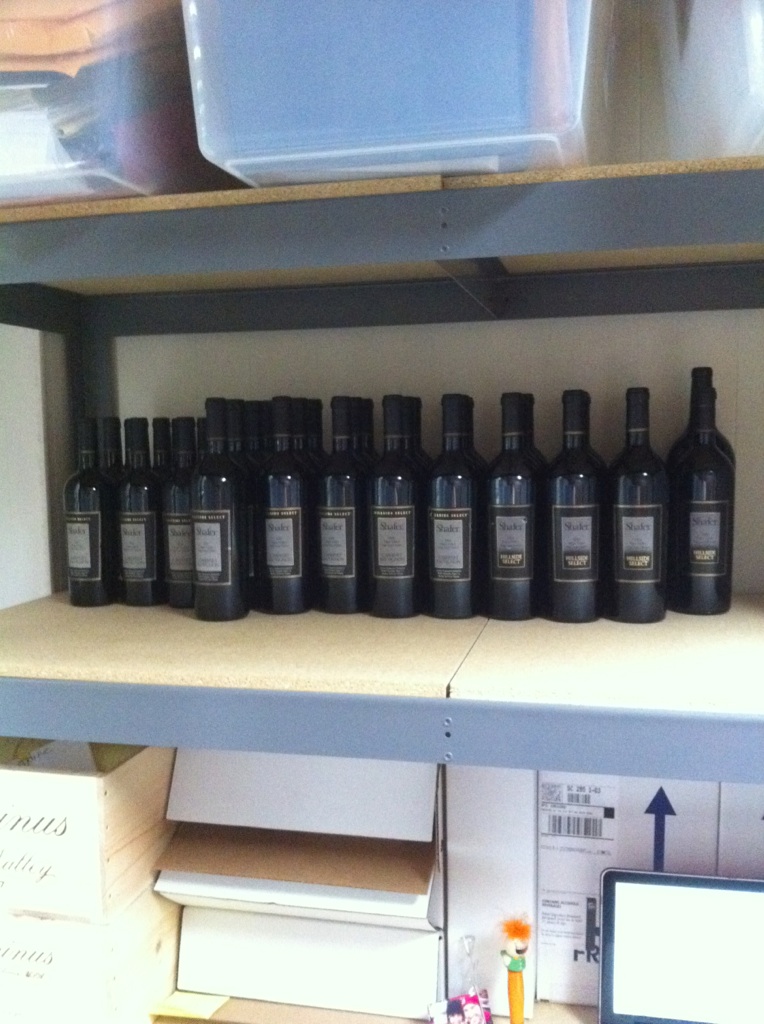
The wines were procured from local collectors with high-quality storage as well as online retailers with excellent reputations in the area of provenance.  The wines were collected at Wineontheway.com well in advance of the event and were stored standing up so that sediments would collect in the bottom of the bottle.  Thirty-six Shafer Hillside Select bottles standing together sure is a sight to see.


The event was shaping up to be a great treat for attendees.  Not only would they be tasting the 12 most recent vintages of the greatest American wine of today, they were also going to be walked through the tasting by one of the most electric and engaging Master Sommeliers in the business today and they were getting what appeared to be good value for their money.  Based on the lowest prices on winesearcher.com, the total value of the wines that were tasted was $9147.00.  When combined with the 500 glasses needed for the tasting (another $2000.00) and the $1000.00 for the room (cost avoided), the cost (excluding printing costs) per attendee was $289.00.

The final requirement was for a set of literature that would carry through the tone of elegance set by the choices of wine, venue, and tasting leader.  The first order of business was a place mat which would have space for all of the vintages being tasted and would identify by year where each vintage was located on the mat.  Further, wineontheway.com created a four-page booklet which contained Robert Parker's tasting notes for each of the vintages.


John Allport was instrumental in obtaining a a rich-looking, black-colored, spiral-bound document titled Shafer Owner's Manual which was placed on each table along with the Parker notes and a flyer titled Shafer: The Hillside Select Story.


The stage was now set for the actual event.

Thursday, August 12, 2010

Andrew McNamara to Lead Wineontheway.com #Cabernet Day Shafer Hillside Tasting

Wineontheway.com (@wineontheway) had previously announced a vertical tasting of Shafer Hillside Select, covering the years 1994 - 2005, as its contrib ution to the worldwide social network event celebrating #Cabernet Day.  Today @wineontheway announced that the tasting will be led by the noted Master Sommelier Andrew McNamara.  This is a significant development and an added treat for event attendees.  Not only will they be tasting these great wines and be able to share their experiences in real-time with others around the world over relevant social networks, but they will be guided through this tasting experience by a noted expert (see Andrew's bio here) who has ranked two of the vintages that will be tasted among his list of wines of the decade.

Wednesday, June 23, 2010

A Wine Journey: 1990 Gruaud-Larose

The 1990 Gruaud-Larose was the most recent conquest in my quest to "run the table" on Master Sommelier Andrew McNamara's Wines of the Decade.


Chateau Gruaud-Larose, a Medoc second growth (1855 classification), can trace its roots back to its creation in 1725 by the knight Joseph Stanislas Gruaud.  The estate, initially called Forbedeau, passed to his only heir, Jean-Sebastian Larose, upon the founder's death.  The chateau was purchased by Bordeaux merchants Balguerie, Sargent and Co., whereupon the name Gruaud-Larose was assigned.  The estate was split between two families shortly after the sale with two Gruaud-Larose wines (Sarget and Bethman) being produced and sold as a result.  The original estate was reconstituted when Desire Cordier, an east France wine merchant, bought the Sarget estate in 1917 and the Bethman estate in 1935.


The current-day Gruaud-Larose occupies 150 hectares in the St. Julien appellation, positioned directly between fellow Medoc properties Branaire-Ducru and Lagrange.  Of the 150 hectares, 82 hectares are planted to vines which are, on average, 45 years old.  The distribution of varietals on the estate is 57% Cabernet Sauvignon, 30% Merlot, 8% Cabernet Franc, 3% Petit Verdot, and 2% Malbec.  The soil under the vineyard is deep Quaternary gravel.


The Gruaud-Larose winemaking process requires that fruit be hand-picked after which it is sorted and cold-soaked.  Fermentation takes place in temperature-controlled wooden and concrete vats with the juice pumped over the must twice per day.  Upon completion of fermentation, one-third of the vintage is subjected to malolactic fermentation in oak barrels.  The entire vintage is aged in up to 50% new oak for 18 months after which it is fined and filtered and then bottled as Gruaud-Larose (25,000 cases) or Sarget de Gruaud-Larose (16,000 cases).


The Wine Quest Premier Dining Experience, an event benefiting a local charity, was being held at the JW Marriott on Saturday evening, The event schedule called for a 7:00 pm champagne reception followed by dinner at 8:00.  In order to have an even fuller evening, four of us decided to take some wine and hang out in the hotel lobby from about 5:30 pm and to then join the Wine Dinner when it began. I took a bottle of the 1990 Gruaud-Larose and a 1990 d'Yquem (for use with our dessert course) and Adam took a 2004 Chaves Hermitage Blanc


We started with the Chaves which had a pale gold color and was thick and weighty in the glass.  This wine needed decanting.  It was powerful, unctuous, weighty on the palate and with a long finish.  It actually needs more time in bottle so that it can resolve its issues.


We next turned to the Gruaud-Larose.  We did not have a wine key so we asked our server to open the bottle for us.  We were engaged in conversation but she did appear to be taking a long time to begin pouring.  we understood why when she asked us if we could help with getting the cork out.  The cork may have had some issues but the server had succeeded in punching a hole deep into the cork and expelling most of the material on which the corkscrew would grab.  We took the bottle and attempted to penetrate at the interface between the cork and the glass but to no avail.  There was not enough material.  We dispatched her to get a decanter and a sieve in the event that we had to punch the cork down but I panicked when she returned with the decanter and a flavor-stripping coffee filter (I never use those for filtering wine after I had the experience of a 1991 Dominus being brought to its knees after being poured into a decanter through one of those filters.).  By this time the anticipation had waned and it was now a rescue operation.  I took the bottle to the bar and had one of the bartenders work on it for well nigh 20 minutes before he was able to successfully extract the cork with no residue migrating through to the wine.


We decanted the wine and then poured it into the glasses.  Garnet color with bricking at the edges.  Good viscosity.  Vegetality on the nose.  Good acidity. On the palate leather and a mintiness.  Did not have a full, round mouthfeel and the finish less-than-long.  I was disappointed in this wine but I will have to retaste it.  The cork might have been an indication of prior battery to the wine and the circumstances under which it was tasted were not exactly  memorable in a positive way.  The company was great though.


Monday, May 10, 2010

A Wine Journey: 1987 Dominus

Robert S., and Allison, members of faculty and administrative management, respectively, of a local university, and, in the case of Robert, a member in good standing of the Antonio's Tasting Group, are moving to another state in furtherance of Allison's career.  As a part of our send-off activities, a few of us got together with them for dinner at the home of Fred W., and Laurie L.


This was an occasion that merited a Wine of the Decade: a few showed up, including the 1987 Dominus, the 2001 Dominus (again), and the 1990 Dom Perignon (white, 750 ml).  This post covers the tasting of the 1987 Dominus.

Details of the Dominus Estate pedigree and winemaking philosophy and process have been covered in a previous post but a look at the label of the 1987 vintage provides new factual details.  The 1987 was the fifth vintage produced by the John Daniel Society, the name of the partnership between Christain Mouiex, Robin Lail, and Marcia Smith.  Second, the vintage has the pre-Bordeaux-style label with a non-dominant portrait of Moueix done by the Israeli artist Avigdor Arikha.

The tasting of the Dominus followed a wonderful "six-course" meal comprised of a jambalaya as a starter, followed by a gazpacho-style, apple-citrus soup, salad, planked salmon, grilled steak and a sherbert for dessert.  Many bottles of wine were consumed prior to, during, and after the dinner.  The 1987 was one of the post-dinner bottles.

The bottle was decanted by "I-need-a-light-source" HlyTerroir. Upon visual inspection, the wine had excellent color with hints of orange at the edges.  The legs were thin and evenly spaced and flowed relatively quickly back to the surface of the wine.  A perusal of the label for information on alcohol content is unrewarded but a  quick search online reveals that it is 12.9%; almost a teetotaler by the standards of today's Napa Cabernets.  That same online search also revealed that the wine is a blend of 86% Cabernet Sauvignon, 9% Cabernet Franc, and 5% Merlot and that said blend spent 14 months in French oak of which 25% was new.

On the nose the wine presents cigarbox, cedar, sandalwood, vanilla, mocha, espresso, spearmint, and eucalyptus.  On the palate there is a muted green note, cassis and a pleasant old cigar.  The late-arriving wood tannins are well integrated into this smooth and very-well-balanced wine.


Robert and Allison, you will be missed but you are permanently seared into our memories, and our senses, through this capstone dinner and the meritorious performance of the 1987 Dominus as a wine of the decade.

Wednesday, May 5, 2010

A Wine Journey: 1970 Vega Sicilia Unico

This foray into the the thicket of McNamara's Wines of the Decade takes us, once again, to the land of Ribero del Duero and that icon of classy elegance, Vega Sicilia Unico.  For many years the winery, and its wine, stood alone against the wines of Rioja so it is only fitting that the tasting of the 1970 Vega Sicilia Unico take place in a setting designed to highlight the wines of Rioja.

On the evening following the Vibrant Rioja professional seminar, this blog teamed up with Vibrant Rioja to host a dinner called A Dinner with Rioja.  The dinner was held in Lake Mary and Parlo, at whose home the dinner was held, worked closely with the chefs from Hospitality Concepts, Inc., to ensure that a food menu suitable to the occasion was on offer.  The final dinner menu consisted of four food courses and five accompanying wines:

  • First course -- Arugula and Mojito Prawn Insalata, Salsa Verde, Manchengo; paired with a 2008 Marques de Riscal Rosado
  • Second course -- Divers Scallop Escoviche, Cilantro Tomato Puree, Candied Lime; paired with a 2001 Marques de Tomares Reserva and a 1995 La Rioja Alta Reserva
  • Third course -- Sugar-cane-charred Churrusca (Skirt Steak), Creamed Yucca, nest of Asparagus, Chimichurri; paired with a 2005 Maetierra Dominus "quatro pagos"
  • Fourth course -- Trio of desserts: Guava Cheese Tart, Coconut Flan, Pineapple Tres Leches; an unusual dessert pairing of 2007 Tobia Graciano.

I welcomed the 35 guests, thanked them for coming, and turned it over to Dhane of Vibrant Rioja.


She, in turn, made a few remarks and then turned it over to Adrian Murcia, our designated driver for the evening.  Each course was preceded by an explanation of the food course by one of the chefs followed by Adrian's explanation of why the particular wine was so well-suited to the food with which it was paired.


The meal was a gustatory tour de force as course after mouth-watering course flowed across our palates and seared themselves into our collective memories.


Chef was in rare form and Adrian more than rose to the occasion.  The Marques de Riscal, Marques de Tomares, and the Graciano had all been tasted earlier in the day at the seminar and had not been exceptional.  Paired with the food, as they were that evening, they shone, especially the Graciano which was used as a dessert wine almost as an experiment.  The class of the Rioja's that evening, however, was the 1995 La Rioja Alta Reserva, two magnums of which were consumed.


After completion of the dinner, and a lot of congratulatory back-slapping, a team was assembled for the tasting of the Unico.  The team was comprised of all attending members of the Antonio's group as well as the members of the Vibrant Rioja team (Yup, the Rioja guys could bring themselves to drink juice from the "hated" Ribera del Duero if it was Unico.).

I had earlier removed the bottle of 1970 Unico from its position of honor in the cellar (in the display window and next to the 2001 Giacomo Conterno Monfortino Reserva Barolo) and I now handed it over to Adrian of Vibrant Rioja (after all, he was the most senior sommelier present) to do the honors.


As he reverently extracted the cork from the bottle, I made note of the serial number: 44631.

The wine was decanted for residue and then poured into the waiting glasses.  Even after being in bottle for well nigh 40 years, the wine had a bright color and was devoid of bricking.  To the awe of the participants, the wine offered up an aromatic feast of coffee, mocha, spice box, leather, mint, faded red flowers, raw meat, morcilla, dried currant, sandalwood, and dried tobacco.  It exhibited great structure and balance and had a very long finish.


The tasting team was blown away by the quality and finesse displayed by this wine as well as its vibrancy even after 40 years of "life."  This wine truly deserves its place on the Wines of the Decade list.

Sunday, May 2, 2010

A Wine Journey: 2001 Dominus

Our random walk -- a wine journey -- through Andrew McNamara's Wines of the Decade continues with the 2001 Dominus from Dominus Estate.

Dominus Estate is owned by Christian Mouiex who, in addition to his Dominus responsibilities, manages his family's properties in Pomerol and St. Emilion,  properties that include the likes of Chateau Petrus and Chateau Trotanoy.  Moueix, whose scholastic accomplishments include a Masters in Enology from UC Davis, was, upon his return to France, given responsibility for the family holdings.  While in California, he had developed a love for Napa Valley and enlisted the late Robert Mondavi to assist him in finding a property that would allow him to produce high-quality wine in Napa.  Robert introduced Christian to Robin Lail and Marcia Smith, daughters of the legendary John Daniels and current owners of Napanook vineyard (Napanook was the former Inglenook Estate and, under John Daniels, had become famous for its Inglenook Cask Selection.).  Grapes from this site were highly sought after for the production of high-quality Napa Cabernets.  Moueix entered into partnership with the two vineyard owners in 1982 to create an entity called Dominus Estate which would focus on producing a Cabernet-based wine.  Moueix eventually bought out the sisters and took full ownership of the property in 1995.

Napanook, located in the foothills of the Mayacamas Mountains, has a history that goes back to 1836 when George Yount, who gave his name to Yountville, planted the first vines in the valley there.  The farm is 124  acres -- 108 of which planted to vines -- with volcanic, heavy clay, and loam soil types.

Chrtistian believes that the best wine is made from the best grapes and, to that end, the company expends enormous amounts of energy in the vineyard -- crop thinning, canopy management, separating clusters, leaf plucking, and rinsing, for example -- to ensure that the best possible grapes are produced.

The estate produces 6,000 - 8,000 cases of wine annually with one half of the production meeting the stringent requirements for Dominus and the remainder either being bottled as the estate's second label -- Napanook -- or sold off in bulk.  Dominus, in the Bordeaux tradition, is a blend.  Early vintages were 75% - 85% Cabernet Sauvignon and the remainder Merlot.  Cabernet Franc was added to the blend in1986 and Petit Verdot in 1989.  The first 13 Dominus vintages were crushed and aged at Rombauer Vineyards but, in 1996, production was shifted to a 50,000 sq. ft., Dominus-owned winery which was designed and built by the Swiss architects Jacques Herzog and Pierre de Meuron.

According to Dominus Estate, the 2001 vintage is truly a classic and will benefit from years of aging.  This vintage was characterized by an early bloom and long growing season that yielded grapes of exceptional maturity.  This wine has the unique ability to be rich and complex while possessing a smooth and silky texture.  The blend for the 7,000 case production was 81% Cabernet Sauvignon, 10% Cabernet Franc, 5% Petit Verdot, and 4% Merlot.  The fermented wine was aged for 18 months in French oak barrels, 40% of which were new.

Tasting the 2001 Dominus was an exercise in perseverance.  I had this wine in my cellar but, inexplicably, bought a bottle from an online retailer for the purpose of the tasting.  I took the bottle to our regular Friday tasting at Antonio's and was disappointed to see that only four of the regulars had shown up for this, my thought, blockbuster event.  It turned out to not matter.  The bottle was not good.  One member of the team thought it might be corked while another thought it was funk that would blow off.  We set the bottle aside and came back to it half an hour later.  The "corkiness" had disappeared somewhat but there was still an unidentified smell that should not have been there.  On the palate, the wine was disaggregated and phenolic with high alcohol.  A chalky residue persisted on the tongue.  This group has had extensive experience tasting both the 1991 (one of our favorite wines) and 1997 Dominus so there was a flavor profile that we were looking for and it was not showing up. Needless to say I was very disappointed and platitudes like "It's not your fault" and "better luck next time" did nothing to pick my chin up off the floor.

I had been invited by Keith M. and his wife Nancy to have dinner with them on the following night as my wife was going to be out of town.  I saw this as an opportunity to re-taste the 2001 Dominus and took a bottle out of my cellar for this purpose (I also took another bottle which I will discuss at a later date.).  So I show up at Keith and Nancy's at 6:30 pm sharp, walk into the kitchen, and begin opening my bag of goodies.  I begin telling Keith that we were going to revisit the scene of the crime, as I pull the 2001 Dominus out of the carrying case, when he points out that he already has a bottle (same wine, same vintage) in the decanter on the kitchen counter.  He had seen how disappointed I was the day before so he was giving me a piece of candy to make me feel better. Oh well.  By the way, he prepared the meal and a wonderful one it was:  Osso Bucco, butternut squash risotto, and roasted asparagus.

Keith had opened his bottle at 1:30 pm and placed it back in his cellar at 57 degrees until 6:30 pm.  We began tasting it at around 8:00 pm. Black fruit and black olives were dominant along with muted hints of graphite.  On the palate there was a distinct creaminess and a hint of coconut.  The wine was smooth and had a very long finish.


This wine is a baby and needs another 5 - 10 years to begin to reveal itself fully.


Friday, April 2, 2010

A Wine Journey: 1987 Mondavi Reserve

The Wine Journey is a quest to taste all of the wines identified as wines of the decade (http://andrewmcnamara.blogspot.com/2009/12/wines-of-decade.html) by Master Sommelier  Andrew McNamara.  I opted for the 1987 Mondavi Reserve as the next wine in the series.

Robert Mondavi Winery, located in the heart of Napa Valley, was founded in 1966 by Robert G. Mondavi to "... create wines in California that belong in the company of the world's finest."  Ably led by Robert G. Mondavi, a worldwide missionary for California wines while he was alive, the winery played a key role in the development of today's US wine business.

Most of the fruit for the Mondavi Reserve is sourced from the 550-acre To-Kalon vineyard which is located in the benchland region of the Oakville AVA.  The location of the AVA (edge of the Mayacamas Mountains), its micro climate (appropriate amount of morning fog followed by day long sun), and its soil profile (bale clay loam alluvial soils) all contribute to the growth of complex, world-class Cabernet Sauvignon grapes which, in turn, power many of Napa Valley's high-profile reds.

The 1987 Napa Valley Growing season was almost perfect.  It was characterized by very mild early spring weather with the mildness extending through the summer.  The extended growing season allowed for slow and even fruit ripening, resulting in good acid levels and a desirous concentration of fruit characteristics.

Now to the wine.  I did not have a bottle of this vintage in my cellar so I purchased a bottle online from Sokolin.  The wine arrived two days after purchase and was pristine in appearance, attesting to, I hoped, good provenance.  I was scheduled to meet Adam Chilvers (wineontheway.com) for lunch at Houston's (a Winter Park restaurant) so I decided to take the bottle along for the ride.

When I arrived at the restaurant Adam was in the company of a Chateau St. Michelle winery representative and Heather Shapiro of Southern Wine and Spirits and they were tasting samples.  The Chateau ST. Michelle rep left prior to the beginning of our tasting session.  Adam's  1996 Leoville Las Cases (brought for the occasion) needed more time in the decanter so we turned to the Mondavi Reserve.  It was opened and decanted at 2:25 pm and the cork came out fully and evenly.  There was some residue on the base of the cork and moisture stains about one-third up the cork.  The color was uneven and there was a muting of the red tones away from the center of the glass.  When swirled in the glass, the wine exhibited excellent viscosity.

On the nose there were notes of cinnamon, blackberry, bell pepper, cedar box, cinnamon, nutmeg, sandalwood, cigarbox, and sweet tobacco.  On the palate the wine showed good structure with an excellent integration of tannin, acid and fruit.  I was very surprised at the retained acid levels in this, a California Cab, after 23 years.  The wine exhibited a peppery spiciness and notes of pine on the back of the palate and had a nice, long finish.


This was an extremely well-balanced wine and tasting it was truly a treat.

Monday, March 29, 2010

Icons of California Wine Dinner

The subject dinner will be held on April 11 at the JW Marriott in Orlando and will feature "a blind tasting of some of California's best wines, paired with a seasonally created dish for a tantalizing, 6-course dinner."  The event is comprised of a reception at 6:00 pm at the JW Marriott Lobby Terrace and dinner at 6:30 in the Chef's Kitchen.  The price for attendance is $100 per person.

This dinner is of especial interest to this blog as the wines will be introduced by Andrew McNamara, the Master Sommelier whose Wines of the Decade list is the inspiration for our Wine Journey posts.

For further information please contact rhonda.beck@marriott.com or call 407.393.4683.

Thursday, March 25, 2010

A Wine Journey: 1994 Vega Sicilia Unico

The Wine Journey is centered around tasting the wines identifed as Wines of the Decade by Master Sommelier Andrew McNamara.  The first wine tasted was the 1989 Beaucastel CDP.  The second step in the journey occured on Tuesday and was both a scintillating and exhilirating tasting experience.

I decided that the 1994 Vega Sicilia (http://www.thewineacademy.es/web/eng/cata.php?id=207) would be the second wine tasted and decided to enlist the assistance of the Wine Barn team because of their vast knowledge of, and experience with, Spanish wines (Remember the Clash of the Spanish Titans?).  So I grabbed a bottle of the 1994 Vega Sicilia from the cellar, hopped into my car, and drove to The Wine Barn.

When I got to the Wine Barn, the entire team was there along with (a pleasant, and pertinent, surprise) Juan Carlos "JC" Marin, the manager of the Jorge Ordonez portfolio for Stacole Fine Wines.  No one refused to participate in the tasting.

The bottle number (a Vega Sicilia practice) was 056115 and Andrew noted that this particular vintage was made by Mariano Garcia, the winemaker at Vega Sicilia from 1968 to 1998.  The bottle was opened and decanted at 5:00 pm and I began pouring wine into the glasses at 5:15 pm.  In the glass, the wine had an oily texture and a dark cherry color.  Both Andrew and JC remarked as to the brilliance of the meniscus and lack of "bricking," an indication that the wine still had many years of life in it.

We spent approximately 15 minutes in nasal worship, contemplating the majesty of the wine as manifested in the complexity and promise of the bouquet.  The tasters observed scents of saddle leather, baking spice, sandalwood, wet stone, morcilla, bacon fat, toast, buttered raspberry, and sweet tobacco with brandy.  At the initial taste, the wine did not live up to the promise provided to the nose.  In addition, there was a strong sense of iron and the wine was both highly tannic and acidic.  It exhibited a lot of power but the finish was not as long or as deep as one would have expected.  Vegetal elements were apparent towards the back of the tongue.  We set the wine aside to see if the various elements would resolve themselves with time.  The wine delivered.  It smoothed out considerably as the elements began to integrate properly and the promise on the nose began to show up on the palate at about 5:50 pm.  The vegetal characteristic noted previously resolved into a soft chalkiness and hints of Penfolds Grange began to show through.


All in all a wonderful and memorable experience (by this time we had been joined by Jerry Spoto, a fine wine rep from Transatlantic) for all of us.

Tuesday, March 23, 2010

A Wine Journey: Wine Profile of a Master Sommelier

The exercise of attempting to taste all of the wines listed as Wines of the Decade (http://andrewmcnamara.blogspot.com/2009/12/wines-of-decade.html) by Andrew McNamara, a Master Sommelier, is a journey into/along the palate of a Master.  Aggregating the data underlying the list allows us to look into the mind of the Master and, in so doing, build his "wine profile."  In this, and subsequent posts, we will analyze the data underlying the Wines of the Decade list in order to build such a wine profile for Andrew McNamara.

The Wines of the Decade list stretches from the 1940s to the 2000s, with each intervening decade represented.  The decades with the highest representation are the 1980s (31% of all wines) and the 1990s (39% of all wines).  French wines are by far the most doiminant, comprising a full 62% of the list.  The next nearest country is the US with 15% of the listed wines.  French wines comprised 66% of the wines from the 1980s and 62% of the wines from the 1990s.  Based on the foregoing, we can surmise that Andrew has a preference for French wines that are vintage 1980s and 1990s.

In future posts we will examine regional preferences, wine styles, and varietal styles, as revealed by the list.