Thursday, December 15, 2011

Growing grapes in soil-challenged environments: Carso (Friuli-Venezia Giulia, Italy) and Douro (Portugal) wine regions

I have previously noted the importance of soil as a key influencer on the growth of the vine plant through the provision of: (i) a supply of water; (ii) anchorage in the ground; and (iii) a source of nutrition.  The Douro (Portugal) and Carso (Friula-Venezia Giulia, Italy) wine regions are separated by the land mass that is Portugal and Spain, the full width of the Mediterranean Sea, and the Italian land mass but they have in common a lack of a classic soil profile as represented in the graphic below.  Even with this challenge, both

Source: westone.wa.gov.au

regions still manage to produce high-quality wines.  In this post I will detail the challenges presented to both regions and compare and contrast the solutions they have implemented in order to mitigate said challenges.

Carso DOC lies on a Karst landscape and is subject to all of its vicissitudes: lack of a surface-water web; no water retention; hard, rocky surface with no surface soil or vegetation.  The Douro soil is schistose with granite at the borders and, in some cases, penetrating horizontally into the schist layers.  Prior to its current state, the Douro land under vine was characterized by "the presence of bedrock at less than 15 cm (5 inches) below the surface" (Instituto dos Vinhos do Douro e Porto (IVDP)).  This was untenable for vine growth given the rooting requirements of the vine.

In both Carso and Douro, viticulturists have found ways to get around nature's lack of gifts and to create environments wherein grape vines can thrive.  In the case of Carso, vineyards are prepared by cutting away any vegetation existing on the rocky surface and then digging down into the limestone to remove the roots.  Yellow soil trucked in from Trieste is laid to a depth of 3 meters and is then overlaid with 0.5 meter of Carso red (terra rossa) soil.  This red soil -- found in collapsed caves called Dolina -- is rich in iron and lime but poor in organic components.  According to IVDP, the Douro soil has been created by man "digging down deeply and forcing the vertically layered rock to break up, thus totally altering its original disposition and creating changes to its original morphology, added to which he has applied fertilizers."  This scarification has resulted in soils with depths of between 1 and 1.3 meters.  In both cases the roots take advantage of the pliability/makeup of the underlying bedrock to dive to great depths.

In both regions the manufactured soil profile consists of three layers.  Carso soil has a 0.5-meter layer of terra rossa, a 3-meter layer of yellow soil, and then bedrock.  The pH of this soil is essentially neutral.  The Douro soil profile consists of a 12.5-cm layer -- "the result of the digging that is done around the roots of the vines every year" -- followed by a layer of between 87.5 centimeters and 1.17 meters thickness, and then bedrock.  The composition of this topsoil is a clay-rock mix with (IVDP): little organic matter; low calcium, magnesium, and phosphorous levels; and medium-high levels of potassium. The soil pH is predominantly acid (4.6-6.5).  The low nutrient levels in the region will act to reduce yield and retard fruit ripening if unaddressed.  The solution is the application of fertilizers for the macronutrients and foliar sprays for the boron deficiency.   Lime is added to the soil as necessary to counteract the effects of low pH.

Carso terra rossa soil
Douro surface soil at Quinta do Vesuvio

The resulting vineyard architectures are similar in that both Carso and the Douro employ terracing.   In Carso, the vineyards reside on stone terraces and vines are Albaretto-trained.  In the Cante vineyard, the density is 8500 vines/hectare, a situation necessitated by the expense associated with creating each acre of vineyard.  In the Douro the vines reside on hillside terraces and are Guyot- or cordon-trained.  Planting density is on the order of 6000 vines/hectare.  Drip irrigation is utilized in Carso but is shunned in the Douro.

Albaretto-trained vines in Carso
Terracing in Carso
Terraces in Douro (Quinta do Vesuvio)
Production levels differ greatly between the two regions.  Given the ready availability of raw materials, and the size of the region, the Douro has by far the greater number of hectares under vine.  But due to the relatively harsh conditions in which the grapes are grown, the berries from both regions are small and thick-skinned with high skin-to-pulp ratios.

These regions were both handed a similar challenge -- lack of a readily apparent wine growing region -- but pioneers living therein saw it not as a problem but as a challenge. And both regions met the challenge in their own inimitable way.

Thursday, December 8, 2011

The Carso DOC of Friuli-Venezia Giulia, Italy

Between Trieste and Collio Goriziano, and running from the Gulf of Trieste over the border into Slovenia, lies a rocky strip of land called the Karst (German; Carso in Italian and Kras in Slovenian) Plateau, an area whose name, according to Gams (Origin of the term "karst," and the transformation of the classical karst (Kras), Environmental Geology 21(3), pp. 110-114), derives from a pre-Indo-European word "karra" which means stony.  And stony it is.

A karst landscape forms when water interacts with soluble bedrock, such as limestone or dolostone, to create an environment that is riven with unique landscape shapes and underground rivers and caverns. This condition arises when falling rain picks up carbon dioxide (either from the atmosphere or ground) and forms carbonic acid.  This mildly acidic solution dissolves the surface of the soluble bedrock and, over time, creates distinct surface shapes and underground cavities and drainage systems.

The characteristics of a karst landscape are :
  • Absence of a surface water web
  • Partial or total lack of soil
  • Irregular plateau
  • Closed depressions
  • Rocky, stony surface which reflects a higher degree of the sun's radiation than say a gneiss surface
  • Limited vegetation cover due to a lack of soil and surface water
Karst landscapes exist in many parts of the world but the area in the Slovene-Italian region was the first to be subjected to rigorous scientific study and, as a result, is called Classical Karst.

And it is in this area that we find the Carso DOC of the Friuli-Venezia Giulia region.  Bounded by the Gulf of Trieste, the border with Slovenia, Vipacco River, the Gorizia-Monfalcone Railway Line, and the A4 Autostrade, this land is a testament to man's perserverance, patience, and ingenuity.  Cultivating land here is a hard, intense, expensive process.

The Carso climate is maritime Mediterranean at the coast and continental approaching the Julian Alps.  A sea breeze -- Yugo -- during the day time keeps the vineyard dry while a nightime breeze --Tramate -- brings the temperatures down at night.  A strong northeast winter wind called Bora-- named after the Greek mythological figure Boreas (the North Wind) -- pummels the area in the winter time with gusts that can reach up to 120 km/hr.

I have just described the karst landscape and it is not vine-friendly in its native state because of a lack of surface soil.  Vineyards are prepared by cutting away any vegetation and then digging down into the limestone to take away the roots of the old vegetation.  Yellow soil from Trieste is then trucked in and laid to a depth of 3 meters.  This soil levels the ground as well as retains some humidity in the environment.  One-half meter of Carso red soil is overlain on the base Trieste soil.  This red (terra rossa) soil is found in collapsed caves called Dolina and is both hard to find and expensive.  This soil is rich in iron and lime but poor in organic components.  This soil is the result of the mixing of calcium carbonate solutions from the bedrock with blown sand from the Sahara and Sahel regions of Africa.

Vineyards reside on stone terraces and vines are Albaretto-trained.  In the Cante vineyard, the density is 8500 vines/hectare, a situation necessitated by the expense associated with creating each acre of vineyard.

Grapes are hand-harvested.  DOC wines must contain 85% of the stated variety with the remainder from permitted varieites of the same color.  The permitted varieties are the major internationals plus two indigenous whites -- Vitovska and Malvasia -- and one indigenous red -- a strain of Refosco called Terrano. The Vitovska is a cross between the Malvasia and Prosecco varieties.  A Rosso is also produced from 70% Terrano and the remainder from other permitted red grapes.

Monday, December 5, 2011

The influence of soils on grape vine growth

The Douro (Portugal) and Carso (Friula-Venezia Giulia, Italy) wine regions are separated by the land mass that is Portugal and Spain, the full width of the Mediterranean Sea, and the Italian land mass but they have in common a lack of a "native" soil.  Even with this challenge, both regions still manage to produce high-quality wines.  I will detail the challenges presented to both regions and the solutions of choice but will precede that discussion with some background on soils and their role in the production of quality wine.

According to Christopher Bargman (Geology and wine in South Africa, Geoscientist 15(4), April 2005), soil is the major influence on the growth of the vine plant as it provides: (i) a supply of water; (ii) anchorage in the ground; and (iii) a source of nutrition.  According to education.mhusa.com, " soil is more than just dirt."  It is, instead, "... a complex system of decomposed rocks that have been enriched over time by decomposed organic matter."  The classic soil profile is shown below.

Source: westone.wa.gov.au

Adequate amounts of the appropriate nutrients are required to support proper growth of the vine, fruit development, and fruit maturity.  The table below shows the mineral requirements of the vine plant, the role of each mineral, acceptable ranges of each mineral in the soil, and the impact of mineral deficiency on the vine.

Source: Compiled from LGRGP.org and others

The key factors in nutrient availability are soil type, soil composition, and root structure.

The soil type dictates the quality of nutrients present and the adequacy of water drainage.  Our soil-type page shows the different types of soil that are of interest to the viticulturist.  The optimal soil type has a moderate content of low cation exchange capability (CEC) clay (Clay minerals act as harbors for nutrients because the positive ions of the nutrients are trapped by the negative charge of the clay minerals.  The abundance and types of minerals determine whether the clay is classed as low- or high-CEC.).

Soil composition affects root growth and development and the availability of nutrients for soil uptake.  Areas of interest here are soil pH, texture, and drainage.

Soil pH is a measure of the acidity (3.5 - 6.5) or alkalinity (7.4 - 9.0) of soil which, through its influence on nutrient solubility and micro-organism activity, affects the number and types of nutrients in the soil. Soil pH between 6 and 7 is considered optimal for vine plant growth as most of the needed nutrients and micro-organisms are available in that range.  Alkaline or acidic soils can be chemically treated to bring them closer to optimal.

Soil texture refers to the nature, size, shape, orientation, and arrangement of particles.  In our soil-type page we showed that sand, silt, and clay have standalone properties which are transformed when the soils are combined.  Clay forms flexible elastic bridges between soil particles to maintain soil structure and preserve porosity.  Pebbles and rocks in clay-rich soils break up the soil, providing pathways for water and root penetration.  Deep, rich soils will provide high-vigor growth and large, watery grapes.

Drainage Water is needed to transport nutrients to the vine plant roots.  Sandy, well-drained soils with little or no clay mineral content may provide inadequate amounts of nutrition, leading to reduced grape quality and a vegetal taste in the wine. Soils which retain too much water will exclude the oxygen needed for the nitrogen cycle.

Root Structure The roots of the vine plant: i) anchor the vine; ii) absorb water and nutrients; iii) store nutrients that nourish the plant during dormancy; and iv) produce hormones that control plant functions. The vine deploys a three-part structure to meet these varied needs.  First, quick-growing, short-lived roots deployed close to the surface are tasked with moisture collection.  Second, subterranean roots provide the anchoring function.  The principal roots are tasked with nutrient delivery and storage.  According to UCDavis, about 60% of the root structure of a vine plant can be found in the first two feet of the surface but individual roots can grow as deep as 20 feet depending on soil permeability, the level of the water table, and the rootstock variety.

Now that we understand the role of soils in the wine grape environment, we can go on to the next step in the Douro and Carso wine regions comparison.

Friday, December 2, 2011

Schioppettino di Prepotto, the variety brought back from the dead

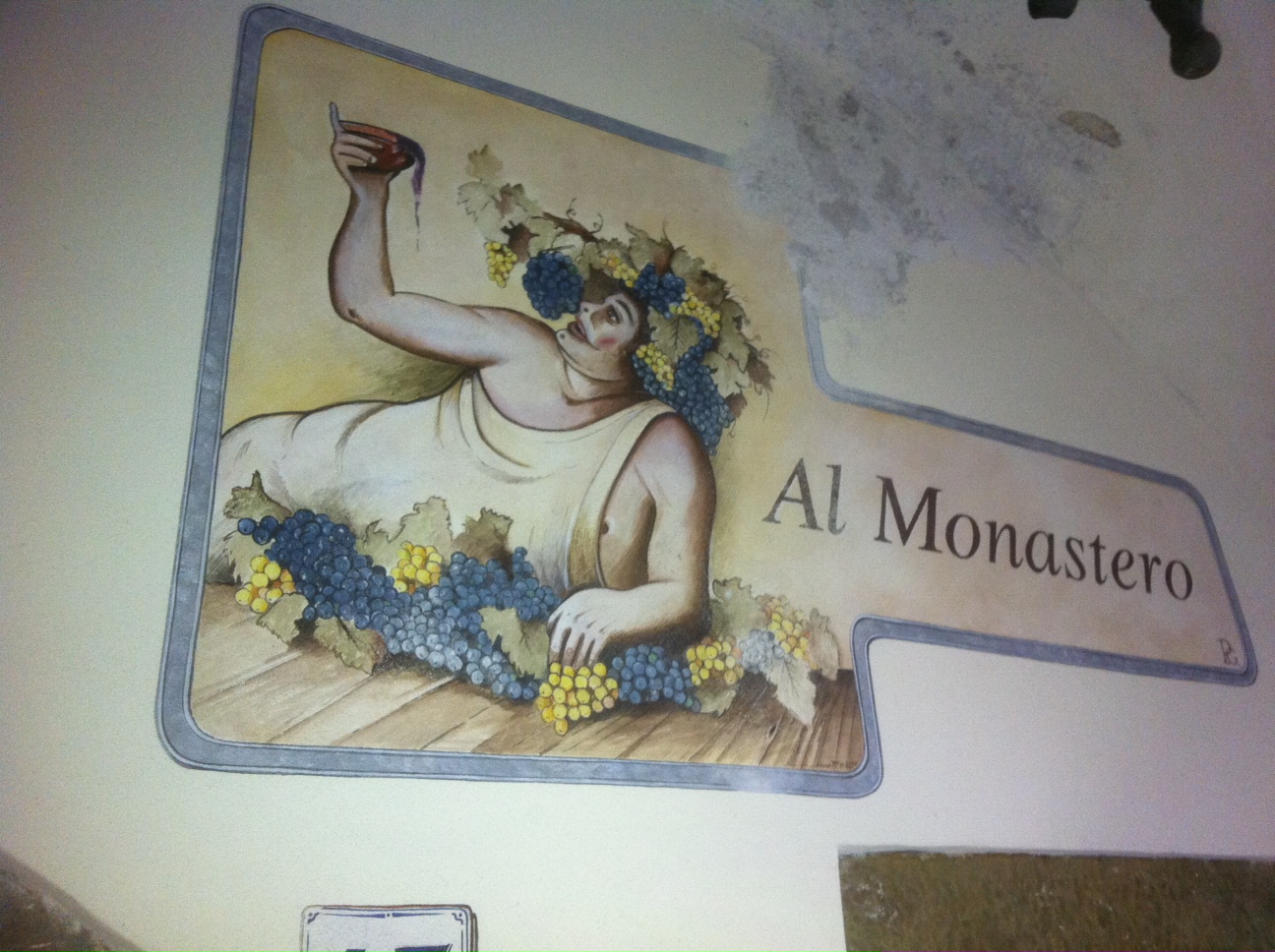
"I unreservedly recommend the wines of Schioppettino di Prepotto.  High-quality, fresh, food-craving wines of great consistency." Thus did I tweet on October 27, 2011, after reflecting on a tasting of seven Schioppettino wines with the Association Produttori Schioppettino di Prepotto at Ristorante Al Monastero in Cividale del Friuli on October 10, 2011.  And that is still my position today.

The Schioppettino grape -- also known as Ribolla Nera and Pokalça -- is native to the Prepotto commune of the Cialla zone of Colli Orientali del Friuli but is currently grown in other Friuli-Venezia Giulia communes (Buttrio and Manzano, for example) and in Sonoma County in the US.  Prepotto occupies a 30-square-kilometer area in the Judrio River Valley and shares a border with Slovenia.

Source: Associazione Produttori Schioppettino di Prepotto
The Prepotto climate varies between Mediterranean and continental but experiences significant temperature differentials between day and night which contributes to the aromas and flavors of the wine.  The dry wind that blows along the river valley serves as a preventative against rot.  The soil is alluvial marl and sandstone covered by a thin layer of clay or gravel.

Schioppettino, a late-ripening variety: is blue-black in color; is thick-skinned; grows in long, large, winged bunches;  has a predilection for clayey, calcium-carbonate-enriched soils; and has a low tolerance for common vineyard diseases.


Like Lazarus, Schioppettino was raised from the dead.  References stretch as far back as 1282 but the variety fell victim to the ravages of phylloxera and then competition from international varieties.  By the 1960s, less than 100 Schioppettino vines were in existence and it was banned as an illegal variety.  Then along came Sig Pancho Rapazzi.  He founded a vineyard in Ciallo in the late 1960s and sought out every Schioppettiano vine that he could find to plant on his estate.  His efforts paid off when the Prepotto local council met in 1977 and one of the agenda items was "defense of Schiopettino at risk of extinction." The EEC regulation in 1978 added Schioppettino to the vine species authorized for cultivation in the province of Udine and the variety was listed as authorized in 1981.  The 1983 EEC regulation -- EEC 3582/83 -- included Schioppettino among the recommended varieties for the province of Udine.  DOC status was attained in 1987.  The producer association was formed in 2002 and its efforts led to the designation of the subzone Schioppettino di Prepotto in 2008.  The association's production requirements are indicated below.


After leaving the Bastianich Winery tasting, we headed into Cividade for a walking tour of the city and a Schioppettino tasting with the regional producers.  It was raining when we got into town so @aleskimethonen, a second blogger, and I found a small wine shop in which to hang out until lunchtime.  We arrived at the restaurant where the tasting was to be held at the same time as our larger group but were drier and in better spirits.  We entered the front section of the restaurant and then were led through a courtyard to a second section where tables had been set up in a u-shaped fashion to support the tasting.


As soon as we were all seated, they began to pour the wines.  While the wines were being poured the President of the Association welcomed us to Cividale and Prepotto.  As the wines were being poured I was struck by the intensity of the color.  I tasted the first four wines and was struck by the consistency of aromas and flavors with the only distinguishing characteristic being increasing weight on the palate as I went from right to left.  On the nose, blackberries, violets, and some spice.  On the palate medium-bodied and fresh with good extension on the finish.  I liked this wine.  Then they brought out the meal, which was capped with a wild boar offering,  and the wines truly excelled in this environment.


The wines tasted at this event were Stanig 2009, Grillo 2008, Pizzulin 2008, Vigna Lenuzza 2008, Vigna Petrussa 2008, La Buse dal Lof 2007, and La Viarte 2007.

"I unreservedly recommend the wines of Schioppettino di Prepotto. High-quality, fresh, food-craving wines of great consistency."

Wednesday, November 30, 2011

James Beard Nominees Charity Dinner at Cress Restaurant: The Spinoff

In an earlier post on the Cress Restaurant James Beard Nominees Charity Dinner, I had described how my wife became caught up in a bidding war to secure two tickets to dine with Chef Hari Pulapaka of said restaurant.  Bill Budzinski, owner of Elusive Grape, had spiced the offer up by promising that Chef Hari and his wife Jenneffer would join the lucky "winners" for dinner.  Further, Bill and his wife would also join the party and he would supply the wine.  Hence a three-way bidding war.  One of the wiser combatants called a truce just as things were about to really go off the deep end and proposed that the three parties split the current bid amount equally -- that's how bad it had gotten -- and would all participate in the dinner.  I jumped at that deal on behalf of my wife before she had a chance to do any alpha-dog stuff.

The dinner was set for Sunday, November 27th.  One of the winning bidders could not make the date but gave us permission to press on.  So we did.  Eight of us in a downtown Deland restaurant that was closed to members of the public.  As I stepped into the restaurant I noted that it had been set up such that the focus was on a centrally located, tastefully appointed table.  The lighting in the restaurant was somewhat restrained.  The wines for the night were arrayed on the bar to the southern side of the restaurant. Napkins were carefully draped across every place setting and folded, sealed menus nestled comfortably on them.


We were the first to arrive, followed in rapid succession by our fellow diners.  We greeted each other with a sense of anticipation.  We were going in and we were going in together. I was ready.  I had eaten lightly during the course of the day because Chef had promised us a meal fit for a Rajah.

We were welcomed to the event by Jenneffer who thanked us for our contributions to the success of the original charity dinner and reminded us that the charities which had benefited from the event were The Taste of Orlando and Second Harvest Food Bank. We toasted ourselves with a bottle of Ca'del Bosco Brut Rosé and then followed up with a wonderful 1992 Bollinger.


There were no servers or other help around.  The Chef was doing all the cooking, plating, and serving.  He appeared unflustered as he brought out the Amuse Bouche: Two types of Croquettes (Applewood Bacon and Vegetarian), a Blooming Onion Pakora, Cranberry Compote, and South Indian Coconut and Ghost Chile Sauce.  The Onion Pakora was bound together with chick-pea flour and had a distinct ginger flavor.  I tried the Croquettes with both of the sauces and felt that the latter provided a better textural contrast.  This was very flavorful all around with a definite undercurrent of exotic Indian spices.  The Bollinger paired very nicely with this course.


The second course was a visually pleasing salad constructed with Smoked Heirloom Tomatoes, Roasted Grapes, Seasonal Local Lettuce, Sesame Sherry Vinaigrette, Chèvre, and Toasted Walnuts.  A distinctive smoked-herring and walnut flavor accompanied the crisp lettuce onto the palate.  The wines presented were a 1968 Vina Valoria Rioja and a 2007 Leeuwin Art Series Chardonnay.  Unfortunately the Vina Valoria was corked but the crisp acidity of the chardonnay carried the day.


Had I mentioned that this was going to be a seven-course meal?  That was big enough but, within the courses, the chef presented options from which we could choose.  For example, the options for the second course were: i) Cast Iron Roasted Grimaud Farms Duck Breast; ii) Pan Roasted Breast of Ashley Farms Chicken; or iii) Butternut Squash Ravioli.  Each of option was presented with a black habanero reduction and, additionally for the third option, Point Reyes Bleu Alfredo.  I opted for the Duck Breast and was treated to an explosion of flavor tinged with spiciness.  A mixture of crispy, crunchy texture close to the skin and softer moistness as you moved towards the center. Wonderful.  This course was paired with a Two Hands 2003 Lily's Garden McLaren Vale Shiraz.


The third course was Linguini with San Marzano Vodka Sauce and Parmeggiano Reggiano.  The pasta had great consistency with hints of pine nuts, lemon zest, and pesto.  Low-grade spiciness.  Paired with a 1997 Don Melchor Private Reserve Cabernet Sauvignon.


As was the case for the second course, the fourth course provided options: i) Kurobuta Pork Cheek Tikka Masala; ii) Cape Canaveral Wild Shrimp Tikka Masala; or iii) Vegetarian Kofta Tikka Masala.  Each of these dishes was offered with Poblano and Grilled Garlic Naan.  I went for the Pork Cheeks.  Its soft texture allowed it to become fully engaged with the Tikka Masala in a mutually beneficial relationship.  A Tikka-Masala-dunked Naan is a special experience when delivered with this level of care and expertise.  Excellent.  Paired with a 2009 Zind Humbrecht Gewurtztraminer.


For the fifth course the chef asked us to choose between a Darling Downs Wagyu Ribeye and an Exotic Mushroom and Pistou Napolean, both prepared with a Smoked Onion Velouche and Truffled Porcini Foam.  You have probably noticed my penchant for meat. This course was paired with the 2003 Lokoya Diamond Mountain Cabernet Sauvignon. An excellent steak which I only succeeded in polishing off today.


Following a cheese selection, our final course was Dark Chocolate Pots de Créme, Grilled Figs, and Salted Caramel Sauce.


This meal had unfolded in a somewhat surreal setting: the restaurant was empty -- save for us --and downtown Deland was empty -- save for us.  It was as though we were alone in the world, eating in a vacuum.  But this was of no account to us.  Chef had gone from strength to strength as we moved through the courses.  The pace had been somewhat languid with Chef spending a fair amount of time at the table shooting the breeze.  Our conversation was animated and far-ranging (as it is won't to be in Jenneffer's presence) and it was now midnight (The dinner had originally been scheduled form 6:00 to 11:00 pm).  I had to give up.  I was begging for mercy and aluminum foil.

This was a rich, opulent, and decadent meal fit for a Rajah.  And us.

Monday, November 28, 2011

Have the World's best wine regions benefited from a previously unrecognized source of nitrogen?

Recently published research on sedimentary bedrock (Morford, Houlton, and Dahlgren, Increased forest ecosystem carbon and nitrogen storage from nitrogen rich bedrock, Nature, 9/1/2011, pp. 78-81) leads me to posit that some of the major wine growing regions of the world have been the unknowing beneficiaries of a heretofore unheralded source of nitrogen and that this has benefited them in their production of high quality wines.  Before expounding further on this hypothesis, I will provide some background.

As shown in the table below, nitrogen is an essential element in the growth of grape vines and an imbalance in its levels can lead to problems in the vineyard and/or in the winery.

Nitrogen and grape vines (Compiled from Grande Passione -- Soil minerals vs wine quality)

According to Schwarcz and Schoeninger (Stable Isotope Analysis in Human Nutrition, Yearbook of Physical Anthropology 34, pp. 293-321), almost 100% of exchangeable nitrogen is found in the atmosphere or dissolved in the world's oceans and is transferred from these environments into the biological system through the processes illustrated in the figure below.  The commonly held view is that grape vine plants receive their nitrogen through the terrestrial nitrogen cycle but the Morford study calls this into question.

Source: http://tolweb.org/notes/?note_id=3920

Nitrogen, as is the case for all plant nutrients, is sourced from the soil by the plant.  According to Christopher Bargman (Geology and wine in South Africa, Geoscientist 15(4), April 2005), soil is the major influence on the growth of the vine plant as it provides: (i) a supply of water; (ii) anchorage in the ground; and (iii) a source of nutrition. The classic soil profile is shown below.

Source: http://www.westone.wa.gov.au
Now back to the Morford, Houlton, and Dahlgren study.  According to the authors, sedimentary rocks contain considerably more fixed nitrogen than all of the fixed nitrogen in the biosphere due to the capture of "... organic matter in marine and freshwater sediments, where it is incorporated into rock as organic N or as ammonium in silicate materials."  Greater amounts of this rock-based N is contained in sedimentary rock (consolidated rock deposited in layers) than is contained in metamorphic ( a rock formed from preexisting solid rocks by mineralogical, structural, and chemical changes, in response to extreme changes in temperature, pressure, and shearing stress -- Answers.com) and igneous rocks (formed when molten minerals cool from a liquid into a solid).  Even though it has been known to geologists that this fixed N is secreted in bedrock, "... it is generally believed that rock N is not sufficiently important to alter the terrestrial N cycle."  The results of this study has shown otherwise.

The authors studied the nitrogen content of soils and forest foliage in forests that were underlain by both sedimentary and igneous bedrock and found the following: (i) the nitrogen content in soils and foliage that grow above sedimentary bedrock is 50% higher than soils and foliage that grow over igneous bedrock; (ii) nitrogen isotope values for rock, soils, and plants are indistinguishable among each other when located above a nitrogen-rich sedimentary bedrock but that is not the case for the same elements overlaying an igneous bedrock; and (iii) "forest responses to geological N inputs are manifested as higher foliar biomass production ..."

The authors conclude that "Our results raise the possibility that rock weathering may be a significant source of N to terrestrial ecosystems..." underlain by terrestrial bedrock.

I compiled the following table of wine regions that may and may not have benefited from the phenomenon described by the authors.  The table shows that some of the world's foremost wine regions are underlain by sedimentary bedrock and may have benefited from that "siteing.".


Additional study will be required to determine the benefits and disadvantages associated with subterranean nitrogen, the implications, and what, if anything, should be done to maximize its effects and minimize its disadvantages.  The information provided herein could be of benefit in making decisions regarding vineyard locations or vineyard retention in the case of a vine-uprooting program.

Wednesday, November 23, 2011

In Search of the Missing Link(s): A Wine Tasting

There is an avid and motivated group of wine drinkers residing in the Orlando area who meet regularly to indulge in their passion.  This group has formed a syndicate which buys and holds wines for the benefit of the group.  Individual members can, and do, have wine holdings of their own. This group holds syndicated tastings wherein either the community wine is used or where the wine used is supplied by an individual who is then reimbursed by attendees.  The group also holds non-syndicated tastings where each attendee provides bottles from his/her cellar and the cost of the following meal is divided between attendees.  The event held last Saturday night fell into the latter category.

I am not a member of the group but was invited to last Saturday's tasting by Ron Siegel, a good friend who has written a guest post for this blog in the recent past..  The format of the event was a blind tasting wherein each attending couple brought three wines which were linked in some way and the tasting group was expected to decipher the linkages.  I had never tasted with this group before, nor had I participated in such a format, so I had some angst in putting my offering together.  I did not complete my final list of wines until 3:00 pm; the event was scheduled to begin at 6:00 pm.

The tasting was held in the basement cellar of the famed Winter Park restaurant LUMA on Park.  A total of 13 people participated in the event.  The cellar room at Luma has a beautiful cocktail area where we drank champagne and ate hor d'oeuvres prior to the start of the sit-down tasting.  At the completion of the cocktail hour, we were called to take our seats for the actual tasting.


This turned out to be a very challenging format.  In the blind tasting that we do at Antoinio's on Friday afternoons, you are asked to identify the varietal and age of a single wine at a time.  In this format, you are being asked to decipher the linkages between three wines and these linkages could include varietal, year, country, etc.   The difficulty posed is that the first wine may give one indication which may be totally reversed by the second wine which is then further set ablaze by the third wine.  Further, the conclusions are discussed publicly -- which serves to place further doubts in your mind about your conclusion -- before the actual revelation of the labels.  Each individual poured his/her own wines with assistance from the dedicated wait staff.

As the table below shows, an equal number of the offered wines originated in the US as did from France and the dominant varieties were Merlot and Pinot Noir.  A majority of the offered wines were from the decades of the 1990s (seven) and 2000s (also seven).


The distribution of the linkages is shown below and the most common linkages were a single varietal or a single varietal distributed between two countries.


The outlier linkage was the Steve's flight, the first flight tasted.  We were provided information that the bottles were priced at $6, $66, and $466 and we should identify which wine was associated with each price.  I approached this with a jaunty step because I was sure that differences between the high- and low-end wines would be easily discernible.  That was not the case.  I expected the $6 wine to be relatively young and fruity but no such characteristic showed up.  The flight (Flight 1) was revealed to consist of a 1979 Charles Krug Cabermet Sauvignon, a 1986 Chateau Margaux, and a 1980 Jordan Cabernet Sauvignon.  According to Steve, the effective price for the Krug when bought at auction is $6; I checked a retail site and it was $27 at that store.  The other difficulty is that old Napa Cabs can be very Bordeaux-like on the nose and palate.  The Chateau Margaux also did not show as well as it should. We were bamboozled.

The most consistent flight in terms of quality was Russell's Merlot flight which consisted of two St. Emilions (2000 Magrez Fombrauge and 2003 Bellevue Mondotte) and one Bolgheri (Masseto).  Russell had decanted these wines previously (the only one to do so) and had then returned them to the bottle and to his cellar.  These wines showed beautifully both on the nose and the palate and was the only flight that was retained in its entirety by the group for continuing consideration.

The most complex linkages were associated with Ron's offering.  His wines were the same variety (Cabernet Sauvignon) from the same year (1990) but from three different regions (Bolgheri, Napa, and Bordeaux).

The flights are presented in the pictures below.

Flight 1: 1979 Charles Krug, 1985 Chateau Margaux, 1980 Jordan

Flight 2: 1990 Louis Latour, 1989 Drouhin Vosne-Romanee, 2004 Evan's Ranch Pinot Noir

Flight 3: 2000 Magrez Fombrauge, 1996 Masseto, 2003 Bellevue Mondotte

Flight 4: 2006 Derenoncourt Merlot, 1995 Masseto, 1982 L'Evangile

Flight 5: 1994 Rex Hill Pinot Noir, 2001 Penner-Ash Pinot Noir, 2004 Vosne-Romanee Beaumont

Flight 6: 2006 Flor de Pingus, 1996 Castillo Ygay, 2006 Remirez de Ganuza Trasnocho

Flight 7: 1990 Dominus, 1990 Chateau Montrose, 1990 Solaia